

State of the Prairie I: Understanding Ecosystem Health and the Role of Fire in Building Resilient Landscapes.
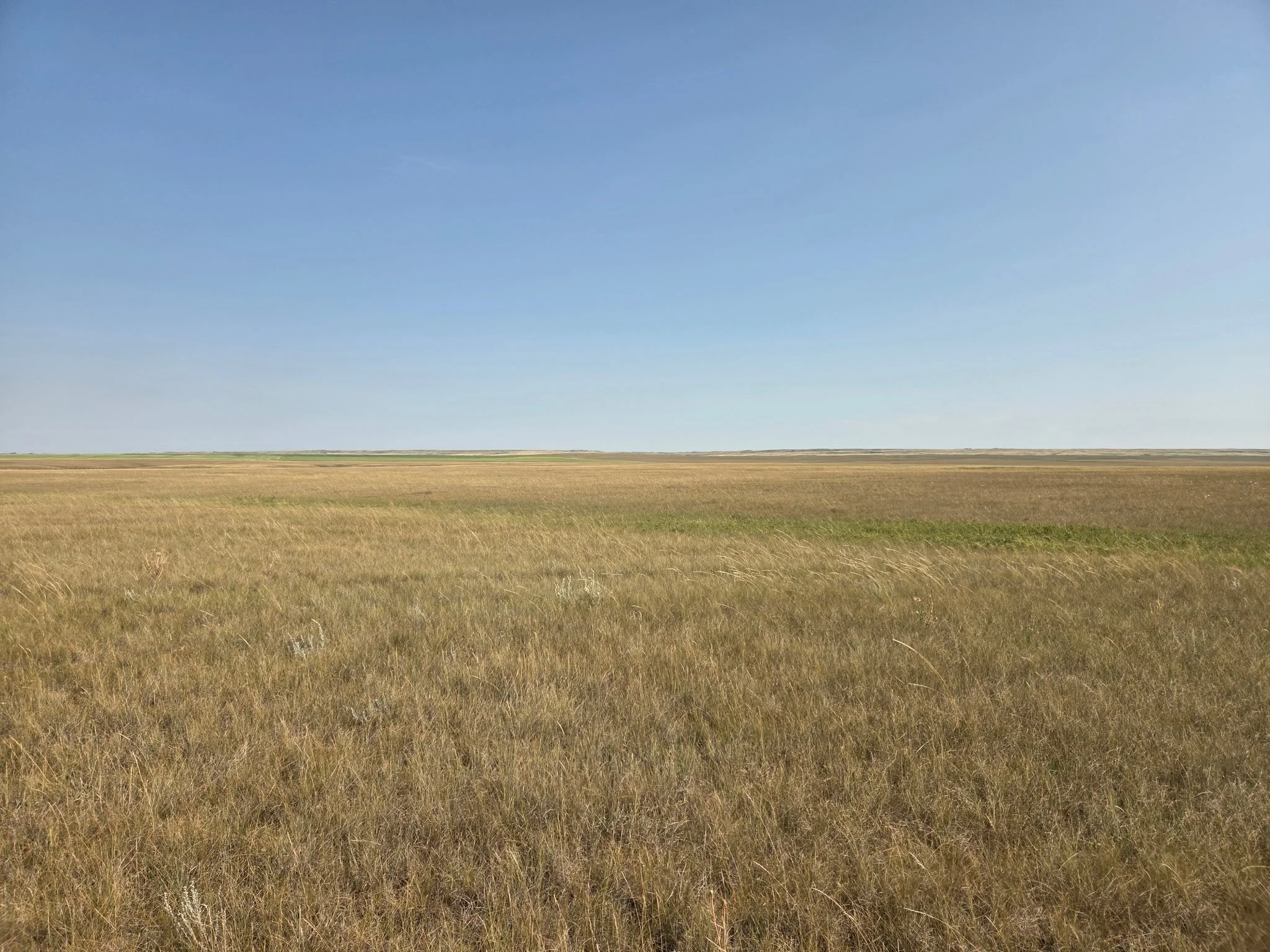
Matador Grasslands Protected Area. A long-standing research site for the University of Saskatchewan and a critical part of the South Saskatchewan River Valley corridor.
Photo Credit: Tricia Bacon
Prairie grasslands are among the most endangered ecosystems on Earth, yet they remain some of the most productive and ecologically important landscapes in North America. A healthy prairie is more than a collection of grasses; it is a dynamic system of plants, animals, soils, microorganisms, and natural disturbances that interact to sustain biodiversity and provide valuable ecological goods and services. In Saskatchewan, native grasslands support wildlife habitat, carbon storage, water infiltration, erosion control, livestock production, recreation, and cultural values. Protecting and restoring the prairie landscapes that remain are essential for maintaining their long-term resilience and benefits to society.
A healthy grassland ecosystem is characterized by native species diversity, ecological integrity, and functioning natural processes. Ecological integrity refers to an ecosystem’s ability to support native species composition, structure, and function comparable to natural conditions. Healthy prairies contain a diverse mix of native grasses, wildflowers, shrubs, soil organisms, pollinators, and wildlife species that have evolved together over thousands of years. These species interact through complex relationships involving grazing, decomposition, pollination, nutrient cycling, and predator-prey dynamics, creating resilient ecosystems capable of adapting to environmental change.
Fire plays a central role in maintaining prairie ecosystems. Historically, grasslands evolved with periodic fire caused by lightning and intentionally applied by Indigenous peoples. These fires prevented excessive litter accumulation, recycled nutrients, stimulated plant growth, and maintained habitat diversity. Fire interacted with grazing by large herbivores such as bison to create a shifting mosaic of vegetation structures across the landscape. This variability provided habitat for a greater diversity of wildlife species while promoting healthy plant communities. Without periodic disturbance from fire and grazing, grasslands often become dominated by a few aggressive species, reducing biodiversity and altering ecosystem function.
Despite their ecological importance, prairie ecosystems face numerous challenges. Habitat loss and fragmentation remain among the most significant threats. In Saskatchewan, native grasslands have declined dramatically due to cultivation, development, roads, and other land-use changes. Remaining grassland parcels are often isolated within agricultural landscapes, reducing connectivity and habitat availability for many species. Invasive plants such as leafy spurge, Kentucky bluegrass, smooth brome, and crested wheatgrass further degrade ecosystem health by outcompeting native vegetation, reducing biodiversity, and increasing fuel accumulation. Woody encroachment, caused in part by fire suppression, can transform open prairie into shrub-dominated communities. Climate change adds further uncertainty as changing precipitation patterns, drought frequency, and extreme weather events affect ecosystem productivity and resilience.
Prescribed fire is one of the most effective tools available to address these challenges. Properly planned burns help restore natural ecological processes while reducing the risk of catastrophic wildfires. Prescribed fire removes accumulated litter, suppresses certain invasive species, recycles nutrients, and stimulates the growth of native grasses and forbs. It can also improve habitat structure for wildlife and species at risk by creating heterogeneity across the landscape. When integrated with grazing management, invasive species control, and restoration activities, prescribed fire becomes even more effective. The framework highlights successful approaches that combine fire with targeted grazing or herbicide treatments to improve grassland condition, restore biodiversity, and enhance long-term ecosystem resilience.
Emerging research and innovation are creating new opportunities for grassland conservation. Advances in satellite imagery, drone technology, and remote sensing now allow managers to assess grassland extent, detect invasive species, evaluate vegetation condition, and monitor prescribed fire effects with unprecedented accuracy. The development of centralized data management systems supports evidence-based decision-making and adaptive management. Collaborative initiatives involving government agencies, Indigenous communities, researchers, non-governmental organizations, and landowners are improving information sharing and expanding the scale of conservation efforts. The growing network of prescribed fire practitioners across the Canadian Prairies is helping build capacity, improve training, and increase the safe application of fire as a conservation tool.
The future of prairie conservation depends on embracing ecosystem-based management that works with natural processes rather than against them. By maintaining native biodiversity, restoring disturbance regimes such as fire and grazing, controlling invasive species, enhancing habitat connectivity, and applying innovative monitoring technologies, prairie ecosystems can remain productive, resilient, and sustainable. Healthy grasslands are not simply remnants of the past; they are living systems that continue to provide essential ecological, economic, and cultural benefits. Protecting them today ensures that future generations will continue to experience the richness and resilience of Canada’s prairie landscapes.
Dale Gross,
Government of Saskatchewan
Park Grassland Ecologist
Landscape Protection Unit, Ministry of Parks, Culture & Sport