

How "Good Fire" Gives Prairie Birds a Fresh Start
When you see smoke rising over a grassy landscape, your first instinct might be worry. But on the prairie, controlled fire, often called "good fire" is actually vital medicine for the land. For thousands of years, North American grasslands thrived on periodic fires. Today, conservation teams carefully plan prescribed burns to clear out thick dead grass, stop invasive trees from taking over, and breathe new life into native plants. For endangered and threatened prairie birds, these managed burns are an absolute lifesaver. Here is how three iconic species rely on prescribed fire:
1. The Burrowing Owl
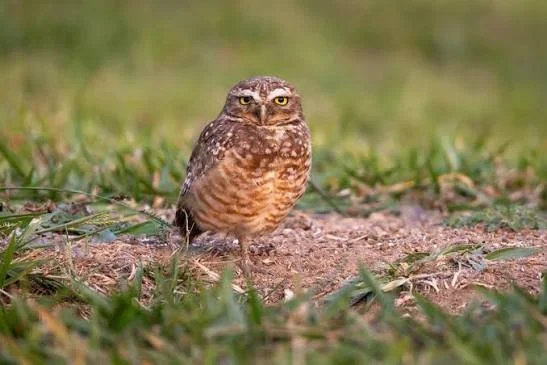
The Burrowing Owl
With its big yellow eyes and comical posture, the Burrowing Owl is an undisputed crowd favorite. But these little owls cannot live in tall, dense vegetation. They need wide-open spaces with short grass and patches of bare soil so they can spot predators and hunt for insects. Fire quickly wipes away thick thatch, creating the open ground owls prefer. Even better, burrowing mammals like badgers and ground squirrels often dig fresh burrows in recently burned areas, leaving behind perfect move-in-ready nests for the owls.
2. The Chestnut-collared Longspur
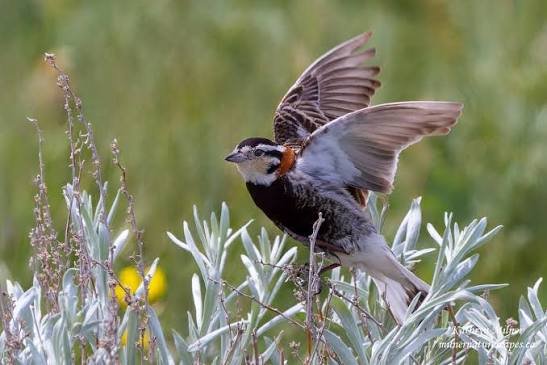
The Chestnut-Collared Longspur
Famous for its striking chestnut nape and warbling aerial songs, the Chestnut-collared Longspur has suffered steep population declines as prairies disappeared or became overgrown. Longspurs require short grass with minimal plant litter to raise their young. When grasslands go years without fire or grazing, dead vegetation builds up into a thick mat that drives longspurs away. Prescribed fire sweeps away this suffocating layer, restoring the open native prairie longspurs need to strut, sing, and nest successfully.
3. The Sprague’s Pipit
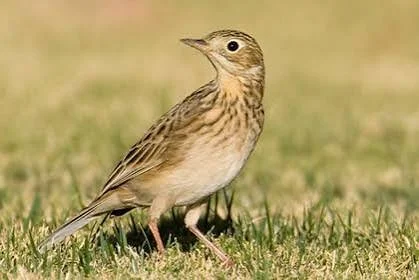
Sprague’s Pipit
This delicate, threatened songbird is a native prairie specialist. Unlike birds that prefer bare soil or super-short grass, the Sprague’s Pipit nests in native grass of intermediate height. When fire is suppressed, shrubs and trees invade, reducing the pipit's open habitat. By periodic burning of prairie patches, land managers reduces woody encroachment. A year or two after a burn, native grasses bounce back stronger and greener, giving pipits the perfect blend of cover and open space.
What About Wildlife Safety?
It is natural to worry about animals during a burn, but prairie wildlife evolved alongside fire. Adult birds simply fly to safety, while small mammals retreat into burrows where the soil acts as a natural heat shield. Furthermore, burns are typically timed outside of peak nesting seasons to keep eggs and chicks safe.
A Quilt of Life
Prescribed fires leave behind a patchwork quilt of burned and unburned areas. This variety creates a rich tapestry of habitats, ensuring that every prairie bird, whether it loves short grass, medium grass, or bare ground, finds a place to call home. Fire isn't destruction; it is the spark that keeps our prairies alive.
References & Further Reading
Grant, T.A., et al. (2011). Ducks and passerines nesting in northern mixed-grass prairie treated with fire. Wildlife Society Bulletin, 35: 368-376.
Dechant, J.A., et al. (1999 - 2002). Effects of management practices on grassland birds: Burrowing Owl, Sprague's Pipit, and Chestnut-collared Longspur accounts. USGS Northern Prairie Wildlife Research Center.