

Pyric Diversity: How Prescribed Fires and Grassland Wildflowers Fuel Our Food Supply
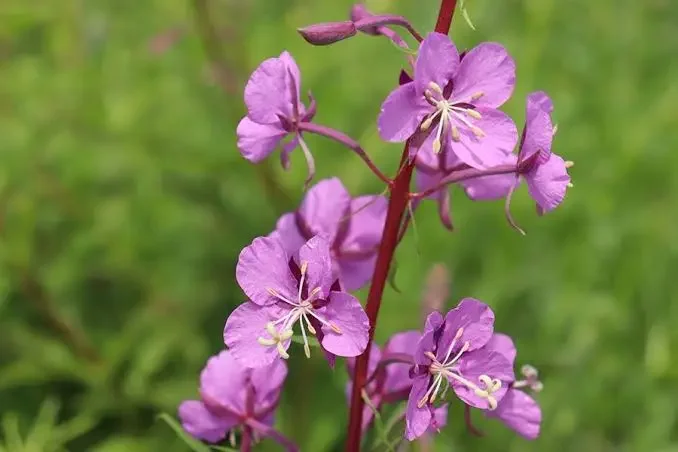
Chamaenerion angustifolium (Fireweed)
The Fireweed responds strongly to fire by using underground roots to quickly resprout and sending massive amounts of fluffy seeds through the wind to colonize the burned soil.
Native temperate grasslands, those found in the Canadian prairies, are among the most endangered ecosystems on Earth. Canada, for instance, has lost over 80% of its historical prairie with estimates of less than 14% remaining in Saskatchewan (1). For decades, complete fire suppression was viewed as a conservation triumph. However, ecological science has revealed a stark truth: excluding natural fire allows aggressive woody invaders, both native and non-native, to displace native flora, leading to widespread biodiversity loss [2]. To restore these landscapes, land managers are increasingly turning to prescribed fire, a vital tool that does not destroy the prairie, but rather unlocks its vibrant, flower-rich biodiversity (2).
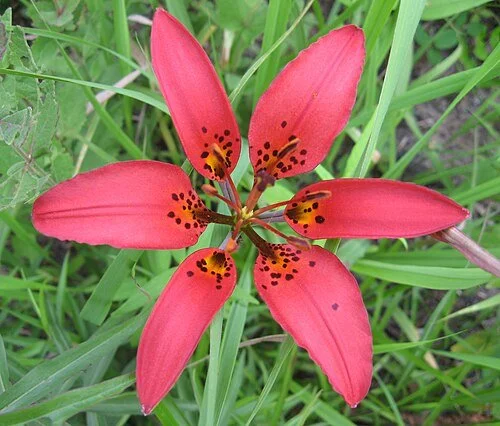
Lilium philadelphicum (Prairie Lily)
Prescribed fires protect the underground bulbs, clear dead plant clutter, reduce disease, and stop taller shrubs from blocking the sunlight the lilies need to grow and bloom
This post-fire revitalization is driven by fascinating biochemical triggers within the soil seed bank. When organic matter burns, it generates a family of heat-stable chemical compounds known as karrikins (3). The primary active compound, karrikinolide, acts as an evolutionary "wake-up call" for fire-following wildflowers (3). Once washed into the soil by subsequent rain, it binds to seed receptors, triggering long-dormant seeds to germinate en masse (3). This process is aided by underground growing points (meristems), which protect perennial wildflowers from lethal aboveground temperatures (2).
Once the flames pass, surviving plants utilize pulsed nutrients, like phosphorus and zinc, and partner with arbuscular mycorrhizal fungi to accelerate growth (2). This culminates in "pyrogenic masting"-a highly synchronized flowering event within and across seasons (4). For self-incompatible wildflowers like the narrow-leaved purple coneflower (Echinacea angustifolia), this synchronization reduces the physical distance between mates, dramatically enhancing pollination efficiency, and boosting seed production by up to 88% (4).
These blooming landscapes provide immense value to livestock operations and the broader agricultural value chain. In livestock rangelands, native wildflowers are highly nutritious, constituting up to 47% of cattle diets (5). Integrating fire through "patch-burn grazing" (also known as Pyric-herbivory) coaxes cattle to feed on high-quality, post-fire regrowth, creating a natural pasture rotation that maintains habitat structural diversity (2, 5).
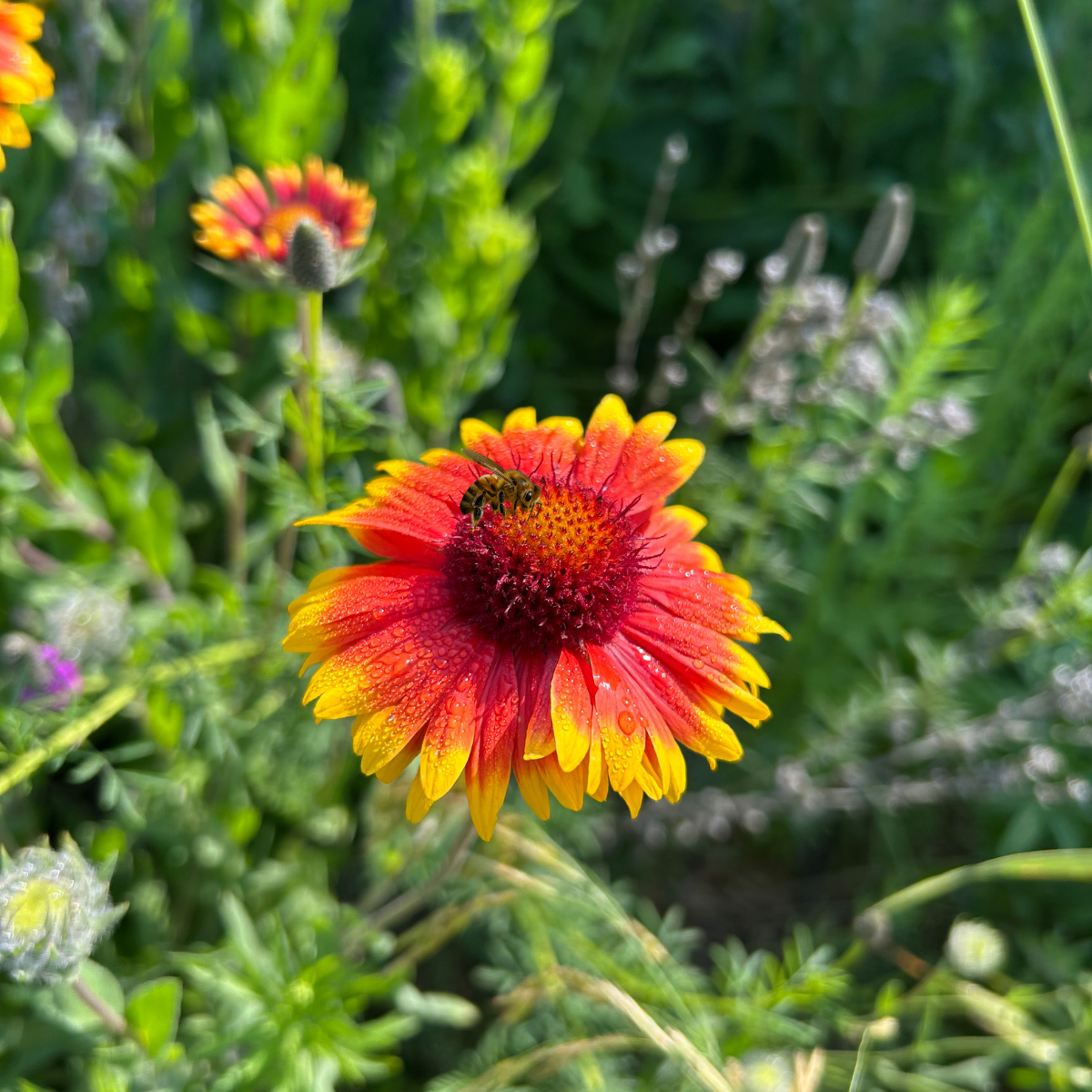
Gaillardia aristata (Blanketflower)
The Blanketflower responds positively to fire and is considered a fire-resistant, fire-dependent, early- to mid-successional species. Its leaves feature a high moisture content and low chemical volatility, meaning it does not easily ignite or fuel a fire, making it a safe choice to plant close to a home
Crucially, these flower-rich grasslands and uncropped field margins support pollinators essential to adjacent croplands (5, 6). Grasslands provide continuous spring-to-autumn forage and undisturbed nesting sites for ground-nesting bees (5). This pollinator spillover is vital to the Canadian canola industry, which contributes $6 billion annually and yields 20 million tonnes of crop (7). Insect pollination increases commodity canola yields by up to 5% and optimizes pod maturation (7). Furthermore, the hybrid canola seed industry in southern Alberta is entirely dependent on insect pollination, requiring the rental of over 60,000 managed honeybee colonies annually at a cost exceeding $10 million (7). Broadly, honeybee pollination adds $3.18 billion directly (and up to $7 billion when including hybrid canola) to Canadian agriculture (8).
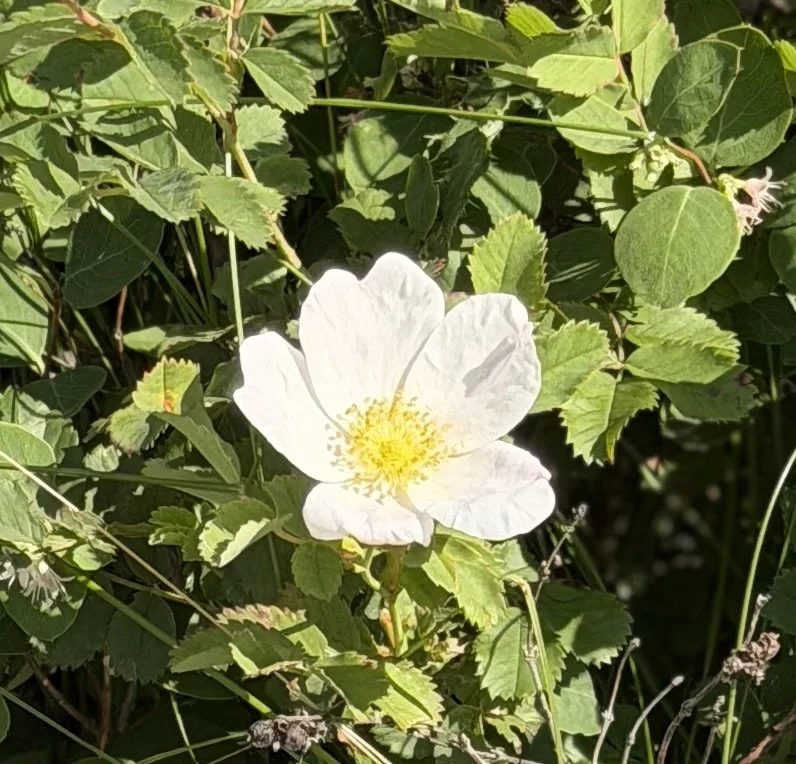
Rosa Woodsii (Wild Rose)
The Wild Rose is strongly fire-tolerant and typically survives low- to moderate-severity prescribed fires by vigorously sprouting from its underground rhizomes and root crowns
Prescribed fire is not merely a strategy for environmental conservation; it is an economic mechanism that fuels agricultural productivity, secures biodiversity, and stabilizes our food supply chain (9).
References
1. Bennett, J., & Lamb, R. (2026). USask AgBio research saving prairie grasslands. University of Saskatchewan Department of Plant Sciences. https://agbio.usask.ca/news/2026/01/usask-agbio-research-saving-prairie-grasslands.php
2. Stubbendieck, J., Volesky, J., & Ortmann, J. (2018). Grassland management with prescribed fire (Extension Circular EC148). University of Nebraska-Lincoln Extension. https://extensionpubs.unl.edu/publication/ec148/na/pdf/view
3. Flematti, G. R., Ghisalberti, E. L., Dixon, K. W., & Trengove, R. D. (2004). A compound from smoke that promotes seed germination. Science, 305(5686), 977. https://doi.org/10.1126/science.1099944
4. Wagenius, S., Beck, J., & Kiefer, G. (2020). Fire synchronizes flowering and boosts reproduction in a widespread but declining prairie species. Proceedings of the National Academy of Sciences, 117(6), 3000-3005. https://doi.org/10.1073/pnas.1907320117
5. Xerces Society for Invertebrate Conservation. (2020). Best management practices for pollinators on rangelands (Publication No. 20-001). Xerces Publications. https://xerces.org/sites/default/files/publications/20-001.pdf
6. Canadian Wildlife Federation. (2023). Agriculture and wildlife habitat conservation. CWF Conservation Programs. https://cwf-fcf.org/en/conserve/agriculture-habitat.html
7. Pollinator Partnership Canada. (2022). Best management practices for pollinator protection in canola fields. Canola Council of Canada. https://pollinatorpartnership.ca/assets/generalFiles/P2C_Canola_Guide_ENG-FINAL-Web.pdf
8. Agriculture and Agri-Food Canada. (2021). Statistical overview of the Canadian honey and bee industry 2021. Government of Canada. https://agriculture.canada.ca/en/sector/horticulture/reports/statistical-overview-canadian-honey-and-bee-industry-2021
9. Waananen, A., Ison, J. L., Wagenius, S., & Shaw, R. G. (2023). Fire effects on sexual reproduction depend on population size in fragmented prairies. Proceedings of the National Academy of Sciences, 120(24), e2306967120. https://doi.org/10.1073/pnas.2306967120