

Built on Partnerships, Guided by Fire
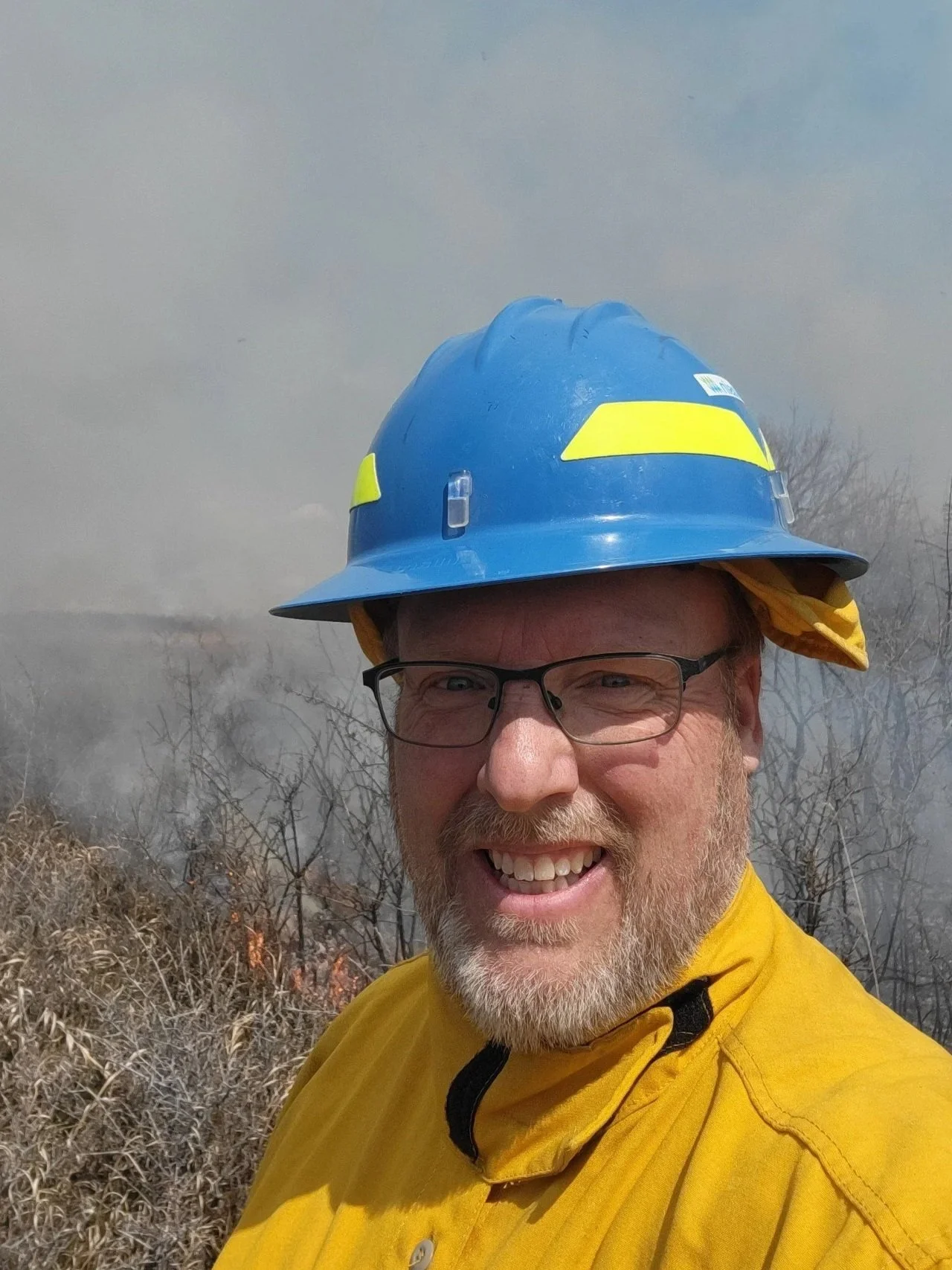
Renny. W. Grilz, PAg
Director of Conservation,
Meewasin Valley Authority
Managing Partner,
Canadian Prairies Prescribed Fire Exchange
Saskatoon
What does it take to bring fire back to the prairie and inspire an entire community to embrace it? For more than 30 years, Renny W. Grilz has been answering that question, building a career at the intersection of conservation, mentorship, and collaboration. From his first prescribed burns as a high school student in rural Saskatchewan to leading landscape-scale restoration efforts with the Meewasin Valley Authority and helping found the Canadian Prairies Prescribed Fire Exchange (CPPFE), Renny has witnessed the transformative power of fire and the people behind it. In this edition of Faces of Fire, he shares the lessons learned from decades on the fireline, the mentors who shaped his journey, and why he believes prescribed fire is ultimately about trust, partnerships, and a commitment to lifelong learning.
For Renny Grilz, prescribed fire has never been solely about the flame. It has always been about the people behind it. After more than three decades working with fire on the landscape, he remains convinced that the most successful burns are built on trust, mentorship, collaboration, and a shared commitment to stewardship.
Renny's journey with prescribed fire began in rural Saskatchewan while he was still in high school. In the early 1990s, he had the opportunity to work with the University of Saskatchewan, where Dr. Jim Romo introduced him to the science and ecology of prescribed burning. Those early experiences ignited a passion that would shape his career, while teaching him a lesson that still guides his work today: prescribed fire is built on partnerships.
The university-led burns brought together practitioners from organizations including Meewasin and Ducks Unlimited Canada. Even then, Renny saw firsthand how every partner contributed something unique, whether knowledge, equipment, experience, or perspective. That collaborative approach left a lasting impression and became a defining theme throughout his career.
In the late 1990s, Renny joined Ducks Unlimited Canada in Manitoba, where he had the privilege of learning alongside Robin Hamilton. Under Robin's mentorship, prescribed burns became more than technical exercises. They became lessons in communication, planning, adaptability, teamwork, and respect for the landscape. Every burn reinforced the importance of balancing confidence with humility and recognizing that nature always has the final say.
His learning journey continued well beyond those early years. More recently, Renny has had the opportunity to work alongside Kody Wohlers in the Loess Hills of Iowa, observing one of North America's most successful prescribed fire partnership networks. There, landowners, agencies, conservation organizations, fire departments, and volunteers work together toward a common goal. The experience reinforced his belief that the greatest achievements in prescribed fire occur when entire communities come together around a shared purpose.
Today, Renny serves as Director of Conservation with the Meewasin Valley Authority, leading a team responsible for conserving and restoring more than 6,700 hectares of natural areas along the South Saskatchewan River Valley. Under his leadership, Meewasin's approach combines prescribed fire, targeted grazing, ecological restoration, invasive species management, native seed development, ecological monitoring, and public education to build resilient prairie ecosystems within an urban landscape.
One of the most meaningful milestones in Renny's career came in 2025, when prescribed fire returned to Saskatoon Natural Grasslands after a 20-year absence. Watching fire once again move across the prairie and seeing the community embrace the project was a powerful reminder of fire's role in conservation. For Renny, the burn demonstrated that prescribed fire belongs not only on remote rangelands but also within urban conservation landscapes, where it can improve biodiversity while reconnecting people to the natural processes that have shaped prairie ecosystems for generations.
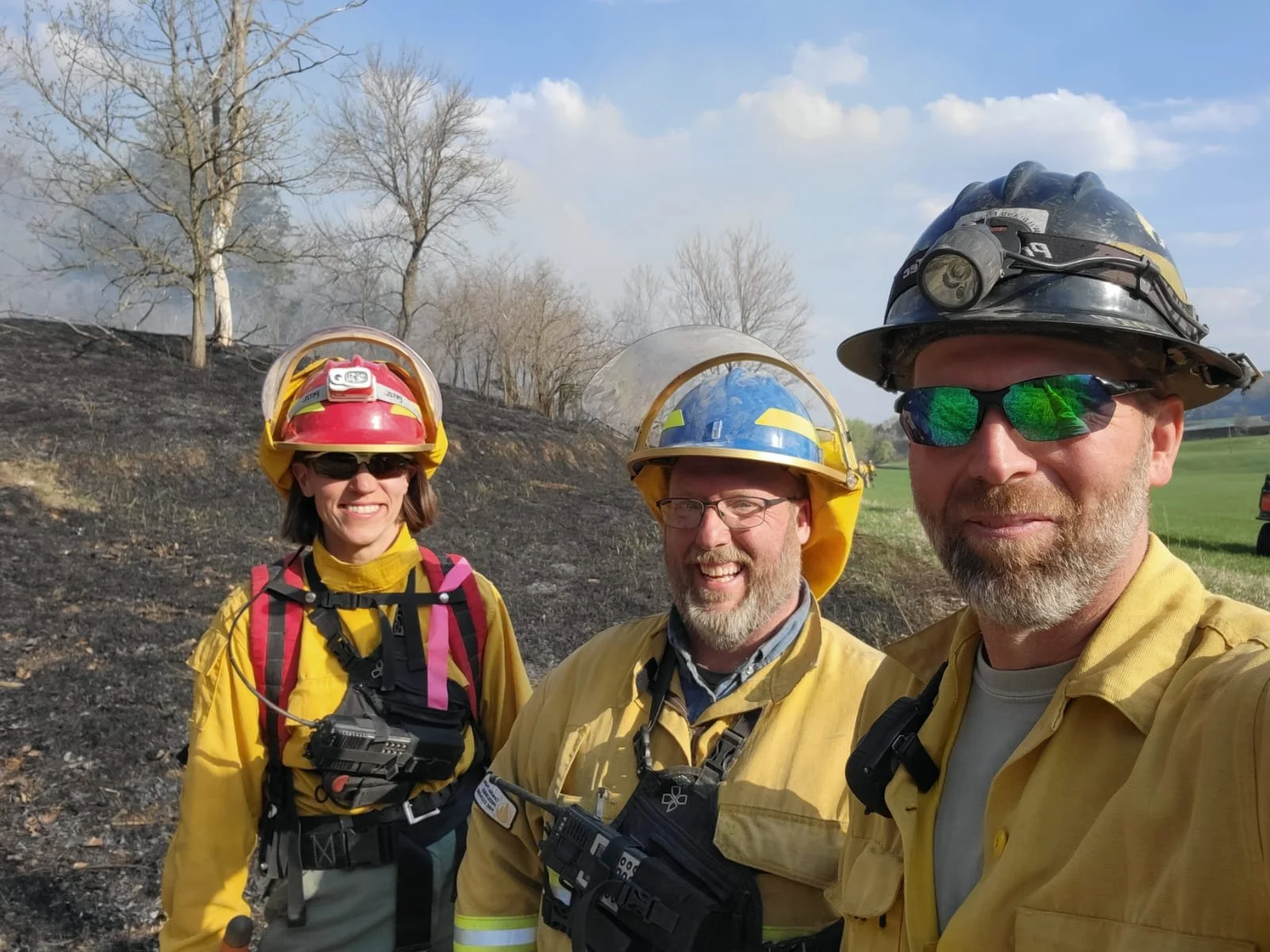
Renny with Kody Wohlers and Kerry Hecker at a burn in Iowa in 2024.
Photo Credit: Renny Grilz, PAg
That success, however, was not achieved alone. Meewasin's prescribed fire program is built on strong partnerships with organizations including the Nature Conservancy of Canada, Saskatchewan Parks, the University of Saskatchewan, the City of Saskatoon, Wanuskewin Heritage Park, Aberdeen Community Pasture, Saskatoon Public School Division, and many others. Each partner contributes expertise, equipment, training, research, or operational support, creating a collaborative model that strengthens fire stewardship across the region.
The same belief in collective action helped inspire the creation of the Canadian Prairies Prescribed Fire Exchange (CPPFE). As a founding member, Renny has helped guide the organization from a small idea shared among passionate practitioners into a growing network that spans the Canadian Prairies and connects to partners across North America. Today, Meewasin proudly hosts CPPFE, and Renny continues to provide strategic leadership as the organization expands opportunities for training, mentorship, equipment sharing, research, and partnership development.
Despite decades of experience, Renny approaches every burn with the mindset of a student. He believes that no matter how many burns someone has participated in, there is always more to learn. Every landscape is different. Every weather pattern presents new challenges. Every fire provides new lessons.
Some of those lessons come from seasoned practitioners. Others come from Indigenous Knowledge Keepers, ranchers, researchers, volunteers, or someone lighting a drip torch for the very first time. That continual exchange of knowledge is what Renny values most about prescribed fire and what inspires his ongoing work with CPPFE.
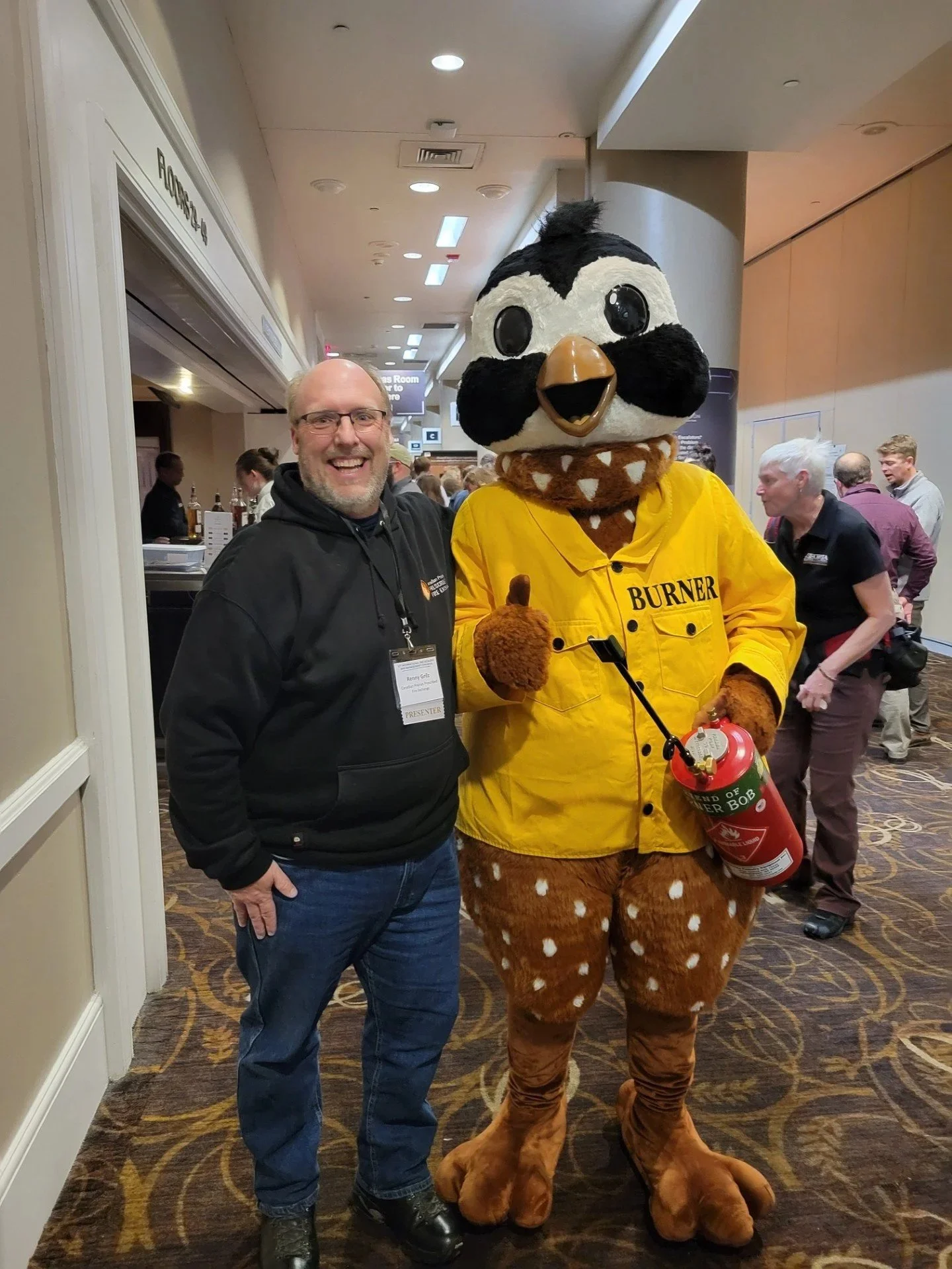
Renny Grilz, PAg with Burner Bob at the
Prescribed Burn Association Take-Over during the Association of Fire Ecology Conference in New Orleans in December 2025.
Photo Credit: Renny Grilz, PAg
Looking back on more than 30 years in the field, Renny remains deeply grateful to the mentors who invested in him and committed to helping him grow as a practitioner and leader. Today, he is dedicated to paying that mentorship forward, helping develop the next generation of fire practitioners across the Canadian Prairies.
For Renny Grilz, fire may be one of nature's greatest tools for renewal, but its true power lies in the people who come together to use it responsibly. Through partnership, humility, and a lifelong commitment to learning, he continues to help build a stronger future for prescribed fire across western Canada.
“Because in prescribed fire, the learning never stops; we are always stronger when we work together.”
- Renny Grilz, PAg