

Lighting the Way: Brad Elder's Life on the Fireline
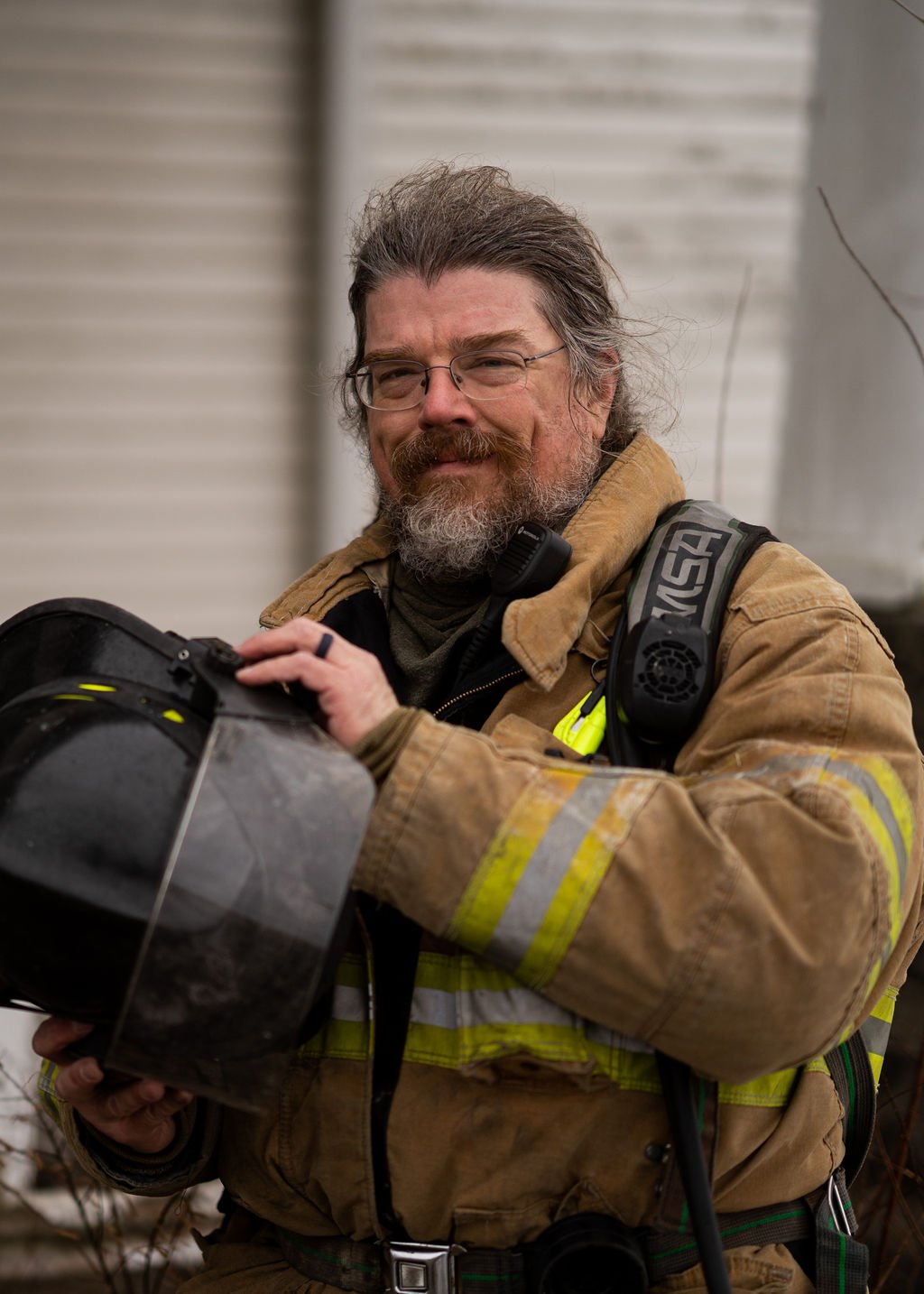
Dr. Brad Elder,
Professor of Biology,
Doane University
Crete, NE
“Every burn is different, every crew is different and every fire gives you something new to learn”. For Professor Brad Elder, that enduring curiosity is what turns science into stewardship. For more than 30 years, he has ignited conversations around grassland restoration, mentoring the next generation of fire practitioners across the Great Plains and answering the call as a volunteer fire fighter. His life’s work remains rooted in a simple truth; healing the landscape does not end with managing the flame or smoke but extends to tending the connections we share with the land and with each other.
Photo Credit: Elayne Woods
When Dr. Brad Elder talks about his decades-long journey with prescribed fire, he usually dates his professional career back to 1991 while working on his PhD in fire ecology on the Konza Prairie at Kansas State University.
Of course, that origin story comes with a minor technicality.
“Actually, that's not quite true,” Brad laughs. “I conducted my first prescribed fire when I was 12. My brother told me a lighter would explode like a stick of dynamite if you held the button down too long, so naturally I tested the hypothesis by building a Cub Scout fire over one. The lighter didn't explode. The prairie grass did catch fire. So I learned two things.”
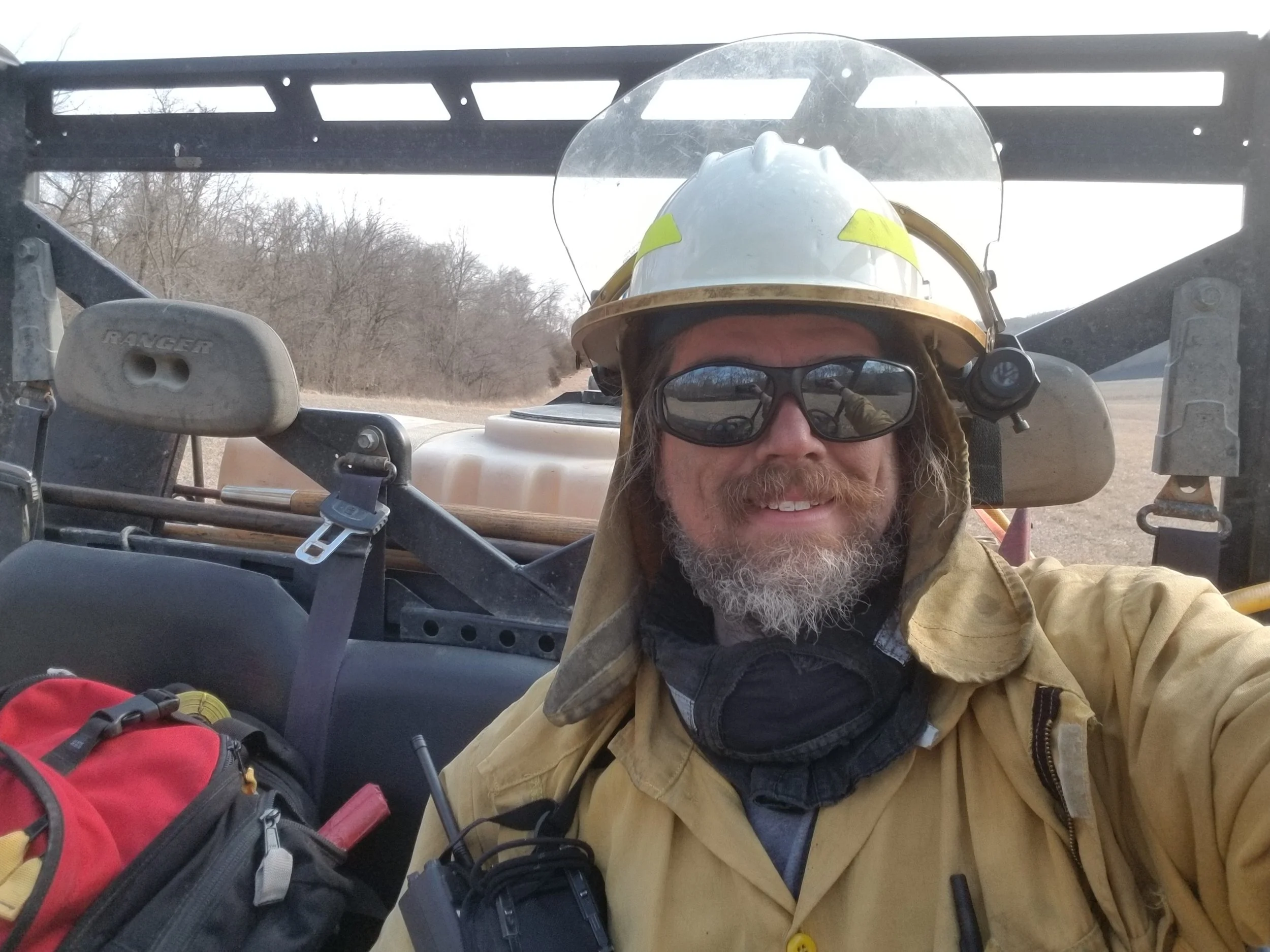
Biologist-Fire Ecologist-Fireman, Professor Brad Elder puts his heart and energy into fire-smoke management and grassland conservation.
Photo credit: Brad Elder
From Accidental Arsonist to Fire Ecologist
That youthful spark eventually grew into a lifelong vocation. At Kansas State's Konza Prairie, researchers were required to volunteer on the burn crews, giving Brad nine immersive years on the fireline. That rigorous groundwork paved the way for a postdoctoral position in Oklahoma and, ultimately, his current home at Doane University in Nebraska, where he serves as a professor of Biology.
When Doane hired him, part of his mandate was ambitious: restore native prairie across 320 acres (129 hectares) of former farmland. What started as a campus restoration project quickly blossomed into a regional movement.
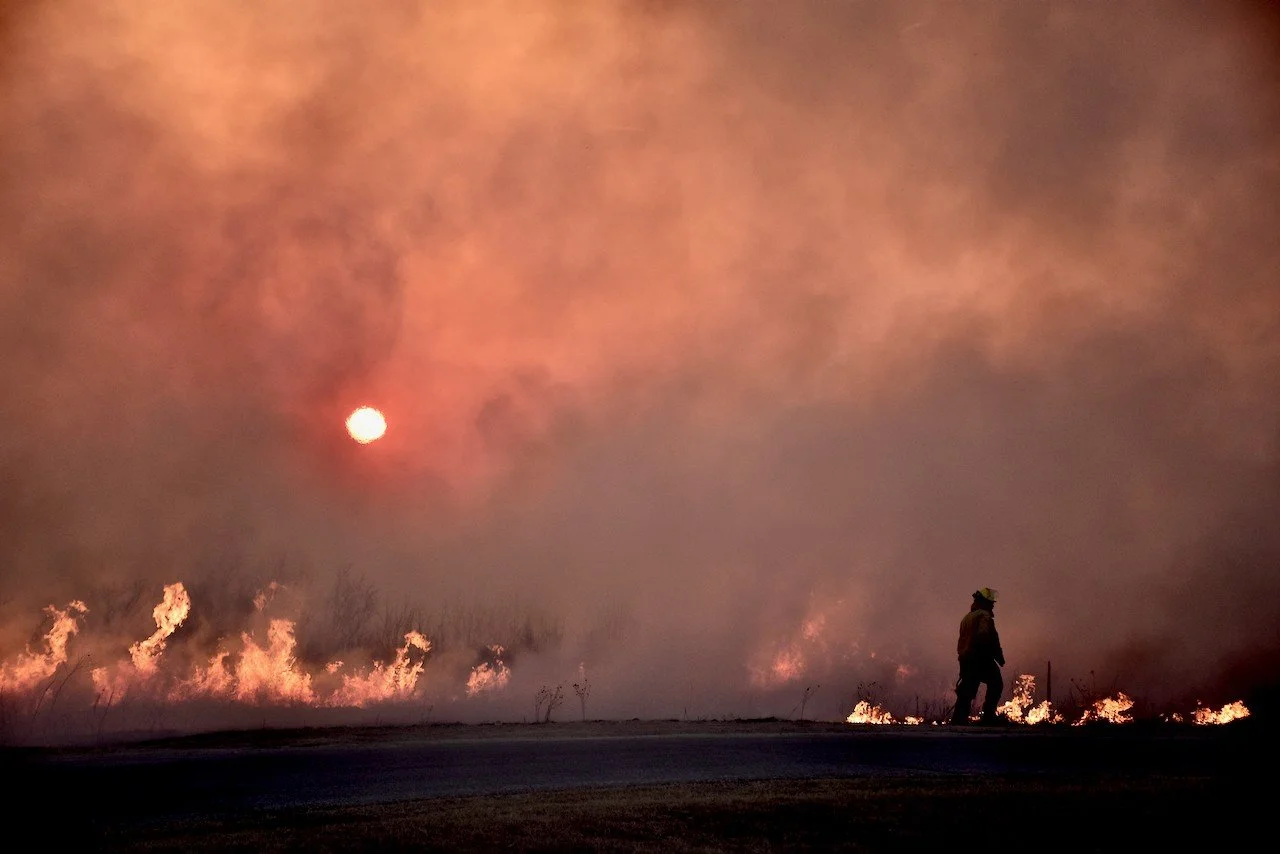
“Every burn is different, every crew is unique and every fire gives you something new to learn”. -Professor Brad Elder
Photo Credit: Barb Van Slyke
Putting Good Fire Back on the Landscape
Today, Brad’s impact extends far beyond the classroom. He has become a pillar of prescribed-fire education and outreach throughout Nebraska and the Great Plains:
Educational Leadership: He has developed training materials and instructional videos relied upon by fire practitioners far beyond state lines.
Hands-on Collaboration: He regularly partners with landowners, land managers, students, and fellow burn bosses to meticulously plan and execute safe, effective prescribed fires.
Community Service: His commitment to public safety also extends close to home, where he serves as a volunteer structural firefighter in Crete, Nebraska.
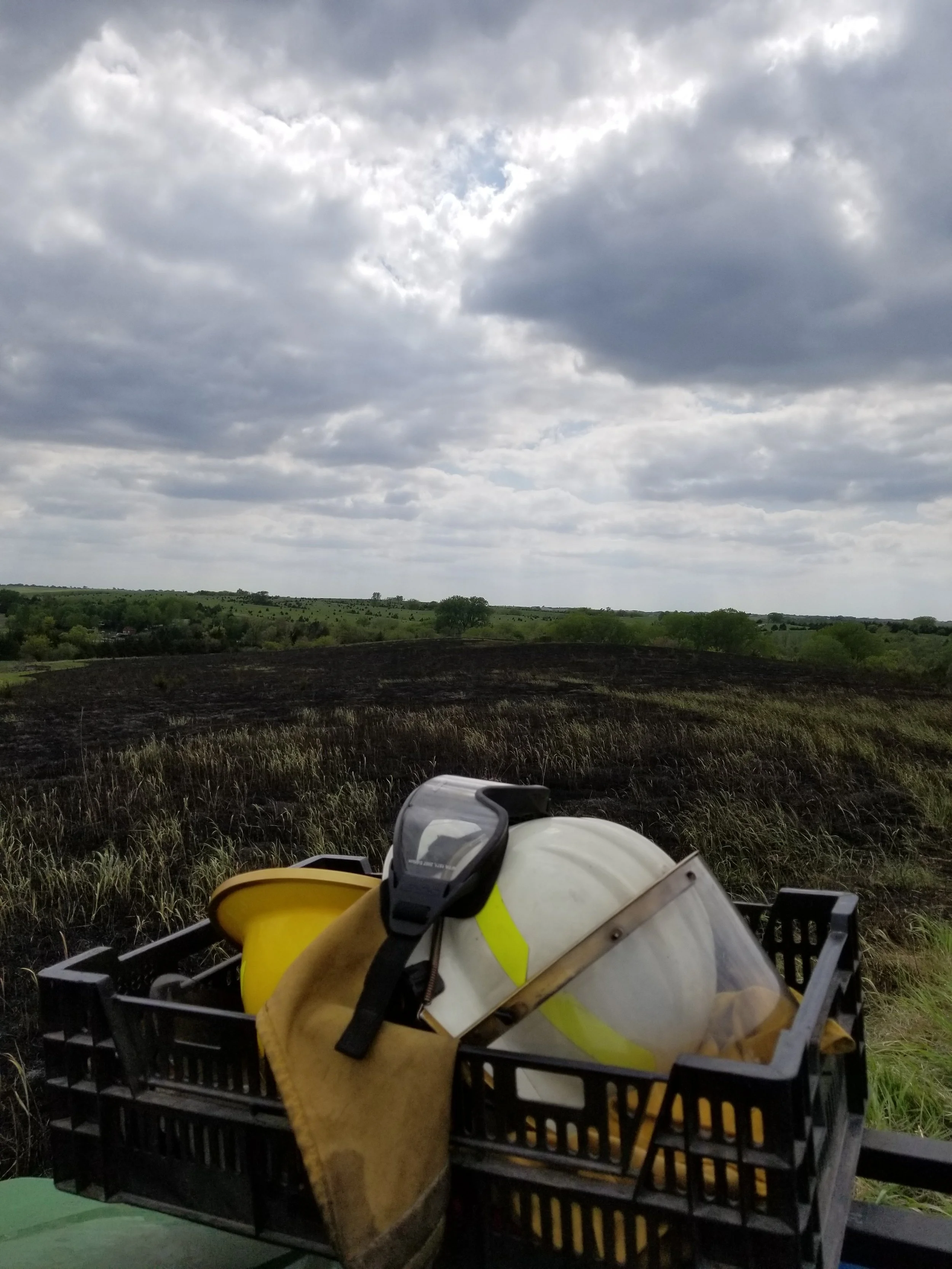
"Good stewardship means improving grazing on ranchland, creating habitat for hunters and nature lovers, and never forgetting my responsibility to my neighbors."
- Professor Brad Elder
Photo credit: Brad Elder
Reflecting on more than thirty years of managing fire, Brad remains grounded in the simple, unpredictable nature of the work.
“Teaching prescribed fire and helping people put good fire back on the landscape safely has been a passion of mine for more than 30 years,” he shares. “Some years that means a lot of small burns and only a few thousand acres. Other years, my section of the fireline alone might stretch five miles. But acreage isn't really what makes fire interesting to me. Every burn is different, every crew is different, and every fire gives you something new to learn.”
For Brad Elder, that enduring curiosity is what turns science into stewardship. Be it igniting a conversation about grassland restoration in the classroom, mentoring the next generation of fire practitioners across the Great Plains, or answering a local call as a volunteer firefighter, his life's work remains rooted in a simple truth: healing the landscape isn't just about managing the flame, it is about tending the connections we share with the land and each other.