

Working With Fire: How Patch-Burn Grazing Delivers Value for Rangelands and Ranchers
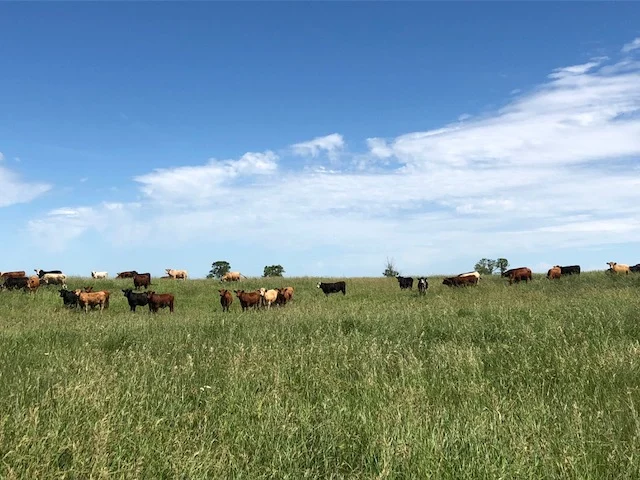
Photo Credit: Association of Manitoba Community Pastures
Managing native pastures across the Northern Great Plains requires balancing livestock production, woody plant encroachment, ecological resilience, and operating costs. While conventional grazing systems often use fencing and water development to control livestock distribution, patch-burn grazing provides another approach by harnessing one of the ecological processes that historically shaped grasslands: the interaction between fire and grazing.
This interaction occurs when grazing animals preferentially use recently burned portions of a landscape. Rather than treating prescribed fire and grazing as separate management practices, patch-burn grazing intentionally reconnects them to create a shifting mosaic of heavily grazed, recovering, and relatively rested vegetation. Fuhlendorf and colleagues describe this spatial and temporal interaction between fire and grazing as an important process underlying grassland heterogeneity.
Although much of the foundational patch-burn grazing research comes from the central and southern Great Plains, its principles may also provide a useful management framework for northern rangelands where prescribed burning is ecologically appropriate. Application should be adapted to local vegetation, climate, fuel conditions, stocking rates, and prescribed-fire requirements.
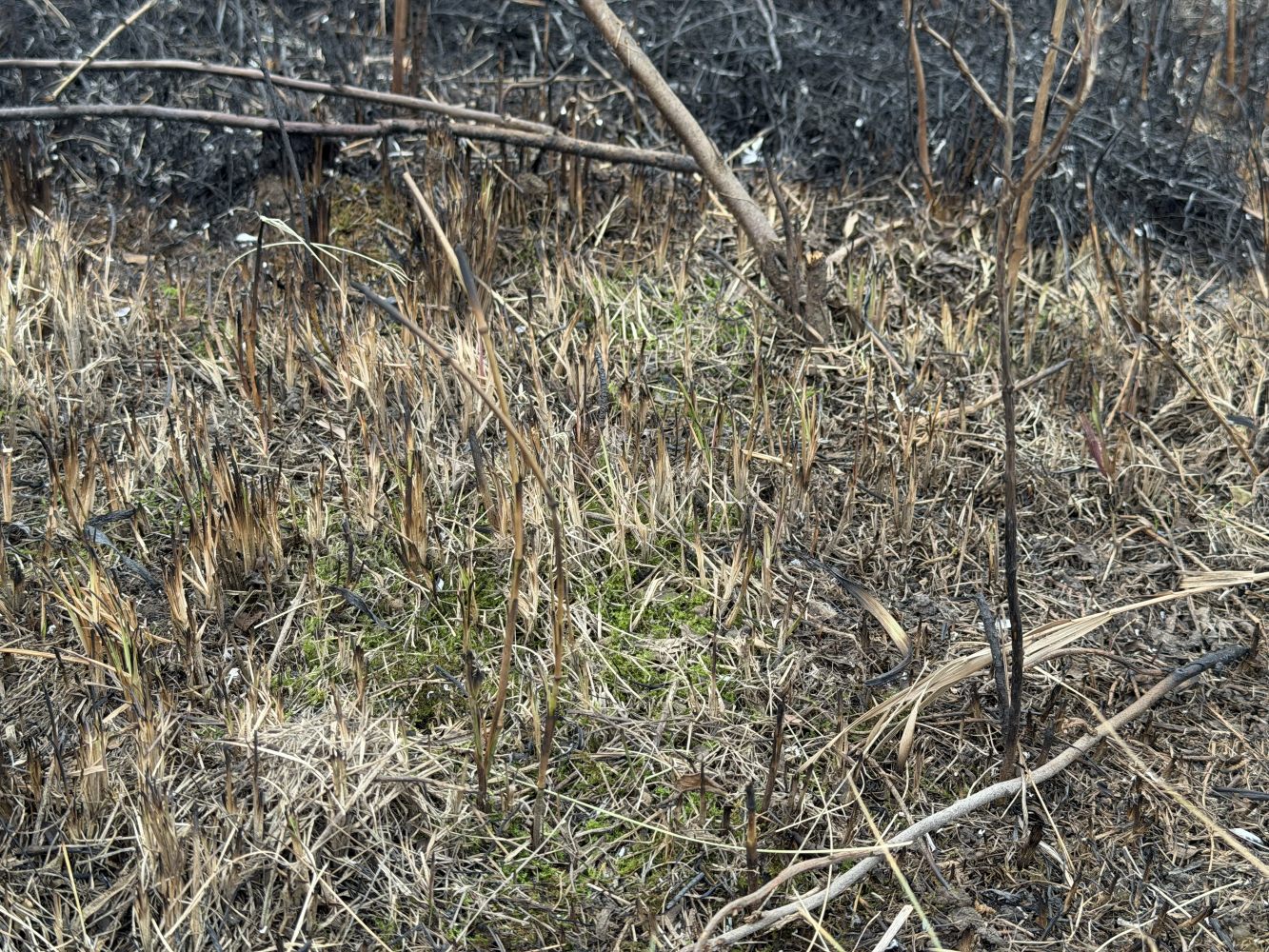
Regrowths at the Kernan Prairie after a Prescribed Fire
The Ecological Mechanism: Recoupling Fire and Grazing
Historically, grazing animals did not use grassland landscapes uniformly. Fire periodically removed accumulated plant material and initiated fresh regrowth. Grazing animals were subsequently attracted to recently burned areas, while less recently burned areas experienced lower grazing pressure. This feedback between fire and grazing helped create a shifting mosaic of vegetation conditions across the landscape.
Patch-burn grazing intentionally uses this response in a managed livestock system.
Targeted prescribed fire: A portion of a pasture is burned while livestock continue to have access to the larger pasture unit.
Selective forage use: Following fire, removal of standing dead material and vigorous plant regrowth can improve forage accessibility and quality. Livestock generally show a strong preference for recently burned patches. Research has demonstrated that grazing animals select recently burned areas while their use declines as time since fire increases.
Reduced pressure elsewhere: As livestock concentrate grazing on recently burned vegetation, other portions of the pasture receive comparatively less grazing pressure, allowing vegetation biomass and structure to recover.
Shifting disturbance: Burning a different patch in subsequent years moves concentrated grazing pressure across the landscape. The result is intentionally heterogeneous vegetation rather than uniform use at any single point in time.
Economic and Production Benefits
Patch-burn grazing may offer several advantages to livestock enterprises.
Maintaining livestock performance: Research indicates that patch-burn grazing can maintain livestock production while giving cattle access to high-quality forage in recently burned portions of the pasture.
Potential economic savings: A recent cow-calf economic analysis estimated approximately $20 per cow per year in reduced winter supplementation costs associated with continual access to high-quality forage. The analysis also found that patch-burn grazing cost approximately $5.94 per hectare per year more than whole-pasture burning every three years, illustrating the importance of considering both costs and benefits when evaluating the practice.
Managing woody encroachment: Prescribed fire is an important tool for maintaining grassland structure and limiting expansion of fire-sensitive woody vegetation. The effectiveness of fire varies considerably among woody species, plant size, fuel conditions and frequency of treatment, so fire should be incorporated into a longer-term vegetation-management strategy rather than viewed as a one-time treatment.
Managing grazing distribution: Patch burning can influence where livestock spend their time without requiring fencing around every individual management patch. Grazing is deliberately concentrated on recently burned vegetation and then redistributed across the pasture as fire is applied to different areas in subsequent years.
Structural Diversity: Connecting Production and Conservation
One of the principal benefits of patch-burn grazing is the creation of vegetation heterogeneity.
Recently burned areas tend to contain shorter vegetation that receives concentrated grazing, while areas with a longer time since fire develop greater residual biomass and vertical structure. Research has documented these differences between recently burned patches and patches with more time since fire.
This creates a pasture containing multiple vegetation conditions rather than a uniformly grazed landscape. Such structural diversity can provide habitat for wildlife species with different vegetation requirements while maintaining forage resources for livestock. Extension resources also report that the mosaic created by patch-burn grazing can provide habitat for grassland wildlife while supporting livestock production.
For ranchers, the key point is that heterogeneity is not necessarily evidence of poor pasture utilization. Under a patch-burn grazing system, uneven vegetation structure is intentional. Fire determines where high grazing pressure occurs, and moving fire across the landscape shifts that pressure through time.
When appropriately planned, patch-burn grazing offers producers a way to use the natural interaction between fire and herbivory as a management tool rather than attempting to make livestock always use every part of a pasture equally.
Interested in patch-burn grazing on your land? Connect with us today email: cppfe@meewasin.com
References and further reading
Allred, B. W., Fuhlendorf, S. D., & Hamilton, R. G. (2011). The role of pyric-herbivory in managing rangeland ecosystems. Applied Vegetation Science, 14(3), 385390.
Baker, H. M., Shear, H. E., Peel, D. S., Raper, K. C., & Fuhlendorf, S. D. (2025). Patch-burn grazing: An economic analysis of pyric herbivory rangeland management by cow-calf producers. Rangeland Ecology & Management, 98(1), 41–48.
Fuhlendorf, S. D., Engle, D. M., Kerby, J., & Hamilton, R. (2009). Pyric herbivory: Rewilding landscapes through the recoupling of fire and grazing. Conservation Biology, 23(3), 588598.
Links
[Ungulate preference for burned patches reveals strength of fire–grazing interaction - Allred - 2011 - Ecology and Evolution - Wiley Online Library], [Pyric Herbivory with Multiple Livestock Species: Similarities in Selection between Cattle and Goats]