

When most people hear the word wildfire, they picture destruction. Across the Canadian Prairies, however, ecologists, ranchers, and Indigenous fire keepers are working together to bring a very different kind of flame back to the landscape: prescribed fire.
Far from being a threat, carefully planned fire is one of the oldest and most essential life-support systems on the plains.
Why the Prairies Actually Need Fire
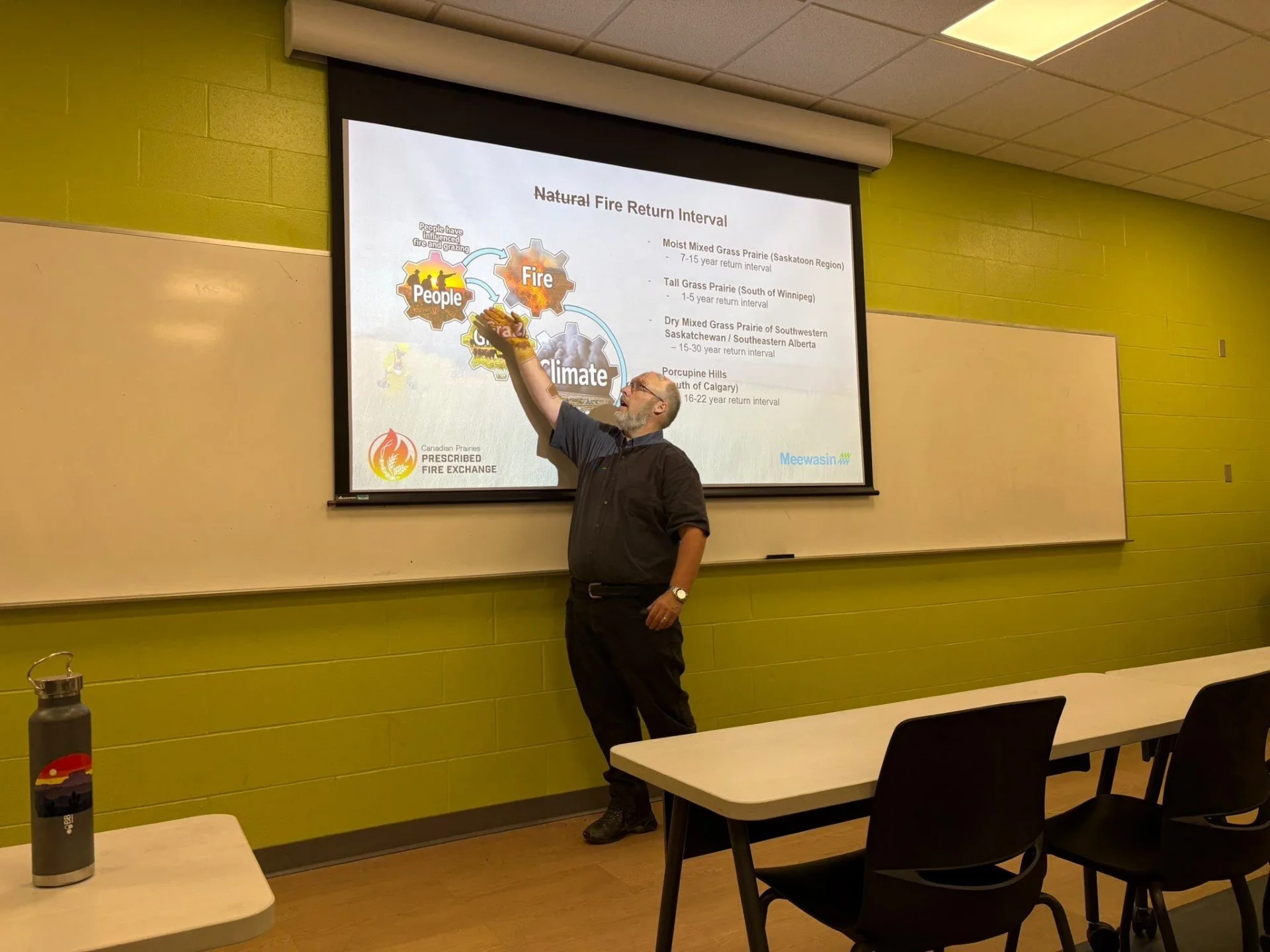
For thousands of years, two forces shaped North America’s grasslands: lightning strikes and intentional burning by Indigenous Peoples. Together with roaming bison, fire prevented trees and shrubs from taking over the open plains.
When fire is removed from a grassland for decades, dead grass piles up into a thick, suffocating blanket called litter. Litter blocks sunlight, traps cold moisture, and chokes out native wildflowers. Eventually, woody shrubs like trembling aspen and snowberry creep in, turning a diverse grassland into a uniform thicket.
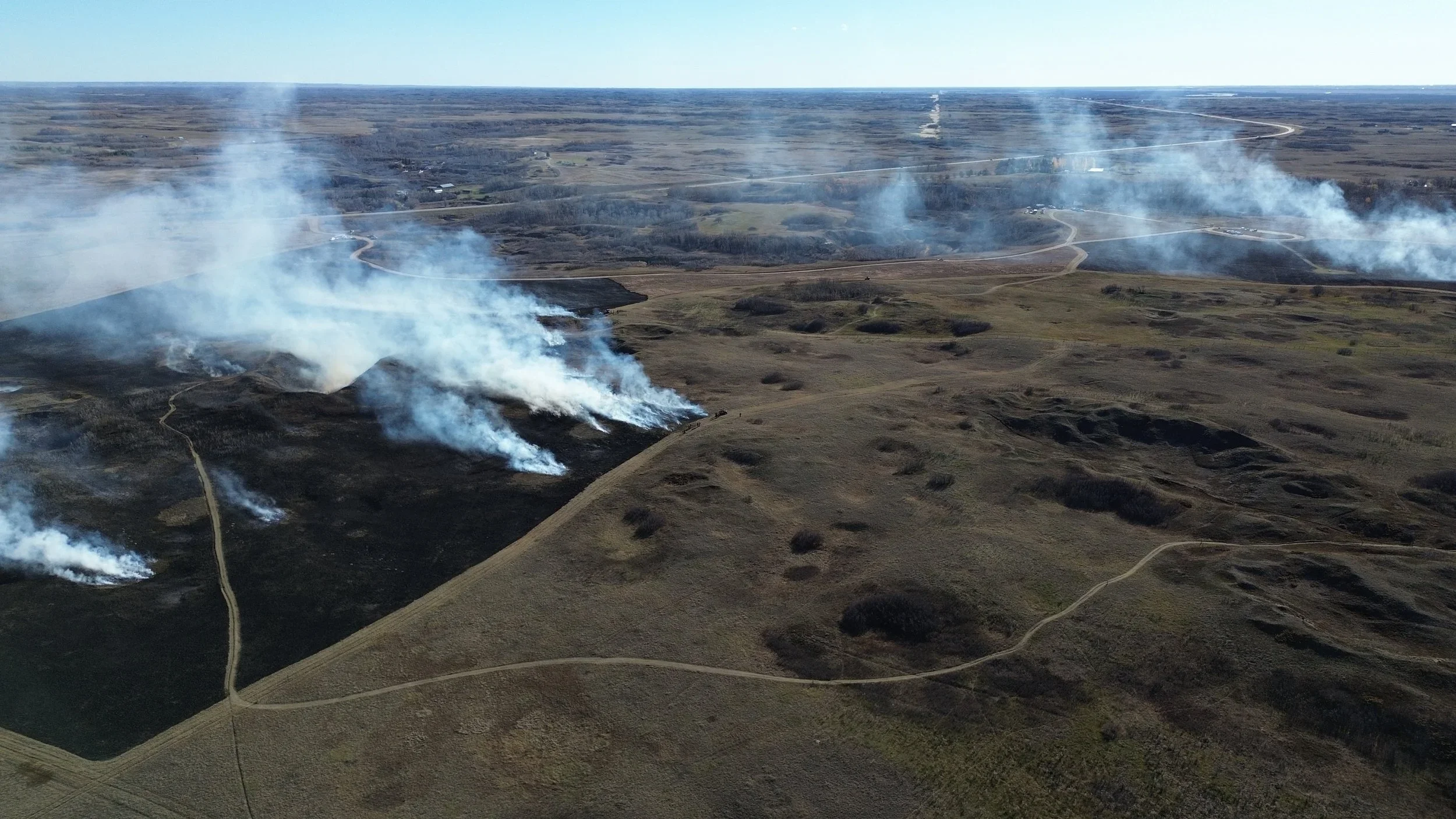
Prescribed fire hits the ecological reset button. By burning under strict, pre-planned weather and fuel conditions, land managers mimic nature’s historical rhythm safely
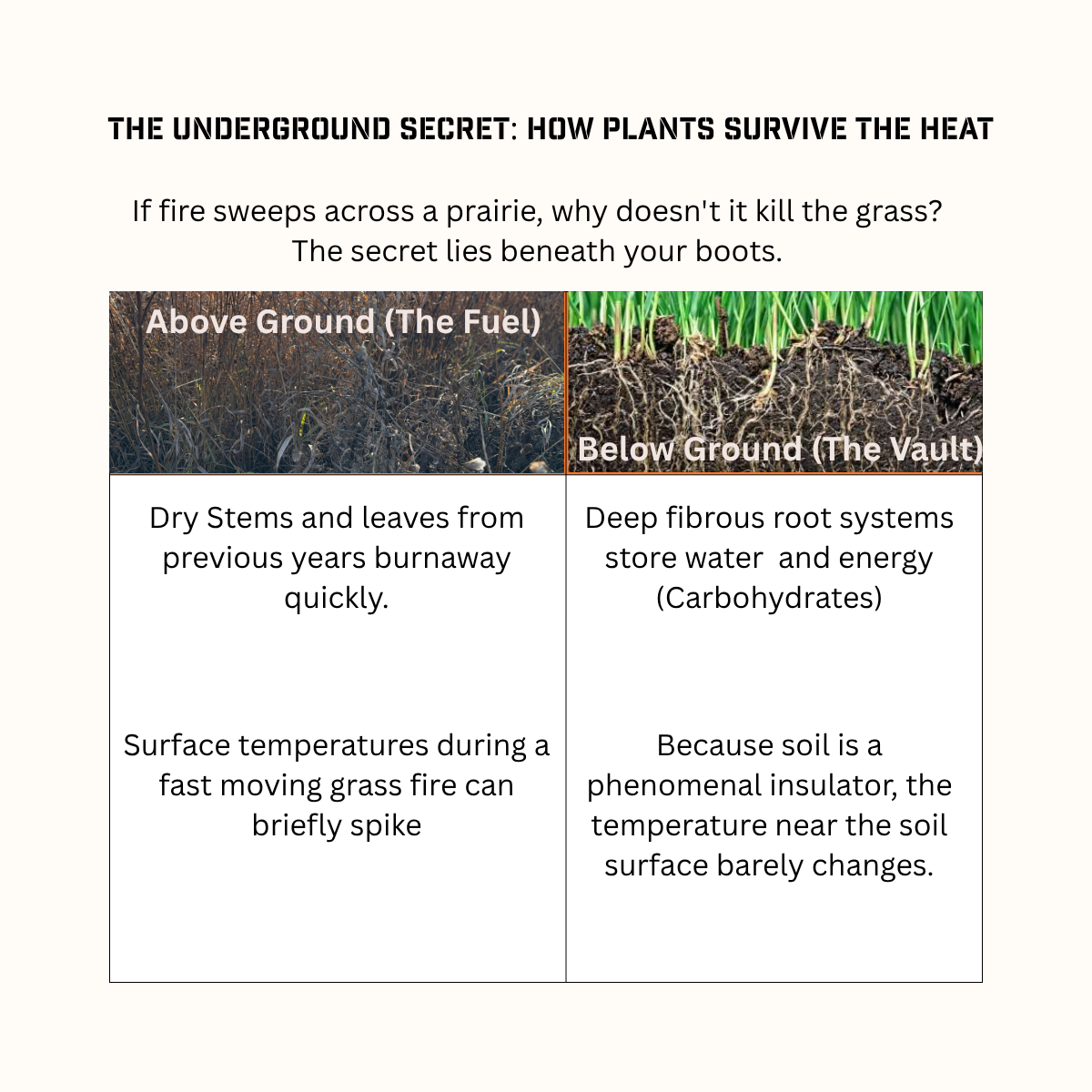
Because the growing points (meristems) of native prairie grasses and wildflowers sit safely tucked below the soil surface, the fire trims away dead clutter without harming the living plant.
Within days, blackened soil absorbs extra warmth from the spring sun, triggering a burst of nutrient-rich green growth.
Enter the Canadian Prairies Prescribed Fire Exchange (CPPFE)
Understanding the science is one thing; safely putting fire on the ground across Alberta, Saskatchewan, and Manitoba is another. That is where the Canadian Prairies Prescribed Fire Exchange (CPPFE) comes in.
Launched as a collaborative hub connecting researchers, conservation groups, universities, ranchers, and Indigenous knowledge holders, the CPPFE acts as a bridge between fire science and real-world land care. Instead of leaving landowners to figure out complex fire physics alone, the Fire Exchange focuses on three practical pillars:
Translating Science into Action: Turning peer-reviewed ecology and fire-behaviour models into plain-language fact sheets, maps, and burn plans.
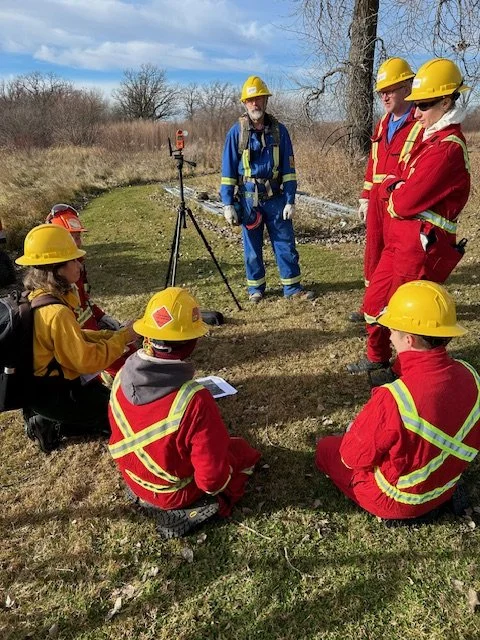
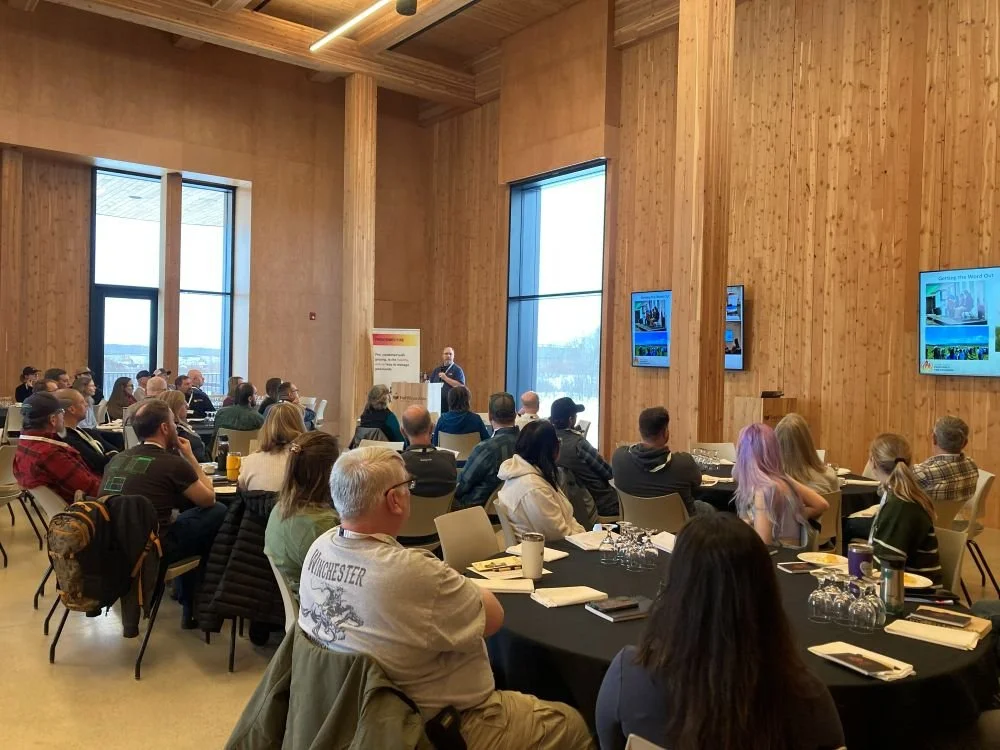
Hands-On Training: Hosting workshops, tours, summits and Prescribed Fire Training Exchanges (TREX) where local ranchers, students, and fire practitioners learn how wind, humidity, and grass moisture dictate how flames move.
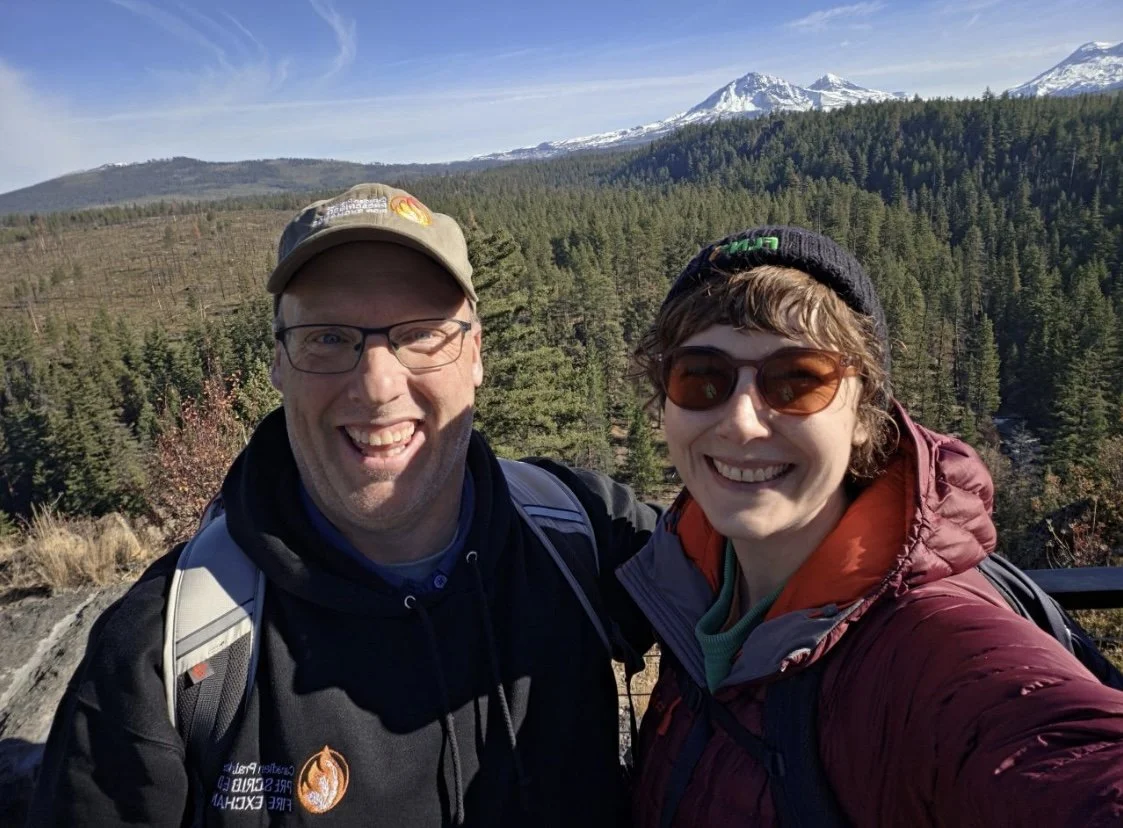
Building Community Capacity: Building networks between prescribed fire practitioners, hosting meetings, and bringing people together to help neighbours form local Prescribed Burn Associations and share specialized safety equipment so small teams can conduct safe, effective burns together.
The "Magnet Effect": Fire + Grazing
One of the most fascinating re-learned concepts championed by prairie fire researchers is pyric herbivory-the partnership between fire and grazing.
Freshly burned prairie grass acts like a magnet for cattle and native wildlife. Because the new shoots are tender and packed with protein, grazers flock to recently burned patches while leaving unburned areas to rest and grow tall. This creates a natural patchwork quilt of short, medium, and tall grass across the landscape-giving everything from burrowing owls to monarch butterflies the exact habitat they need to thrive.
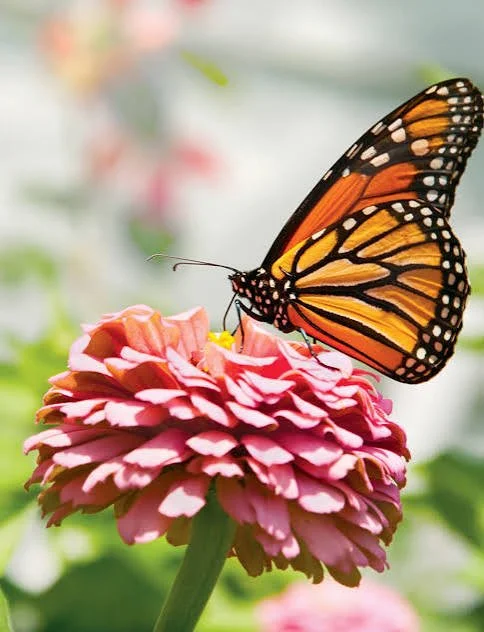
The Monarch Butterfly
Photo Credit Jack and Diane Voelker | June 12, 2017
References & Further Reading
Canadian Prairies Prescribed Fire Exchange (CPPFE). Advancing Prescribed Fire Knowledge, Training, and Conservation. grasslandfire.ca
Gross, D. V., & Lamb, E. G. (2021). Strategies to reintroduce prescribed fire as a grassland management tool in Saskatchewan. University of Saskatchewan.
Powell, J., Martin, B., Dreitz, V. J., & Allred, B. W. (2018). Grazing preferences and vegetation feedbacks of the fire-grazing interaction in the Northern Great Plains. Rangeland Ecology & Management, 71, 45–52.
Valkó, O., et al. (2016). Supporting biodiversity by prescribed burning in grasslands – A multi-taxa approach. Science of the Total Environment, 572, 1377–1384.
Natural Resources Canada – Canadian Forest Service (2012). Prescribed Burning in the Tallgrass Prairie Ecosystem. Great Lakes Forestry Centre Research Note No. 55.