
Great Plains Fire Summit
August 3-6, 2026· Northwestern Oklahoma State University Student Center, 709 Oklahoma Boulevard, Alva, OK 73717
Theme: Neighbors in Fire, Partners in Conservation
Getting There
"Life is a Highway" was the perfect soundtrack for the 1,320-mile drive from Saskatoon to Alva, Oklahoma, for the Great Plains Fire Science Exchange's Great Plains Fire Summit for our team members, Renny and Roy.
Mile by mile through the Dakotas, Nebraska, and Kansas, the landscape told its own story, eastern red cedar steadily reclaiming native grassland, a vivid reminder of what happens when fire disappears from fire-adapted ecosystems.
It's a challenge that doesn't stop at the Canada-U.S. border, and exactly why connecting with practitioners and partners across the Great Plains matters so much. Sometimes the journey itself is a reminder of why this work matters.
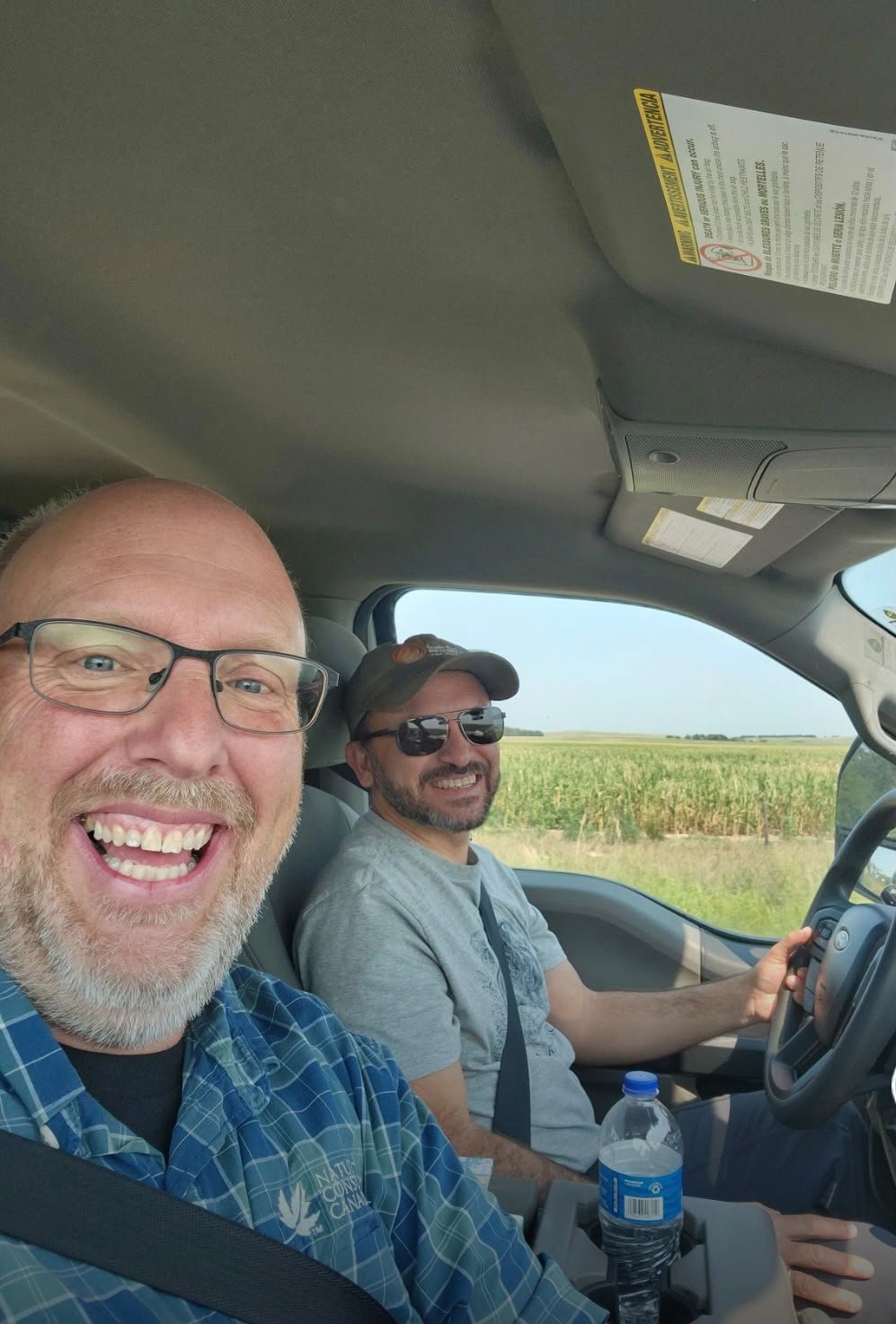
Renny and Roy cruising through the highway to Oklahoma
Photo Credit: Renny Grilz, PAg
Highlights
This year's summit theme captured exactly what the Great Plains fire community is about: cooperation across boundaries.
A few highlights from the event:
Collaboration across the region: Sessions emphasized how local and regional partnerships on prescribed burning drive better conservation outcomes, echoing the shared challenges between the Canadian Prairies and the U.S. Great Plains.
Field tour to the Gyp Hills: A bus tour to private ranches showcasing prescribed fire in action: restoring wildlife habitat, supporting livestock grazing, and aiding wildfire recovery on working landscapes. The tour saw the team visiting the Anderson Creek Wildfire and Contrasting Managed versus Unmanaged Tree Encroachment, a 367,620 acre impacted by the Anderson Creek wildfire in 2016. They explored the extreme fire effects, range and stream recovery.
Culture, economics, and science of fire: Presentations connected the practical, economic, and ecological dimensions of fire ecology, grounding the summit in real land-management decisions, not just theory.
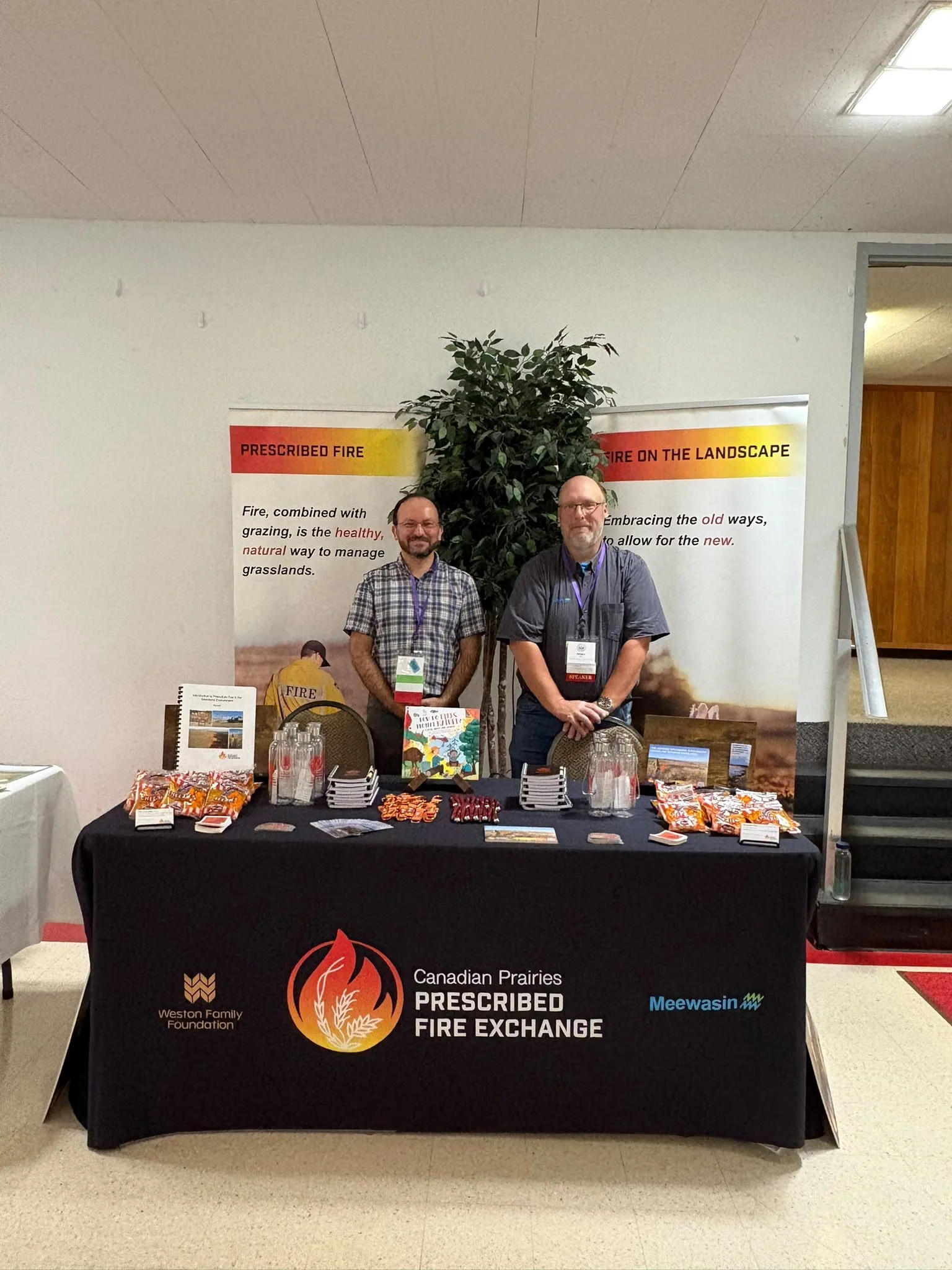
The CPPFE booth was buzzing at the Great Plains Fire Summit. Sharing resources on prescribed fire and grassland stewardship with fellow practitioners, researchers and land managers from across North America.
Nothing Like connecting face to face with people doing this work on thew ground!
Our presence at events like this is made possible with support from the Weston Family Foundation and Meewasin Valley Authority
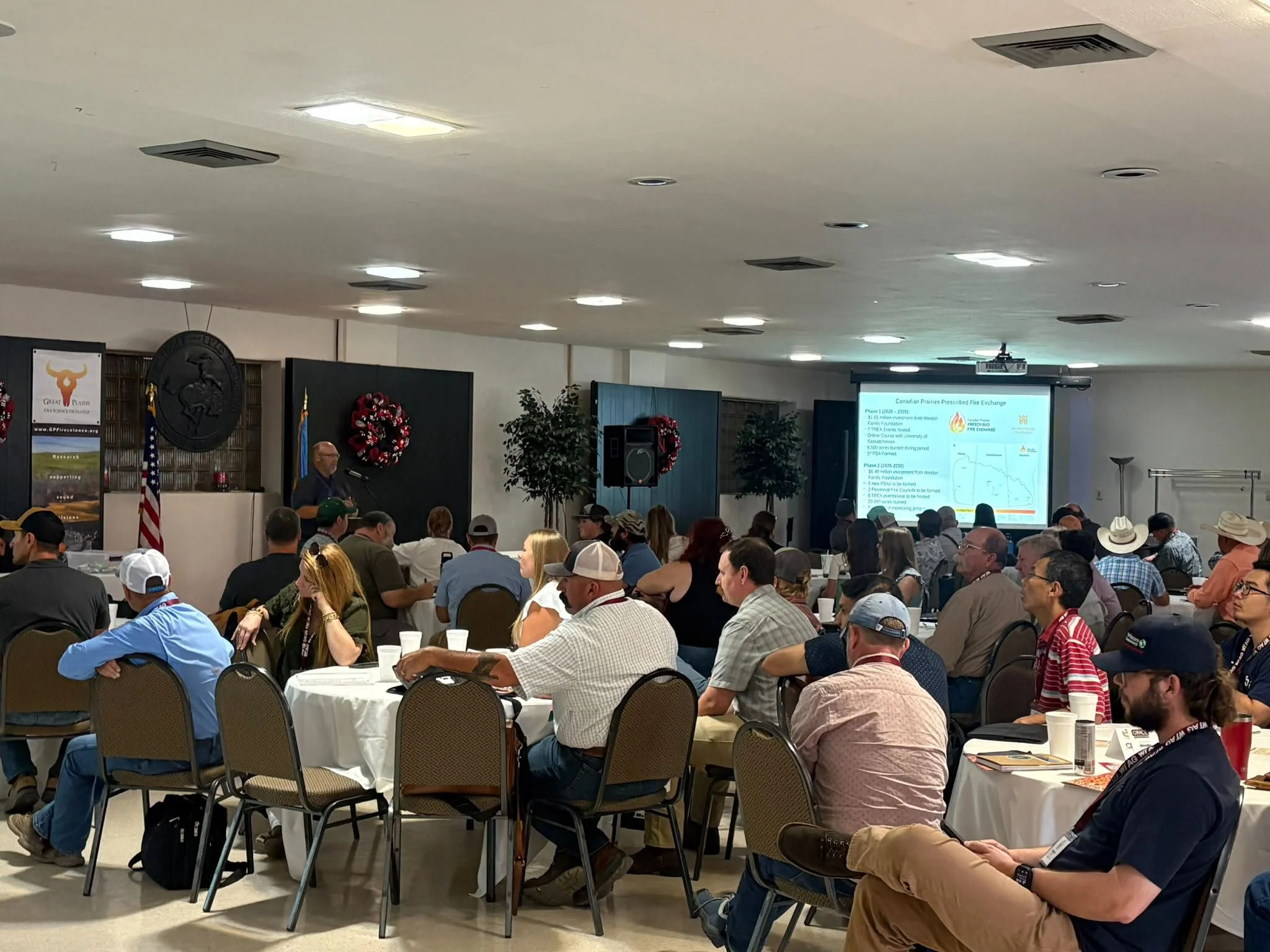
Renny Grilz, PAg giving an update on Prescribed Burn Associations in Canada.
Photo Credit : Roy Vera Velez
Panel Discussion: Renny Grilz, PAg took part in a panel alongside Aaron Druery of the City of Lincoln, Nebraska, tackling a topic that doesn’t get nearly enough attention; prescribed fire in urban areas. Managing fire near cities and towns comes with its own set of challenges, from public perception to logistics, making this a valuable conversation for anyone working at the intersection of fire management and urban land use.
Want to talk more about Urban Prescribed Fire Management in your community?
Sign up to join the conversation!
Research Presentation: Roy Vera-Velez also presented his research on the impacts of prescribed fire and patch-burn grazing in Canadian grasslands, adding a Canadian Prairies perspective to a conversation largely centered on the U.S. Great Plains. Patch-burn grazing; a method that combines fire and livestock movement to create a shifting mosaic of habitat across the landscape, has become an increasingly important tool for balancing grazing productivity with wildlife and ecosystem health, and his work offered summit attendees a firsthand look at how it’s being applied and studied north of the border.
Curious about patch-burn grazing on the prairies ?
Reach out to us to learn more about Roy’s research.
Key Takeaways
Fire is a multi-objective tool: Prescribed fire simultaneously supports wildlife habitat restoration, livestock grazing, and woody plant control, and it can accelerate ecosystem recovery after severe, unplanned wildfires.
Combating woody encroachment: Decades of fire suppression have let invasive species like eastern redcedar and ashe juniper, aspen, overtake native grasslands. Restoring natural fire intervals; paired with mechanical removal methods like chaining for standing dead trees is key to lowering fuel loads and reclaiming water resources.
Bridging regulatory and knowledge gaps: Prescribed Burn Associations need seamless, interstate frameworks to overcome regional policy divides, and closing the communication gap between university researchers and working rangeland practitioners speeds up how quickly new safety practices reach the field.
Trust and culture drive long-term success: Lasting conservation depends on deep trust between private ranchers, state agencies, and Tribal partners, and on shifting the broader mindset around fire, from hazard to be feared, to a controlled, cultural, and economic tool.
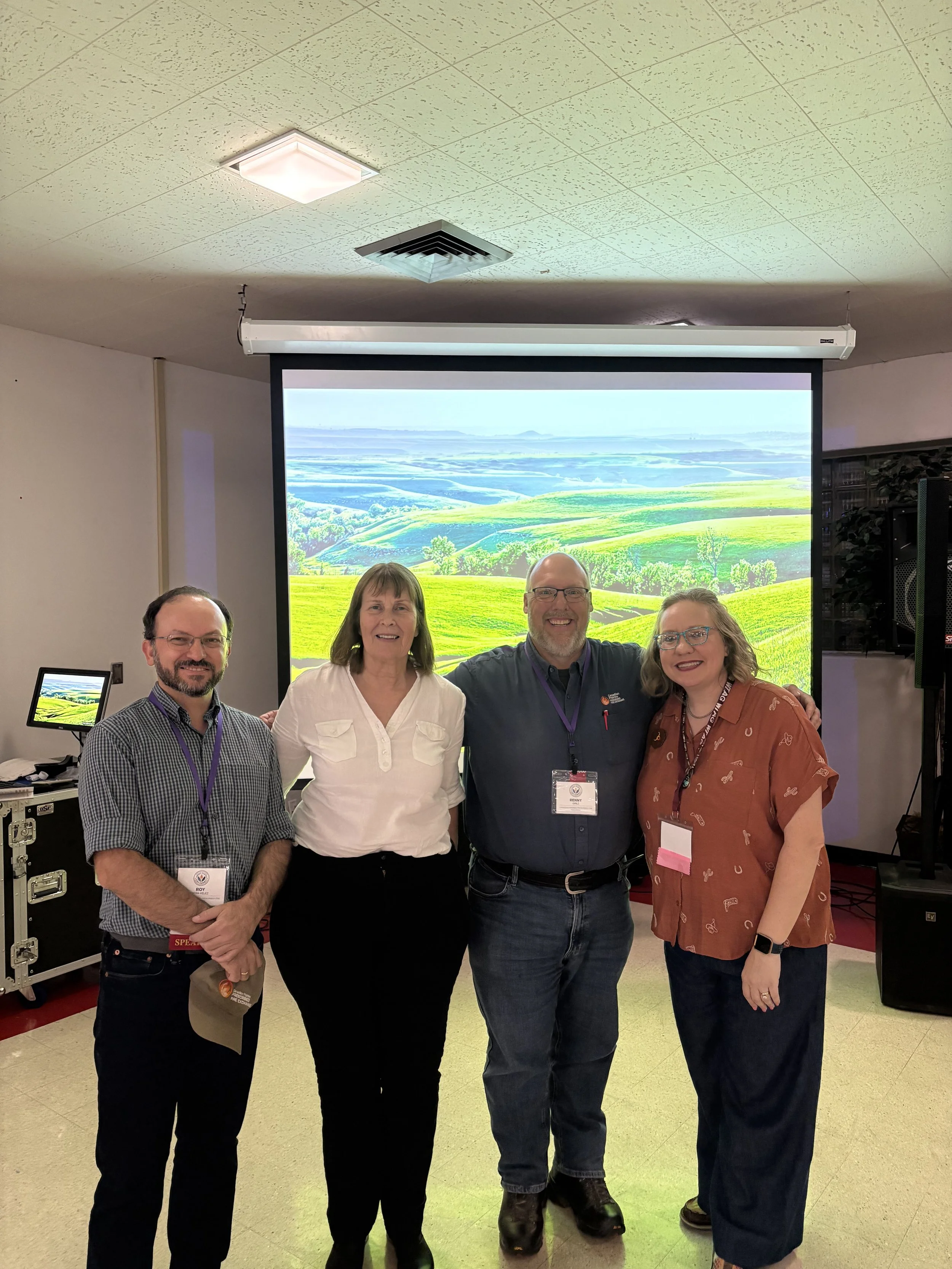
L-R Roy Vera Velez(CPPFE), Carol Baldwin(GPFSE), Renny Grilz(CPPFE), Lori Bammerlin (GPFSE) at the 2026 Great Plains Fire Conference in Oklahoma.
None of this would have come together without the work of Carol Baldwin and Lori Bammerlin of the Great Plains Fire Science Exchange, who were part of the summit organizing team. Their efforts brought together researchers, land managers , ranchers and Tribal Partners from across the Great Plains and Canadian Prairies for three days of shared learning ; a reminder that strong partnerships like the one between CPPFE and the Great Plains Fire Science Exchange are what make cross border conservation work possible.
Thank you, Carol and Lori for building a space where this kind of knowledge- sharing could happen!
Check our events calendar for more information on upcoming events!