

Fire, Grazing & Grassland Management at Aberdeen Municipal Pasture
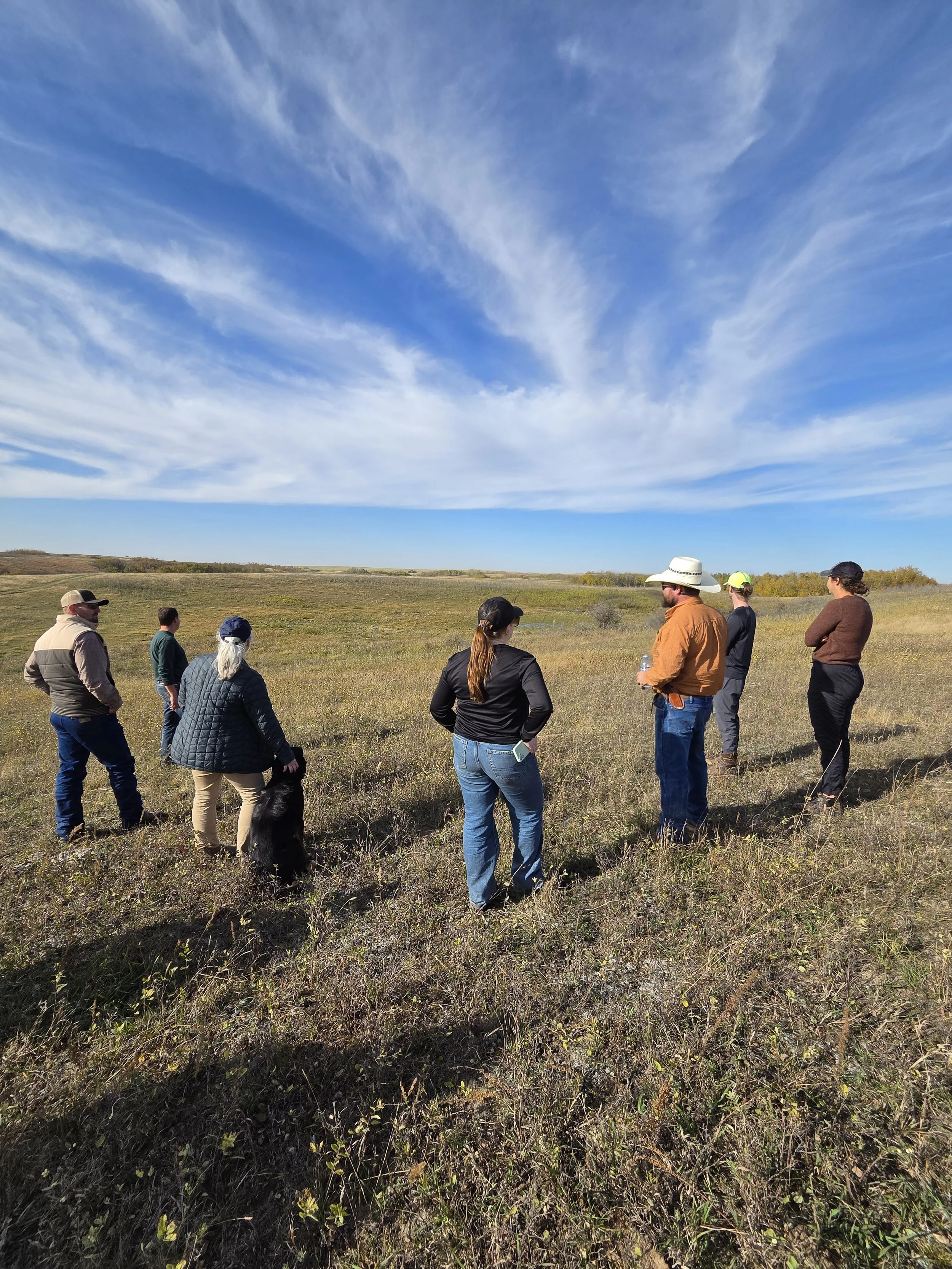
On October 6, the Canadian Prairies Prescribed Fire Exchange (CPPFE) toured the Aberdeen Municipal Pasture near Aberdeen, Saskatchewan, hosted by the Nature Conservancy of Canada (NCC). The visit offered a close look at how prescribed fire and grazing can work together on a working grassland.
Tour highlights
Pasture Manager Sam Morrison shared the prescribed fire and grazing work underway at the pasture. The group visited areas burned during the Canadian Prairies Prescribed Fire Training Exchange (TREX) in October 2024, as well as the patch-burn grazing sites from TREX in October 2025.
The 2025 burns targeted numerous patches of western snowberry and wolfwillow. These dense shrub areas had been difficult for cattle to access. This grazing season, cattle have been actively using the burned patches.
Joining the tour was Janelle Rudolph of Glacier Media / The Western Producer, who came to learn more about prescribed fire and patch-burn grazing on Saskatchewan's working grasslands.
Lessons learned
Fire can open up access. Burning dense shrub patches gave cattle access to areas they previously struggled to use.
Fire can influence livestock distribution. Cattle's use of the burned patches showed how prescribed fire can shape where animals graze, along with forage access and vegetation management.
Time on the ground matters. Seeing sites one and two years after fire is key to understanding how burning and grazing can work together to manage and restore prairie landscapes.
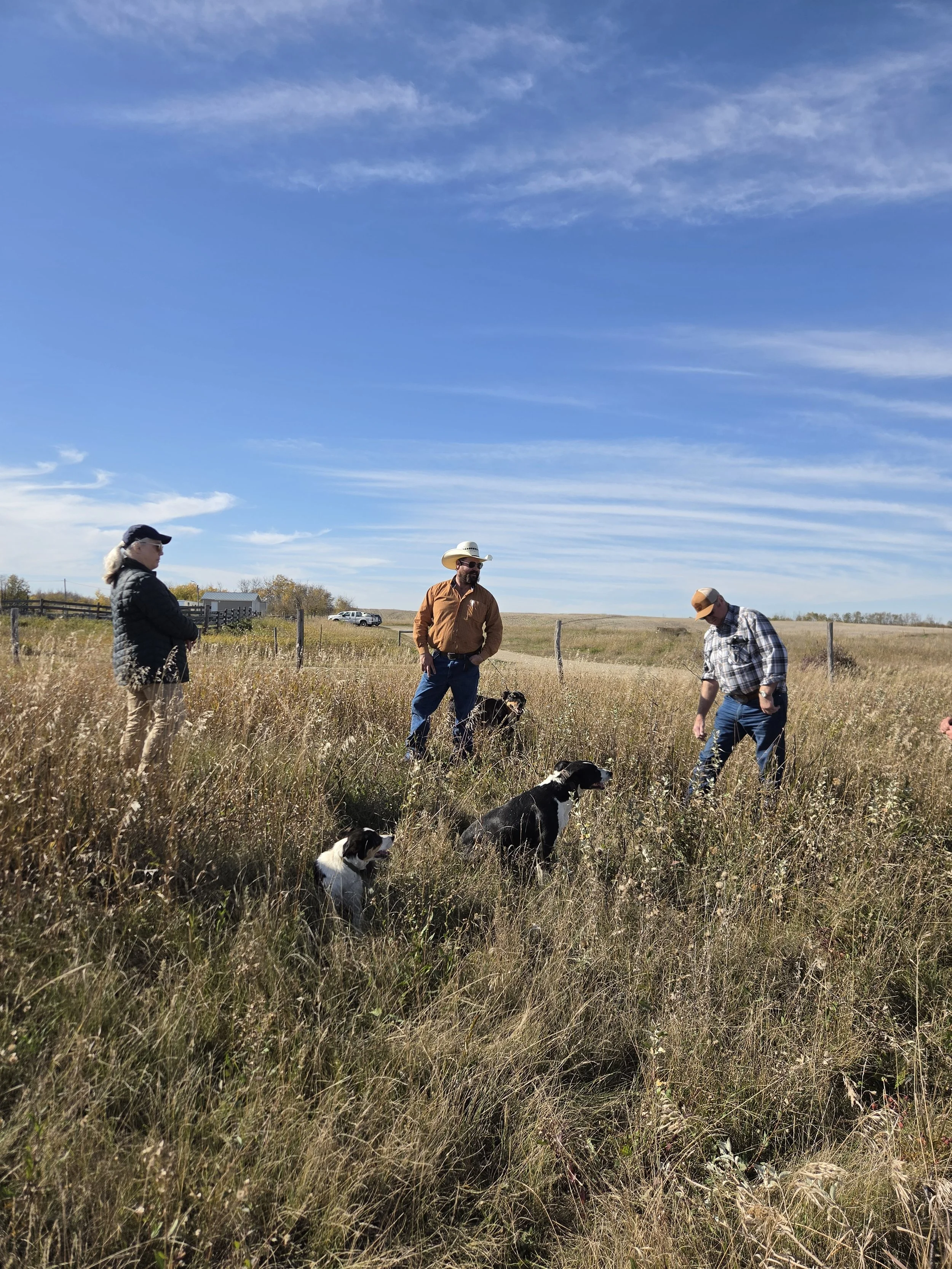
Field conversations teach. Walking the sites and discussing them with the people managing the land added context no report could.
A big thank you to Sam Morrison and Casey of the Nature Conservancy of Canada for hosting, sharing their experience, and leading some great discussions in the field.
Learning from fire. Learning from grazing. Learning from the land.