
TREX Training in Action - From Prescribed Fire to Wildfire Response
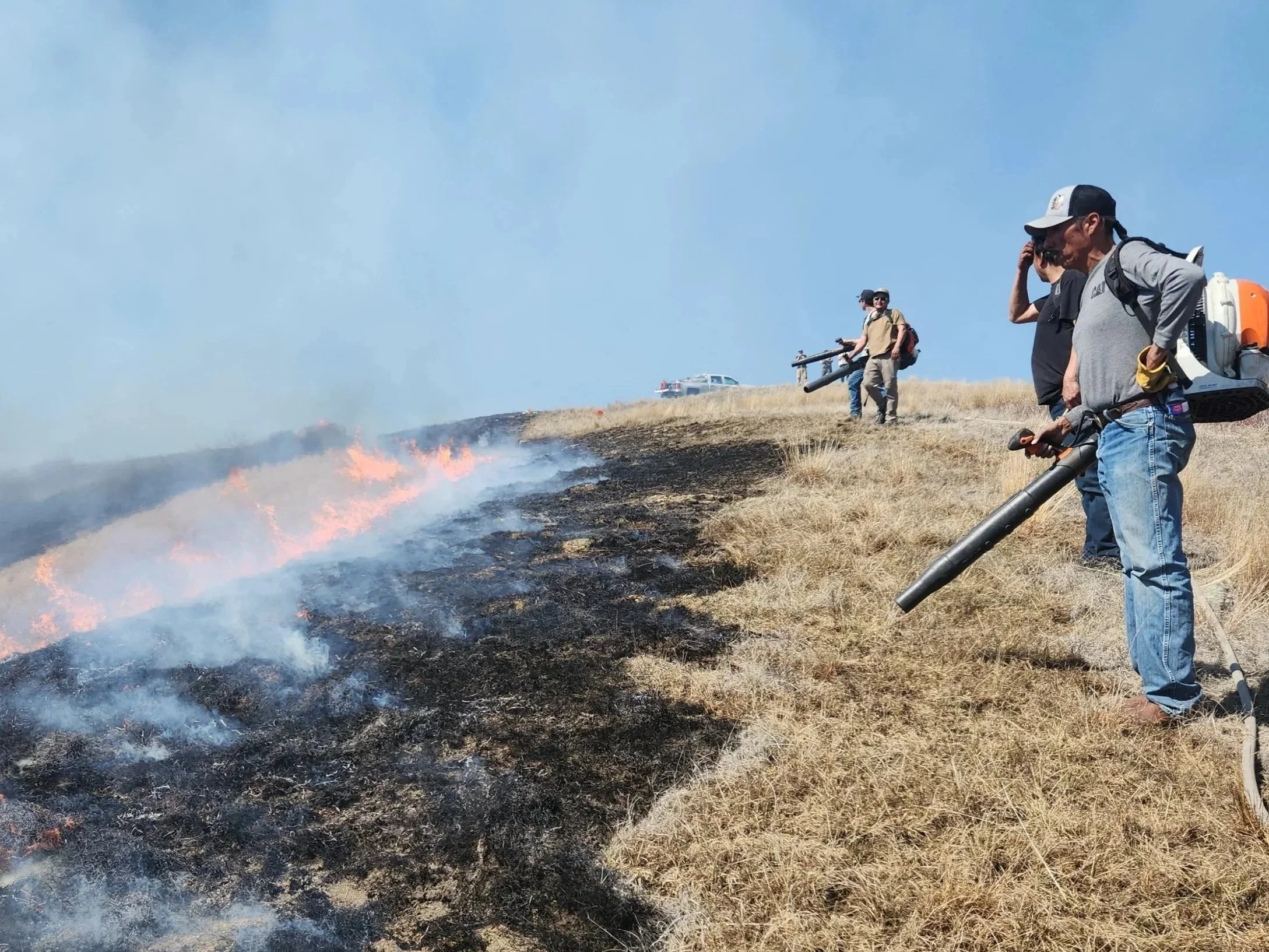
Wildland fire responders use leaf blowers while blacklining, a prescribed fire technique, to help contain a wildfire at Standing Buffalo First Nation near Regina, Saskatchewan, in April 2026. The response showcased TREX training in action, as the hands-on experience and inter-agency collaboration developed during the exchange helped crews work together effectively to manage a real-world wildfire incident.
The value of TREX
This spring marked the first year that a TREX (Prescribed Fire Training Exchange) event has been held in Regina and I wanted to highlight the importance of inter-agency collaboration and training with a real-world example that I was fortunate to experience. As many folks know, individual organizations often do not have the personnel to pull off their own prescribed fire, so organizations work in a mutual aid fashion of you help us out, we help you out.
As it goes in Saskatchewan, we ended up experiencing inclement weather during our TREX and as a result, we only had two days of weather conducive to burning. I share this because it meant that we had to rush the training more than we would have liked to because those two burn days occurred at the beginning of the week. While rushing through training is not ideal, it does give you the opportunity to trust and rely on others with more experience than yourself, leading to learning opportunities you may not otherwise get.
On our second day of TREX, we were on a burn unit where the border we would be back burning from had not been mowed. After some humming and hawing about how to pull it off, one of the attendees, Corey Coons from Silton Volunteer Fire Department suggested we pull water from the lake and using a long hose line, put down a thick wet line by hand. Fortunately, I had worked with Austin ???, the day before, testing out our Floto Pump on a controlled burn of some wood piles. Austin came to the TREX event with 3 years of wildfire experience, so he knew his way around this equipment and was able to share his expertise with me. We quickly zipped back to the cache and the two of us worked the hose to lay down a nice wet line as we worked our way up the east side of the burn unit. This was an excellent example of how inter-agency collaboration can bring new ideas and techniques to the table.
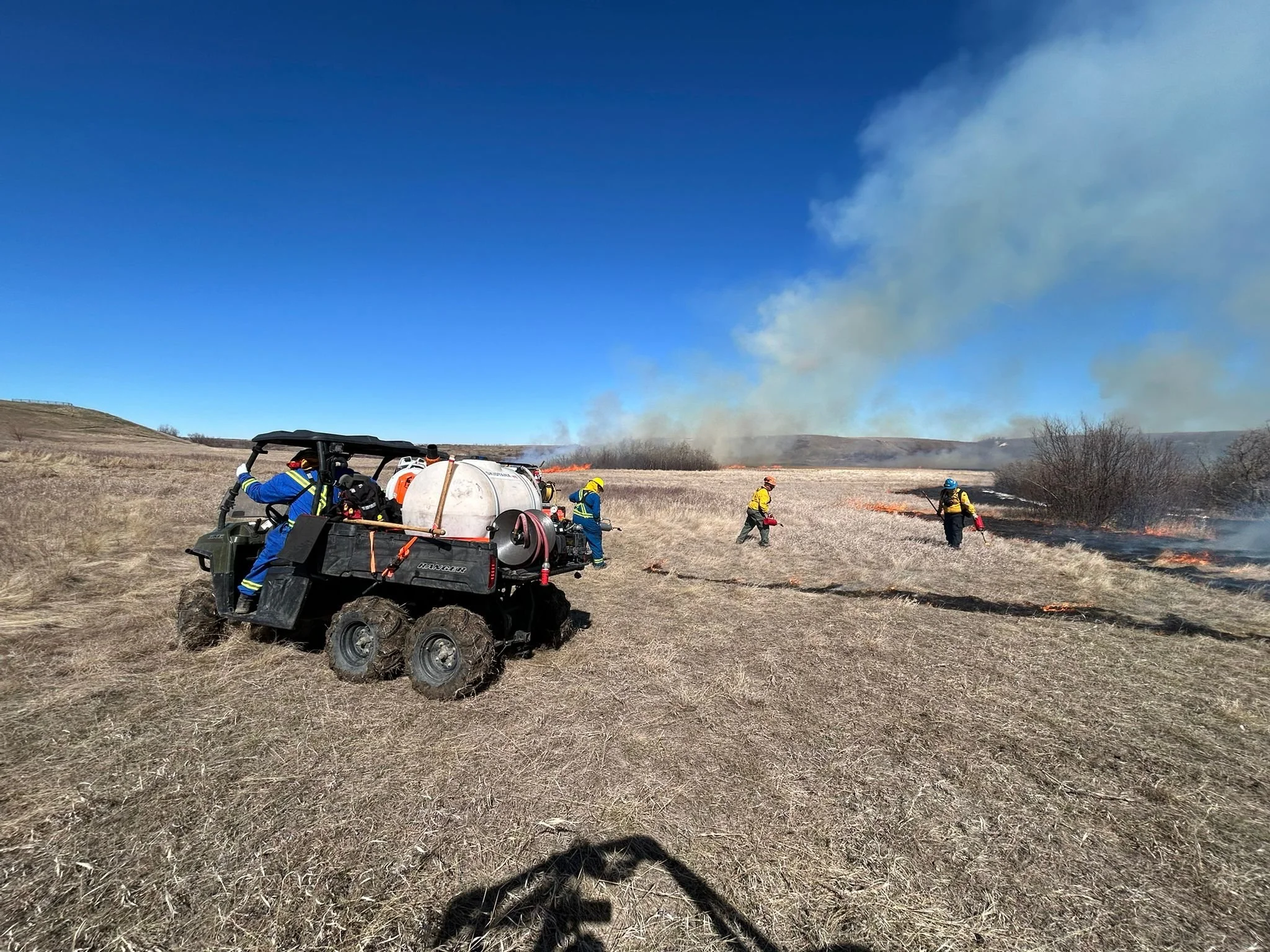
Photo: Joe Milligan
Participants at Oskana Plains TREX 2026 conduct a prescribed burn near Regina, SK. Training exercises like this provide valuable opportunities to develop practical fire skills, build relationships across agencies and organizations, and strengthen the collaboration needed to safely and effectively use fire on the landscape.
Putting new skills to work at Echo Valley
Fast forward one week and we had a burn to pull off in Echo Valley Provincial Park outside of the TREX event. On this fire, we (Provincial Park staff) were very fortunate to have the help of Pasqua, and Standing Buffalo First Nation, as well as the chief from the Fort Qu’Appelle Fire Department. Many of the participants came with fire experience but for some, it was their first chance to get on some of the tools used in prescribed/wildfire situations. The day went very well; we ended up mostly controlling it by hand using leaf blowers because we had a lot of people on the fire line. The crew was fun to work with and we made some great connections.
An unexpected call to action
The next day, I went out to our burn site to make sure that all the hot spots were out and that the fire would remain contained. After putting everything out, we rounded a corner of the burn unit and noticed smoke across the valley. This smoke was not related to our fire, but we could tell that it was occurring on Standing Buffalo First Nation.
Being that I was already in my fire coveralls and had been so grateful for Standing Buffalo’s help the day prior, I drove towards the smoke to see if I could help. When I got to the top of the valley where the incident command had been set-up, I quickly linked up with the Standing Buffalo crew. The fire was currently working its way down one side of a coulee and it was important to get it contained before it hit the bottom of the coulee and started coming up the valley with more ferocity. The terrain made it difficult to attack the fire with hand tools so after taking stock of available equipment and personnel, we decided we would light a back burn on the upwind side of the fire at the top of the coulee so that it could slowly burn down and meet the wildfire at the bottom of the coulee and consume all of the fuels in between. Fortunately, I had packed a significant amount of wildfire hose with me and between the three responding teams, enough hose was scrounged up to make it all the way down the length of the coulee with Fort Qu’Appelle fire truck at the top of the valley supplying the water. Since we had worked so well together the day before and I had the most experience with back burning, I led the Standing Buffalo crew down the length of the coulee. Taking what I had learned the week prior, I fanned out a fireguard with the hose, and taking what they had learned the day prior, the Standing Buffalo crew kept the flames back with the leaf blowers. The only thing we didn’t have was a drip torch, but we had lots of smokers, so we had one member of the crew light the grass every 3 feet off the wet line. The timing could not have been more perfect nor the execution more textbook. The backfire slowly made its way down the coulee where it met up with the wildfire and the fire put itself out.
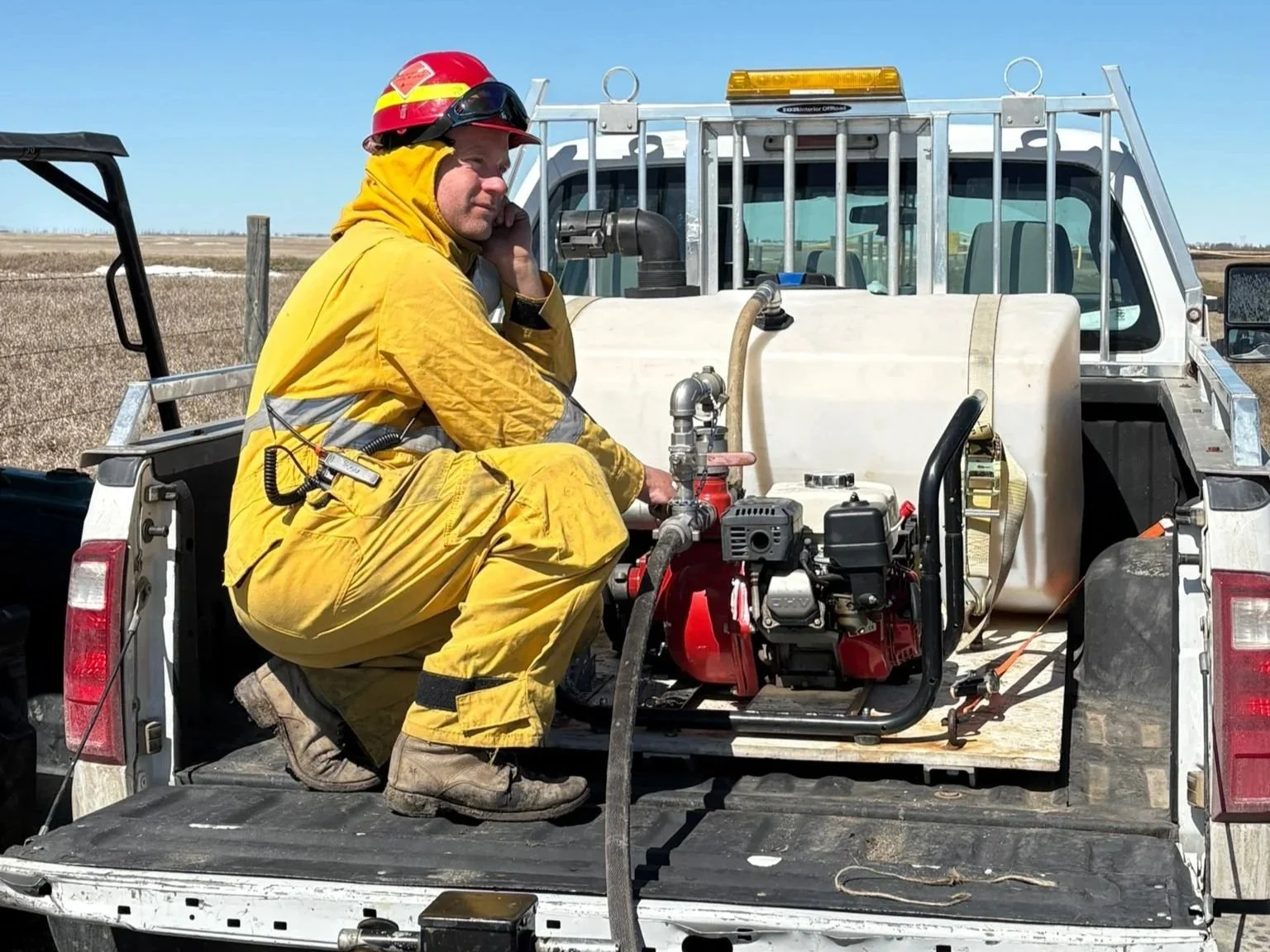
Jeff operates a portable water pump during Oskana Plains TREX 2026 near Regina, SK. Beyond fireline operations, TREX provides participants with hands-on training in the equipment, tools, and techniques used in prescribed fire.
Photo: Roy Vera-Velez
Beyond training…
Ten more minutes of putting out the fire where the hose could not reach, and we were eating pizza together back at the top of the valley. Since then, I have been out on another fire with the Standing Buffalo crew and I’m certain we will keep working together in the future, sharing laughs, pizza and stories from the fire line.