

Understanding Prescribed Fire
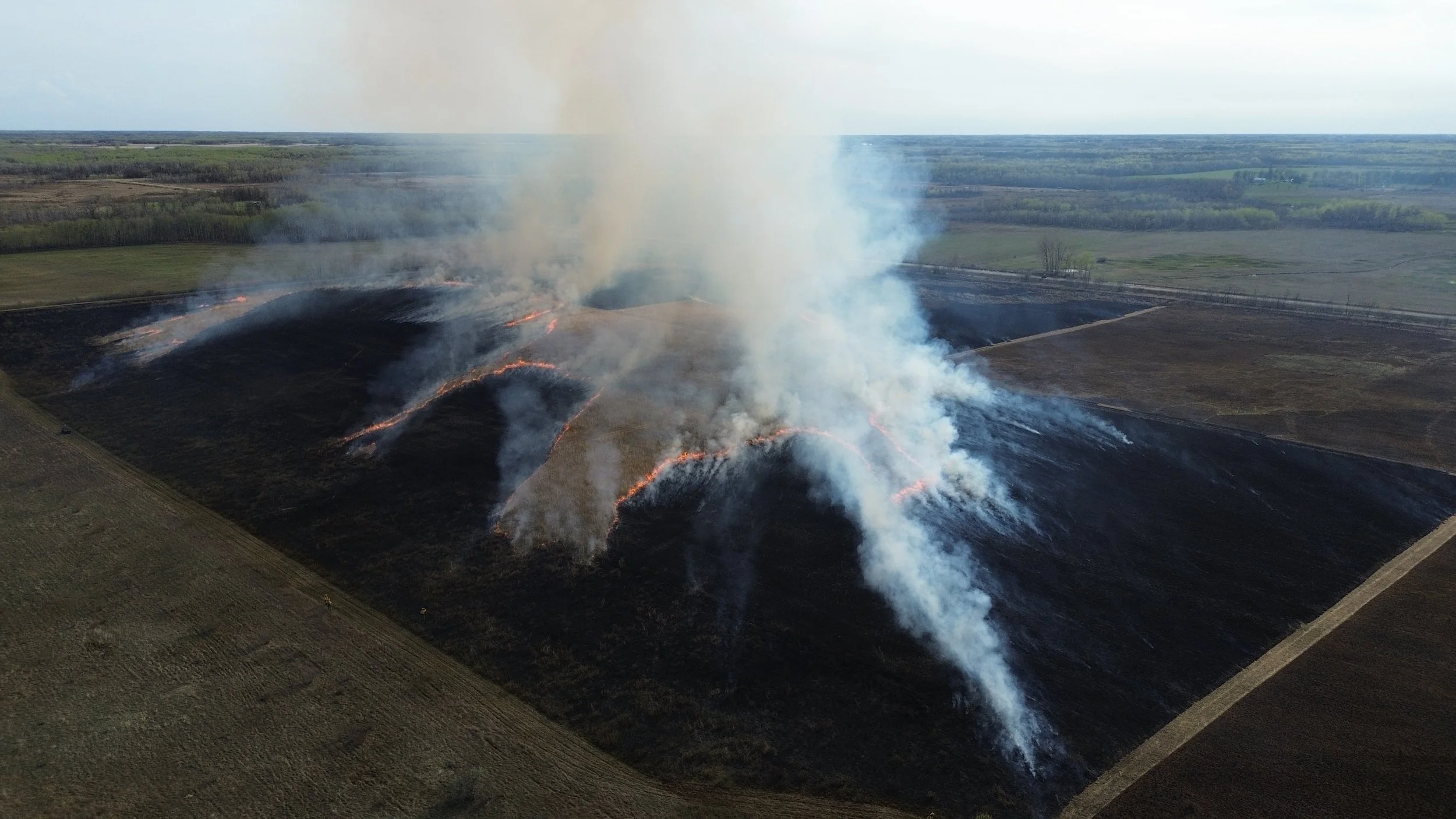
Fire has been a natural part of many ecosystems for thousands of years. Long before modern firefighting existed, naturally occurring fires and Indigenous cultural burning practices helped shape Canada's forests, grasslands, wetlands, and oak savannahs, creating diverse, resilient landscapes. Today, prescribed fire continues this important role using a carefully planned, science-based approach.
A prescribed fire is a deliberately ignited and professionally managed fire conducted under specific environmental conditions to achieve defined ecological, cultural, or land management objectives. Unlike wildfire, prescribed fire is planned in advance, with site preparation, monitored throughout the operation, and carried out by trained fire practitioners following strict safety protocols.
Prescribed fire is used to:
• Reduce wildfire risk by removing excess vegetation and accumulated fuels
• Restore and maintain healthy ecosystems
• Improve wildlife habitat and biodiversity
• Encourage native plant growth and regeneration
• Control invasive species
• Recycle nutrients back into the soil
• Support ecological resilience and natural processes
• Improve livestock distribution and forage quality
Every Prescribed fire follows a comprehensive burn plan that considers:
• Weather conditions
• Wind speed and direction
• Relative humidity
• Fuel moisture levels
• Burn boundaries and control lines
• Smoke management
• Public and worker safety
• Personnel and equipment requirements
• Emergency contingency procedures
• Ecological and management objectives
• Monitoring plan
If conditions fall outside approved parameters, the burn is postponed until conditions are safe and suitable.
Prescribed Fire vs. Wildfire
Although both involve fire on the landscape, prescribed fire and wildfire are fundamentally different.
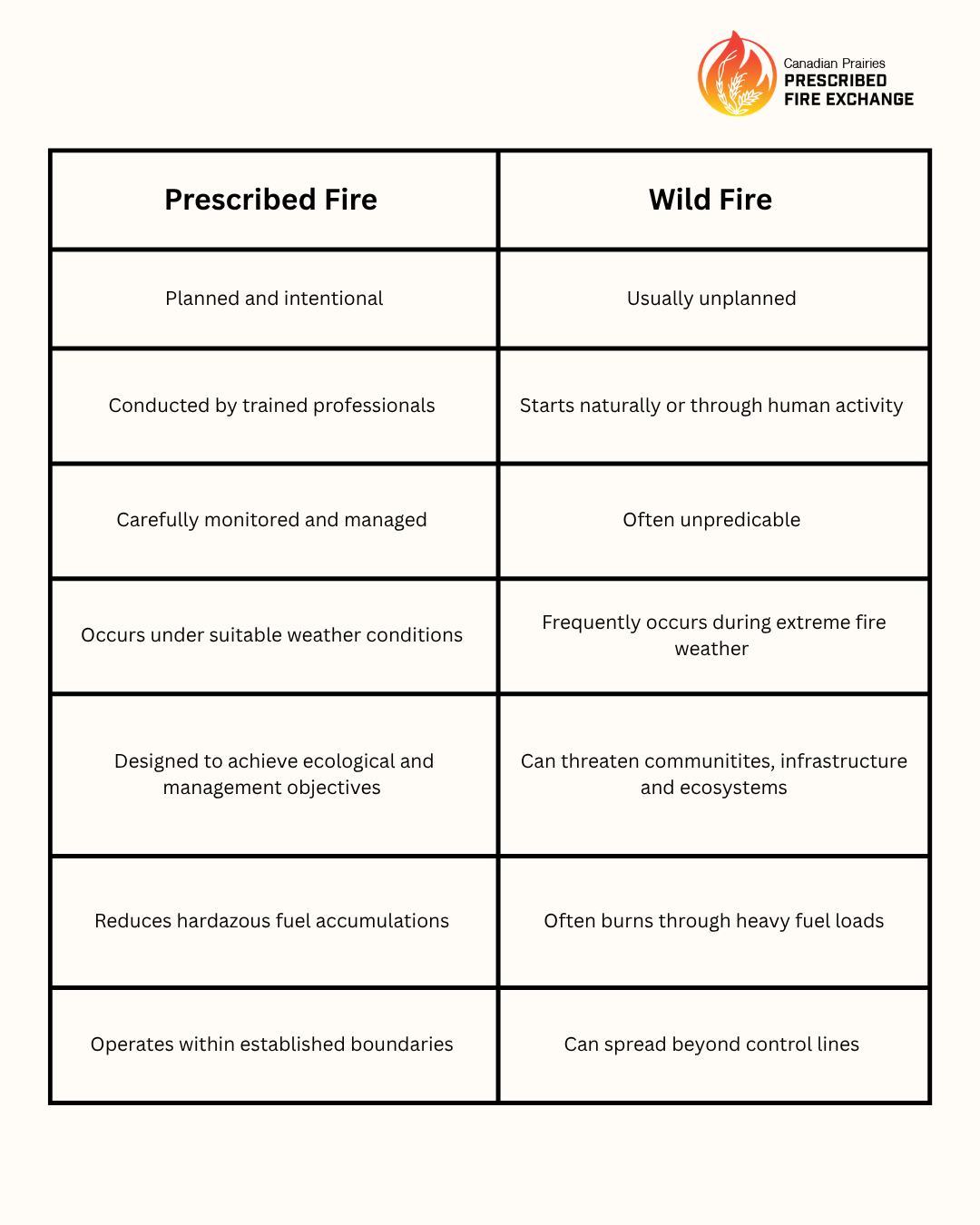
Difference Between Prescribed Fire and Wild Fire
Why Do Ecosystems Need Fire?
Many ecosystems evolved with regular fire and depend on it to remain healthy and resilient.
Periodic burning helps remove accumulated vegetation and dead plant material, stimulates the growth of native plants, recycles nutrients into the soil, creates habitat diversity, improves forage quality, and maintains ecological balance. Some species, including certain grasses, shrubs, birds, and pollinators, benefit directly from the habitat conditions created by fire. When fire is excluded from the landscape for long periods, forests and grasslands can become overcrowded with dense vegetation and heavy fuel loads. These conditions often increase the likelihood of more intense and destructive wildfires.
Prescribed fire helps restore a natural balance by reintroducing fire under carefully controlled conditions.
Prescribed Fire in Action
Prescribed fire has been successfully used across Canada and the United States for decades to improve ecosystem health and reduce wildfire risk.
Grassland Restoration in the Prairie Provinces
Prescribed burning has been widely used throughout prairie grasslands to control invasive species, reduce woody encroachment, and promote native plant communities. Many native prairie species are adapted to periodic fire and respond with vigorous growth following a burn, improving habitat for birds, pollinators, and other wildlife.
Oak Savannah Restoration in Southern Ontario
Fire has played a critical role in restoring rare oak savannah and tallgrass prairie ecosystems in southern Ontario. Regular prescribed burns help maintain open-canopy habitats, reduce invasive vegetation, and support numerous species at risk that depend on these fire-adapted ecosystems.
Wildfire Risk Reduction in Western Canada
In British Columbia, Alberta, and Saskatchewan prescribed burns have been used to reduce hazardous fuel accumulations near communities and critical infrastructure. By removing excess vegetation before wildfire season, these treatments can slow wildfire spread, reduce fire intensity, and provide safer conditions for wildfire response efforts.
Forest Health and Wildlife Habitat Improvement
Across many forested landscapes, prescribed fire is used to create habitat diversity and encourage regeneration of native vegetation. The resulting mosaic of burned and unburned areas supports a wider range of wildlife species and improves overall ecosystem resilience.
Working With Nature-Not Against It
Modern land stewardship recognizes that fire is not simply a force to suppress, it is a natural process that many ecosystems need to thrive.
Prescribed fire allows land managers, Indigenous communities, conservation organizations, and government agencies to safely reintroduce fire where it provides ecological benefits. When applied under the right conditions, prescribed fire helps restore natural processes, improve forage quality and livestock distribution, improve ecosystem health, enhance biodiversity, and reduce the risk of severe wildfires.
By working with nature rather than against it, prescribed fire helps create healthier landscapes, more resilient ecosystems, and safer communities.
Good fire today helps enhance our landscapes tomorrow-building stronger, healthier ecosystems for generations to come.