

Photo Credit: Erica Maier
There is a joke that ecologists tell each other, half-serious, in the smoke line during a spring burn: "the fastest way to green up a prairie is to set it on fire."
It sounds like sabotage dressed up as horticulture. But stand at the edge of a grassland unit an hour after the flame front has passed, and the joke stops sounding like one. The black stubble is still ticking with heat. The air smells like a campfire that argued with a hayfield. And within days - sometimes hours, the char begins to blush green at the base, as if the fire had done the one thing fire is supposed to be incapable of doing.
It hadn't, of course. Not literally. But the metaphor holds up better than most metaphors do, because prescribed fire in grassland ecosystems behaves less like destruction and more like irrigation with extra steps. It releases what water alone cannot: nutrients locked in dead biomass, sunlight trapped under years of litter, warmth held hostage by insulating litter. Fire, in a prairie, is a plumbing system. It just happens to be built out of flame instead of pipe.
The Prairie's Debt to Disturbance
Grasslands are not landscapes that tolerate fire. They are landscapes that were built by it, in partnership with bison, drought, and lightning, over roughly ten thousand years of Holocene improvisation. Remove fire from a prairie and you do not get a static meadow preserved in amber. You get a slow-motion invasion - woody shrubs creeping in from the margins, a litter layer thickening into a wet, cold blanket that suppresses seed germination, and a steady erosion of the very biodiversity that made the prairie worth protecting in the first place. Fire suppression, ironically, is the more radical intervention. Burning is just the prairie returning to form.
This is the part visitors find hardest to accept: the prescribed fire crew isn't managing a catastrophe. They're managing a checkup. A well-timed prescribed fire behaves like a scalpel, not a bomb - clearing brush, cycling nutrients, and resetting the competitive balance between grasses and the trees that would otherwise shade them out.
Reading Fire by Its Colors
Anyone who has stood behind a drip torch will tell you that fire has a vocabulary, and it speaks almost entirely in colour. Learn to read it, and a burn stops looking like chaos and starts looking like a conversation.
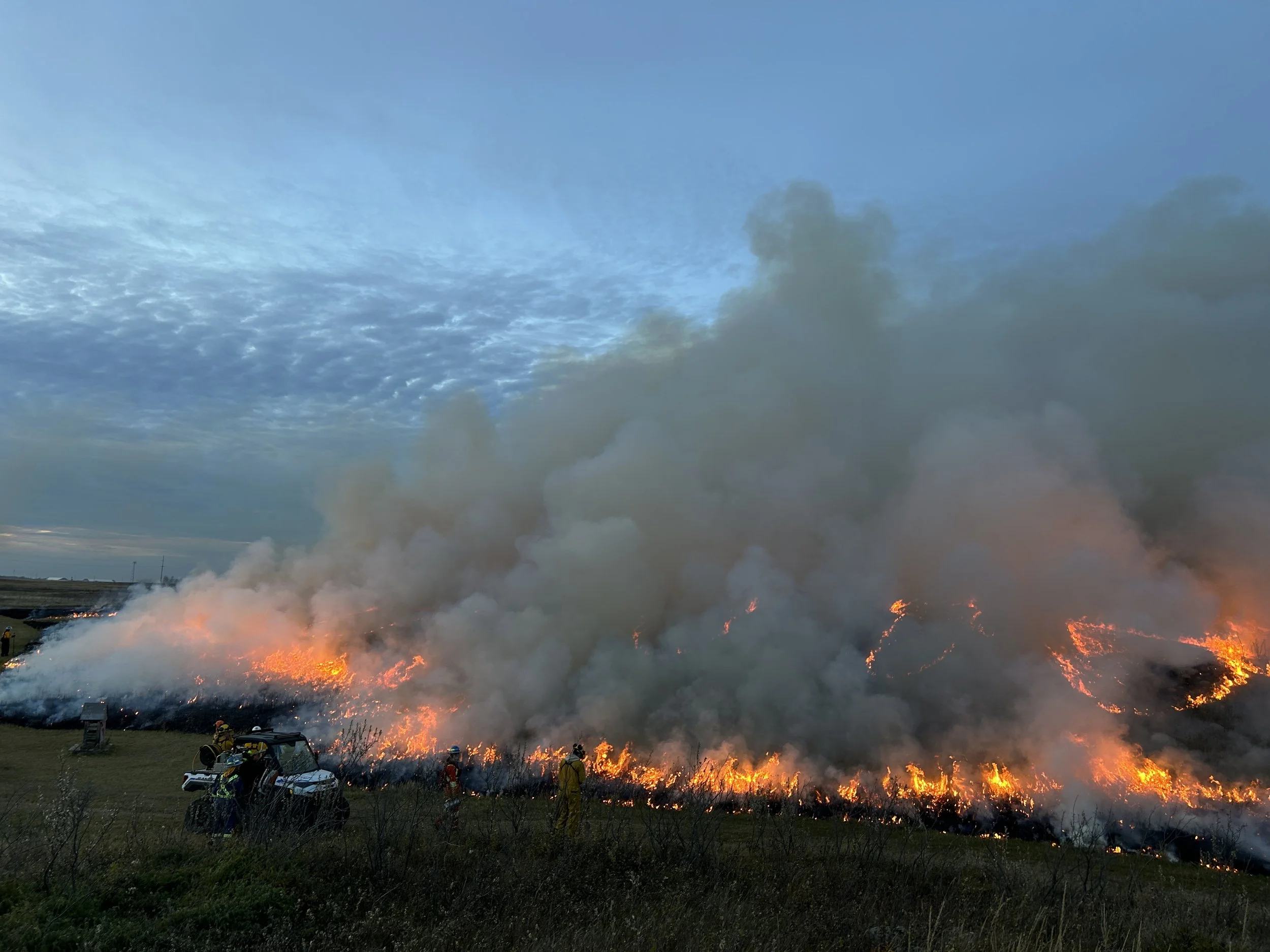
Red is the color of combustion at its most honest - the visible signature of a flame front working through cured grass at or near its hottest, most active phase. It's the color crews watch most carefully, because red flame in dry, fine fuel means fast-moving fire, and fast-moving fire is precisely what a prescribed burn is engineered to be: quick, shallow-rooted in time, gone before the soil beneath it ever really warms. Red is urgency, but a rehearsed urgency - danger that has been scheduled.
Photo Credit: Abbie Tratch
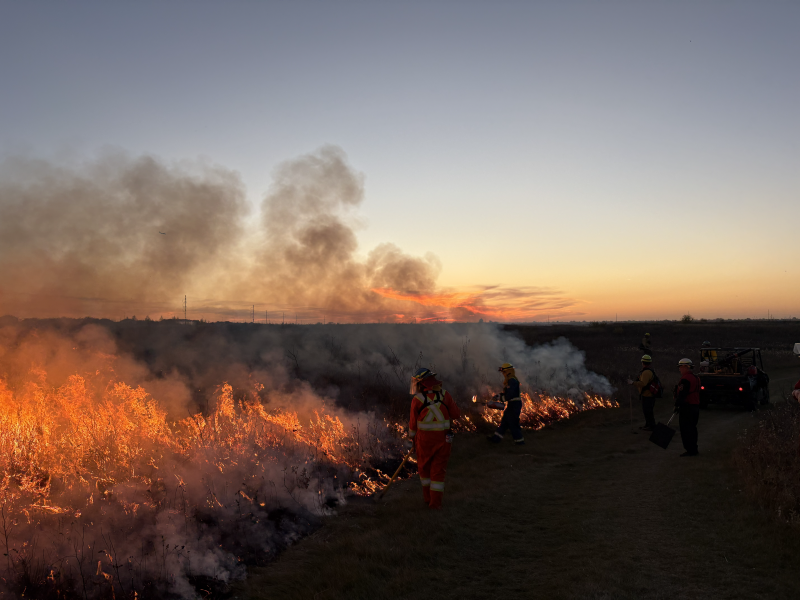
Yellow sits just behind red on the temperature curve, cooler and often more sustained, common where fuel is thinner or where the fire is backing gently against the wind rather than racing with it. Yellow is also, not coincidentally, the colour of the cured grass itself before the match ever touches it - the dormant gold of a dead prairie waiting for permission to burn. In fire-weather forecasting, yellow marks elevated but manageable risk: the colour of a day worth watching closely, not a day to cancel the burn plan.
Photo Credit: Kody Wohlers
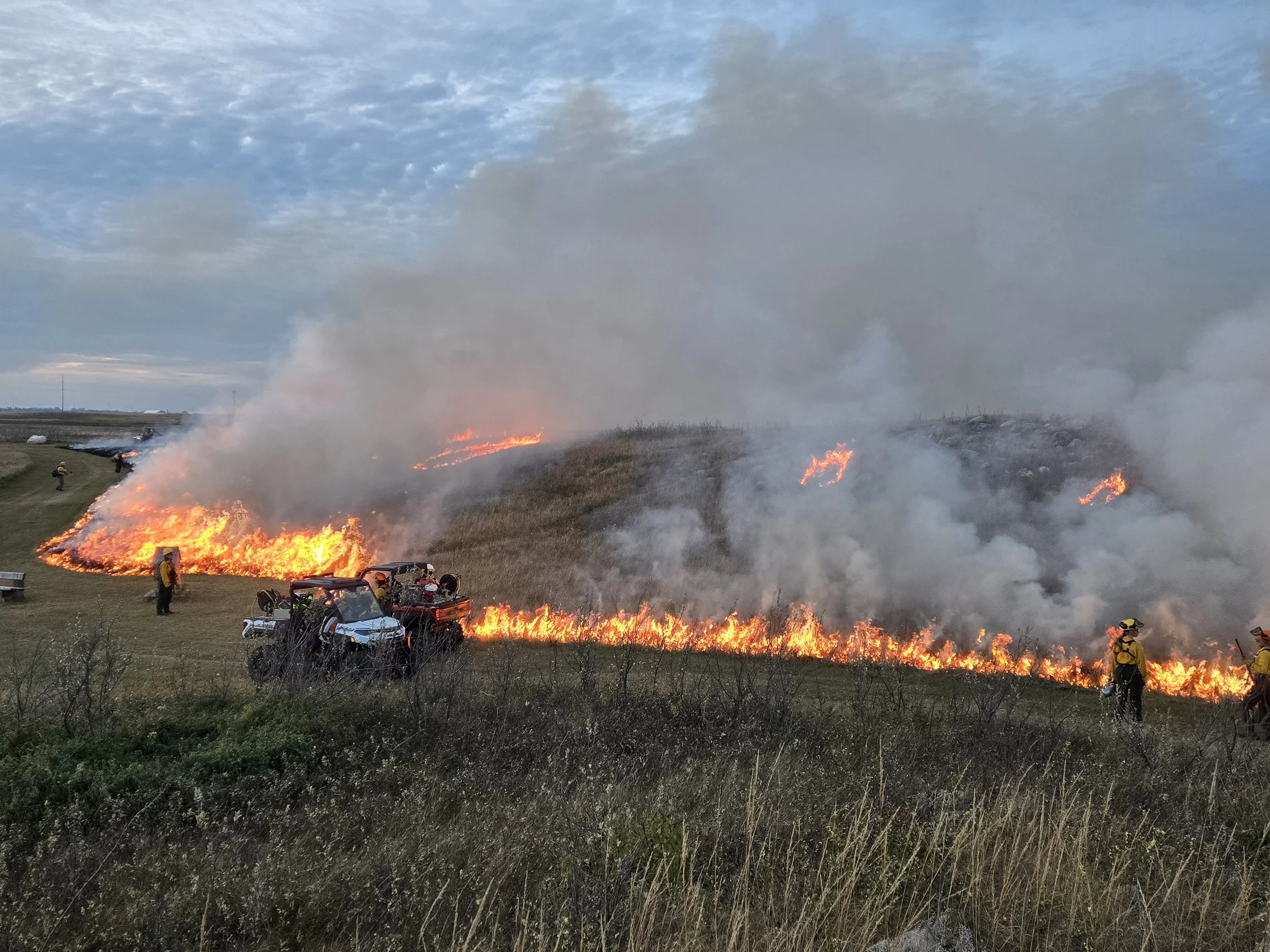
White is the color most people mistake for the fire's dying breath. It is, more literally, water-surprising in a landscape being consumed by flame, but chemically inevitable. Grass is built largely of water and carbohydrate, and combustion releases both: the carbohydrate as heat and carbon, the water as the pale plume rising off a freshly blackened unit. The prairie, mid-burn, is quite literally exhaling the water it spent all summer storing. What looks like smoke thinning to nothing is, in large part, vapor returning to the sky it came from and the pale ash left behind is a mineral bank deposit, phosphorus and calcium and potassium suddenly available to roots that spent the whole prior season competing for scraps of both.
Photo Credit: Ryan Rice
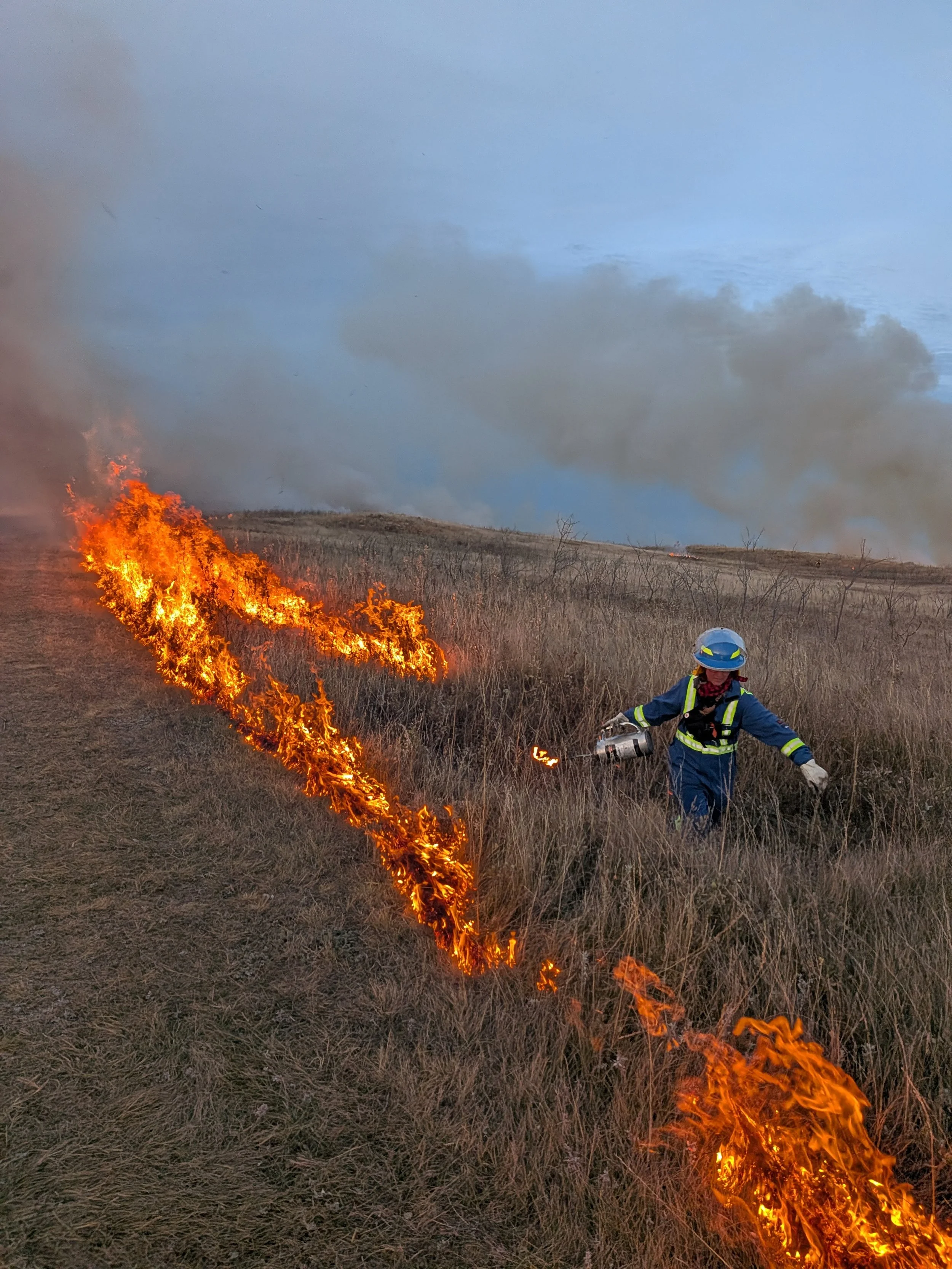
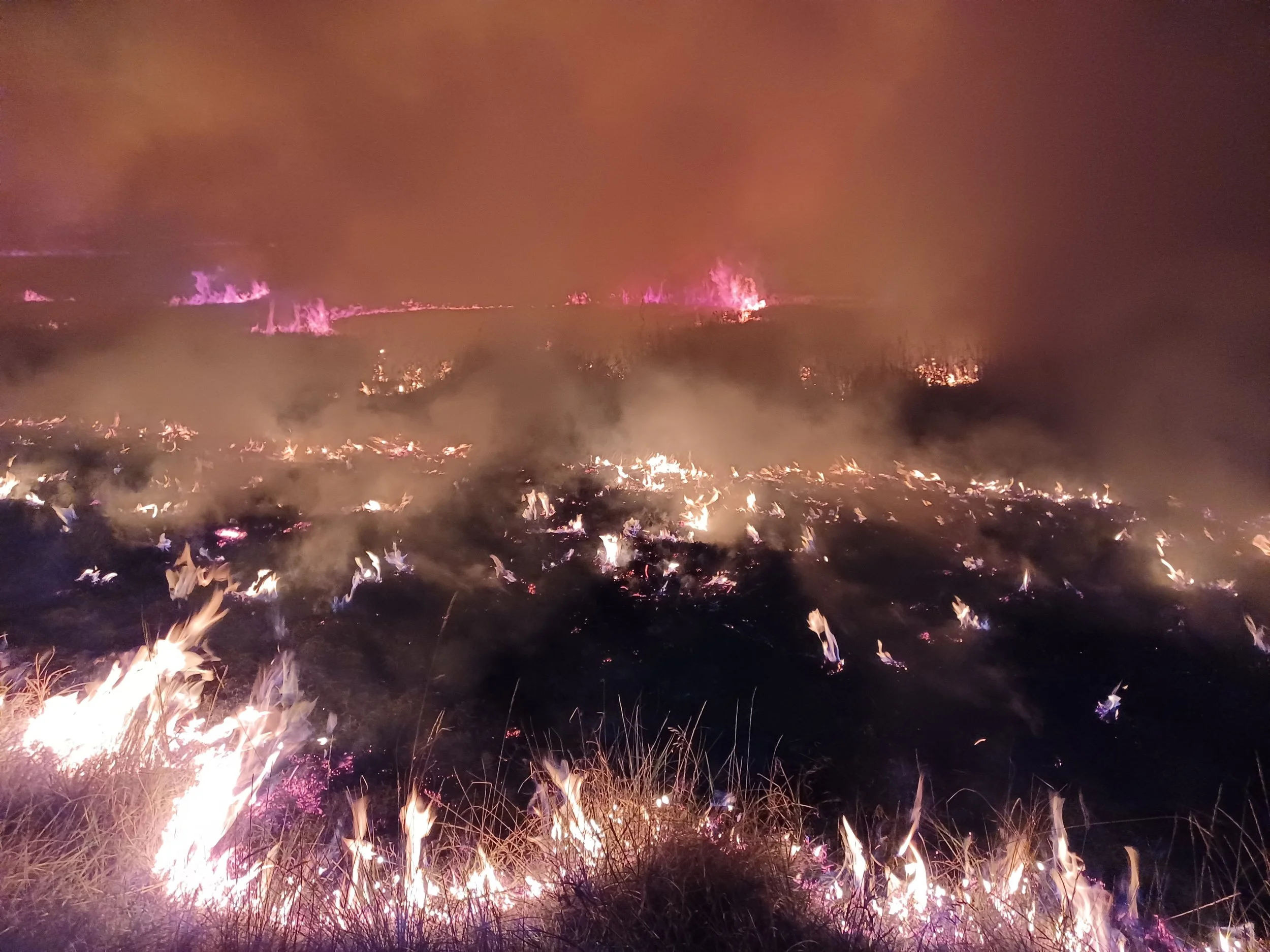
Orange belongs to the in-between hours - the flame colour most visible at dawn and dusk burns, when crews deliberately schedule ignition to take advantage of calmer wind and rising humidity. It is also the colour coded into fire-danger rating systems as "very high": a warning tier experienced burners have learned to read as opportunity as much as hazard, since the driest, most flammable conditions are often exactly the conditions a prescription calls for. Orange is fire at its most theatrical and, not coincidentally, at its most photogenic; the colour that ends up in every burn-day photograph, precisely because it's the colour fire wears when humans are paying the closest attention to it.
Photo Credit: Tori Redman
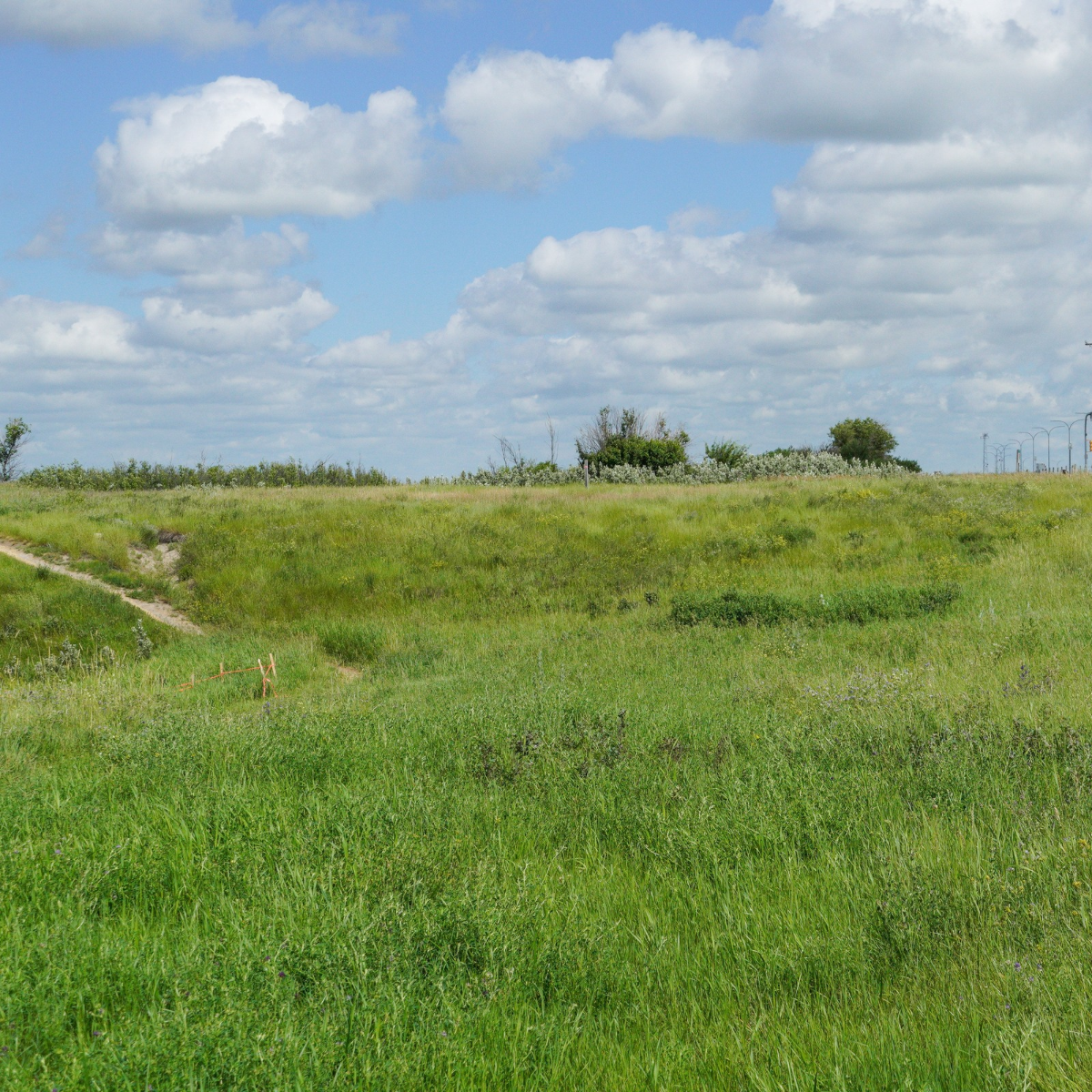
Gradient green isn't a fire color at all; it's the fire's signature, written afterward. Walk a patch-burned landscape mid-season and you'll see it: a mosaic of deep, saturated green where the burn happened months ago, fading through paler shades toward units burned more recently, and finally to black or gray where the torch passed through last week. This gradient is not incidental; it is the entire management strategy. Wildlife biologists call it pyric herbivory: grazing animals are drawn overwhelmingly to the freshest burns, where regrowth is most nutritious, which in turn rests the older, deeper-green patches and lets them build seed and structure undisturbed. The green gradient is a map of grazing pressure, nutrient cycling, and time, all layered into a single, readable palette. It is the closest thing a prairie has to a calendar.
Photo Credit: Tobi Oyedele
Water Matters More Than the Fire - The Why
The temptation is to think of prescribed fire as a nutrient event, and it is, but its water story deserves equal billing. A prairie's litter, left unburned, intercepts rain before it reaches soil and holds moisture in a slowly decomposing mat that mostly benefits fungi, not grass roots. Burn it away, and bare, blackened soil absorbs sunlight far more efficiently, warming faster in spring and triggering earlier root activity. That black surface also infiltrates the first hard rain after a burn with far less resistance, since the litter that once diverted water sideways is simply gone. And since the root mass is still intact at this point, water hitting the surface does not cause erosion. The net effect is a landscape that, despite having just been lit on fire, ends up managing its water more efficiently than it did the season before.
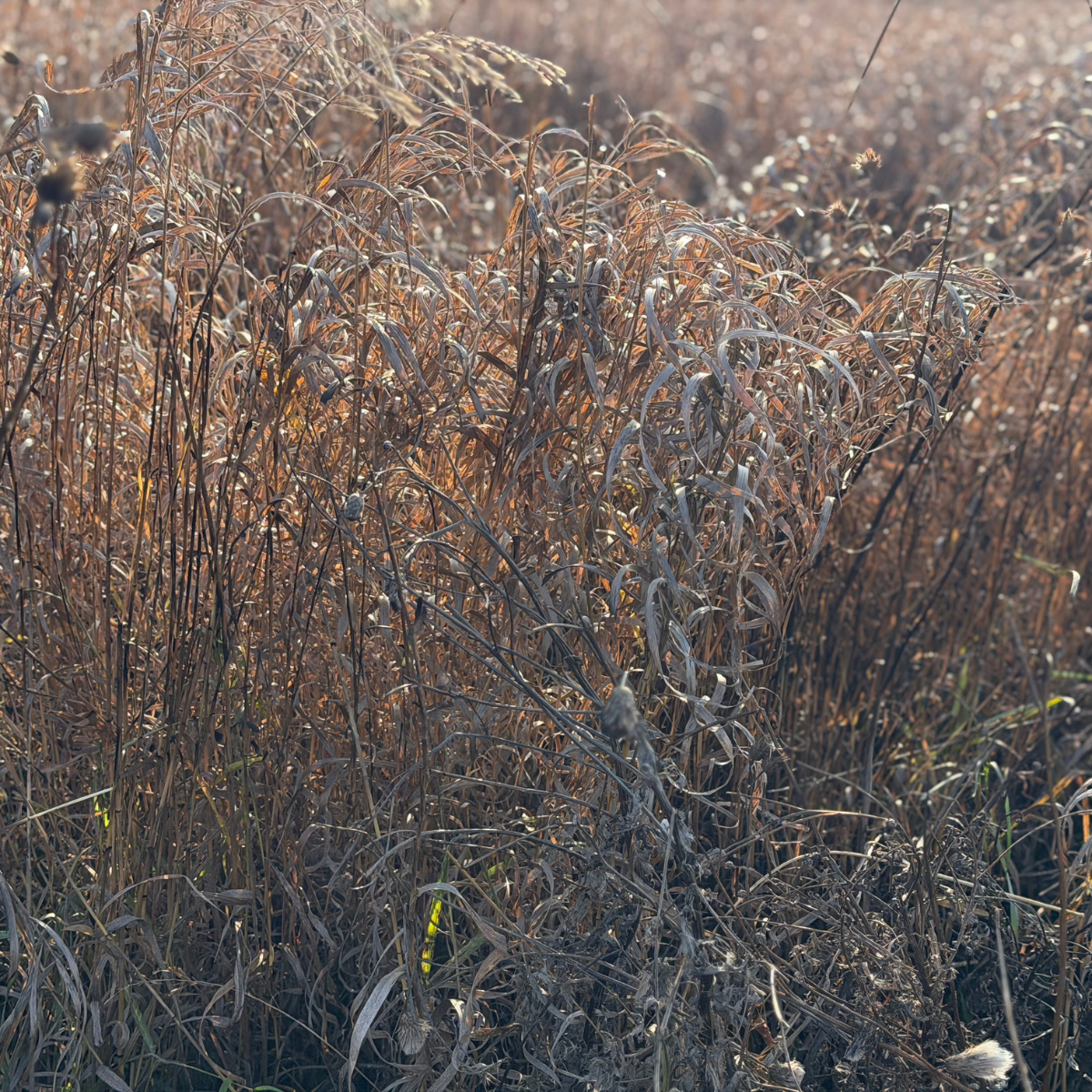
Photo Credit : Tobi Oyedele
This is the quiet irony at the center of the practice, and the reason why just adding water isn't rhetorical. Add water to a prairie in drought and you get temporary relief. Add fire, and you get a system that uses the water it already has more efficiently - for years.
The Discipline Behind the Drip Torch
None of this happens by accident. A prescribed fire is scripted months in advance: wind speed windows, relative humidity thresholds, fuel moisture readings, smoke dispersal modeling, firebreaks cut and mowed and sometimes wetted down as insurance. The romance of flame obscures how much of the job is paperwork and patience - waiting for the one afternoon in a six-week window when every variable lines up. Crews describe the actual ignition, when it finally comes, as almost anticlimactic: the hard part was already finished before the torch touched grass.
That discipline is what separates a prescribed fire from a wildfire, and it's worth saying plainly, because the two get conflated constantly in public conversation. A wildfire is an emergency. A prescribed fire is a maintenance appointment that happens to look, for about twenty minutes, exactly like an emergency.
An Ecosystem That Asks to Be Burned
Perhaps the strangest thing about prescribed fire is how quickly it stops feeling strange once you've watched a few. The blackened ground stops reading as loss and starts reading as preparation. The smoke stops reading as pollution and starts reading, correctly, as water and carbon returning to circulation. The colours stop being a hazard palette and start being a language, red for urgency, yellow for readiness, white for the water leaving, orange for the hours humans choose to work, green for everything that comes after.
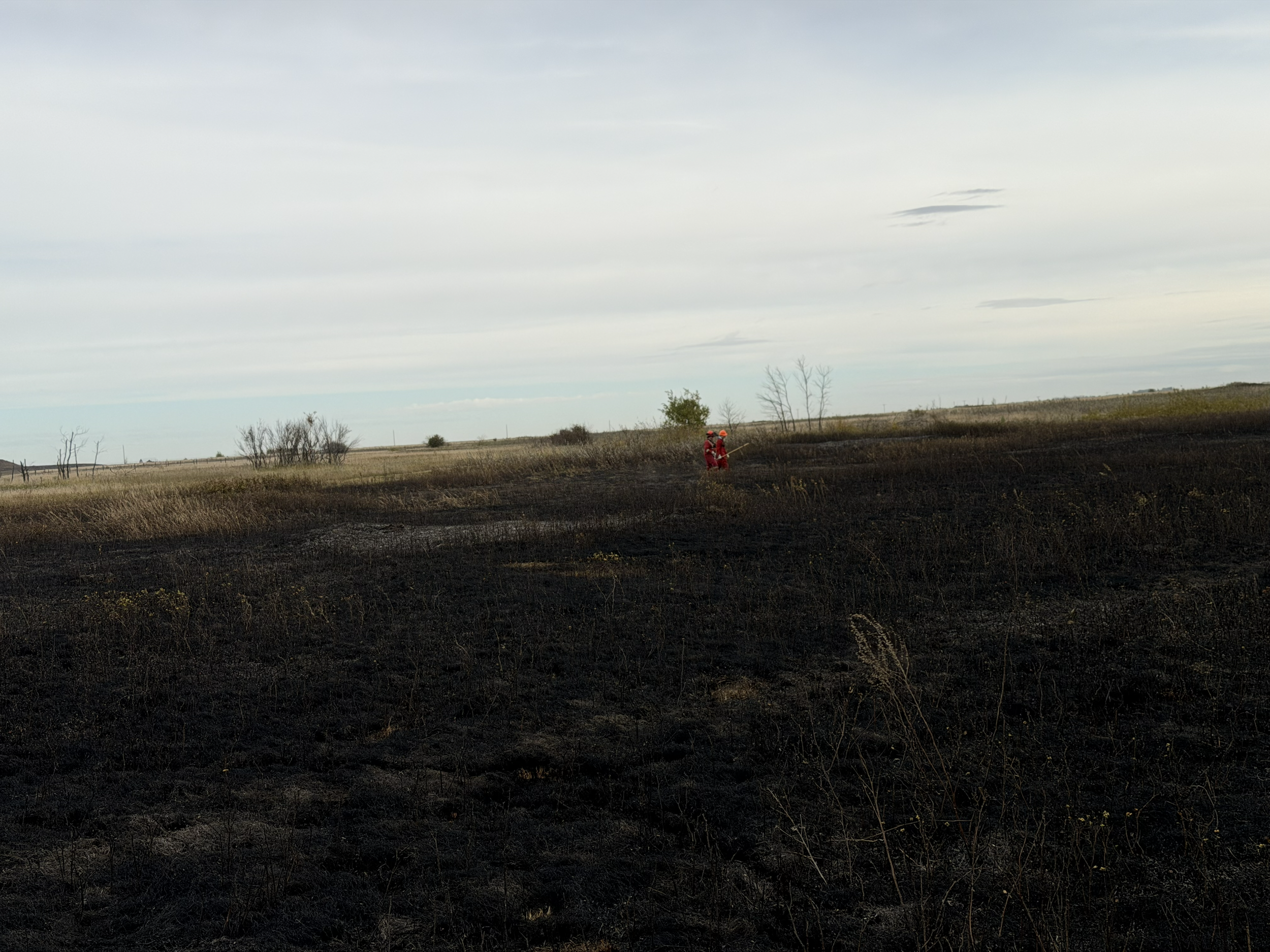
Mop up exercise at the North East Swale Ecological Core at the 5th Annual Canadian Prairies TREX
The prairie was never a static thing to be preserved under glass. It is a system built around a return address, and fire is simply the mail carrier. Every few years, the letter comes due. The prairie opens it, burns black for a season, and writes back in green.