

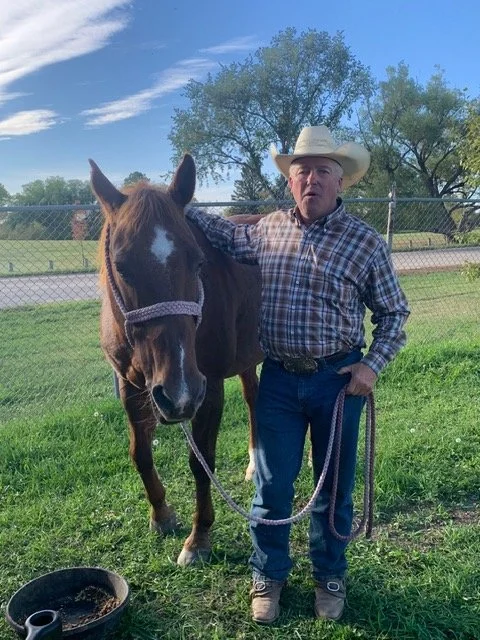
Zane Fedbjornson
Pasture Manager,
Association of Manitoba Community Pastures
For Zane Fedbjornson, that stewardship has been a lifelong commitment. From growing up on a community pasture to managing prairie landscapes for more than three decades, he has dedicated his career to caring for the land. Today, through prescribed fire, he is helping restore the natural processes that keep grasslands healthy, productive, and resilient.
For Zane Fedbjornson, grassland stewardship is not just a profession. It's in his blood.
Raised on the Westbourne Community Pasture in Manitoba, where his father served as pasture manager, Zane learned early that healthy grasslands do not happen by accident. They are the result of care, attention, and a deep understanding of the land. Those lessons shaped a career that has now spanned more than four decades in pasture management and livestock production.
Today, Zane serves as pasture manager at the Spy Hill-Ellice Community Pasture, located along the Manitoba-Saskatchewan border. After 31 years as a pasture manager and 41 years working in the industry, he continues to bring the same passion and commitment to the landscape that first inspired him as a child.
His connection to the land is evident in the way he talks about it. Every pasture tells a story. Every season brings new challenges. And every management decision today helps shape what the land will look like tomorrow.
Finding New Tools for Old Challenges
The prairie landscape has always been dynamic, but one challenge has become increasingly familiar to land managers across the Prairies: brush encroachment.
As shrubs and trees gradually move into open grasslands, they compete with forage production, alter wildlife habitat, and change the character of landscapes that have supported grazing for generations. For years, rotational grazing and herbicides were among the primary tools used to address these challenges. While effective, Zane recognized there was room for another approach. That opportunity came through prescribed fire.
Working alongside the Association of Manitoba Community Pastures (AMCP) and the Canadian Prairies Prescribed Fire Exchange (CPPFE), Zane has become part of a growing effort to reintroduce fire as a tool for grassland management.
Through AMCP's developing burn program, prescribed fire has helped reduce brush encroachment, clean up woody growth, and rejuvenate native grasslands within community pastures. To date, AMCP has completed burns on more than 1,500 acres and continues to expand its use of prescribed fire as part of a broader stewardship strategy.
Watching the Landscape Respond
What inspires Zane most is seeing the transformation after a successful burn.
Areas that were once choked with brush begin to open. Native grasses respond with renewed growth. Forage production improves. The landscape becomes more resilient and productive.
For Zane, prescribed fire doesn’t change the land. It helps the land function the way it was meant to.
The sandy grasslands of Spy Hill-Ellice present unique management challenges, but they also offer tremendous opportunities for stewardship. By combining prescribed fire with other range management practices, Zane has seen firsthand how these landscapes can benefit when natural ecological processes are restored.
“I have found fire to be a useful tool in achieving these goals. The plan is to continue with a burn program to create a healthier grassland. In the past, rotational grazing and herbicide were the main forms of management. Now with including prescribed burns, it is a great improvement for the landscape.” One that works alongside grazing and other management practices to support healthier grasslands and sustainable livestock production.
Stewardship for the Next Generation
The work Zane does extends far beyond managing cattle and forage. Healthy grasslands support biodiversity, provide habitat for wildlife, improve soil health, and contribute to resilient ecosystems. Through thoughtful management and a willingness to embrace tools like prescribed fire, he is helping ensure these landscapes continue to provide those benefits for years to come.
After more than 40 years on the land, Zane remains just as committed to learning and adapting as he was at the start of his career. His involvement in prescribed fire reflects a belief shared by many land stewards across the Prairies: that some of the best solutions for the future can be found by working with the natural processes that shaped these landscapes for thousands of years.
For Zane Fedbjornson, prescribed fire is an investment in healthier grasslands, stronger grazing landscapes, and a more resilient future for the Prairies.