

Partner Spotlight
At the Canadian Prairies Prescribed fire Exchange, we know that meaningful change on the landscape doesn’t happen alone-it happens through partnership. Our partner Spotlight page celebrates the incredible organizations working alongside us to advance the safe and effective use of prescribed fire across the prairies. Each partner brings unique expertise, passion, and commitment to our shared mission of building fire-resilient landscapes and communities through knowledge sharing and hands-on collaboration.
We are proud to shine a light on these champions of change and invite you to explore their stories -a testament of what we can accomplish when we work together.
Association of Manitoba Community Pastures
The Association of Manitoba Community Pastures (AMCP) is a not-for-profit producer-led organization unparalleled in Manitoba and Saskatchewan. AMCP is committed to enhancing and supporting the livestock industry by providing high-quality grazing balanced with sustainable rangeland stewardship.
This is achieved by;
Pasture Managers and Riders working directly on site to ensure animal care, range management, and pasture management.
Providing grazing lands throughout the grazing season: over 42,000 head of livestock are brought to the Community Pastures every year.
Democratic governance by livestock producers with firsthand knowledge of the industry. The Community Pasture program is designed to meet the needs of Pasture Patrons.
AMCP’s Community Pastures are located throughout Manitoba and into Saskatchewan:
Alonsa, Bield, Birch River, Cote-San Clara, Ellice-Archie, Ethelbert, Gardenton, Pansy, Langord, Lenswood, Libau, McCreary, Mulvihill, Narcisse, Spy Hill-Ellice, Sylvan Dale, Turtle Mountain and Wallace.
AMCP staff use established range management practices and principles to ensure strong and sustainable forage supplies. Well-managed grazing lands deliver many environmental benefits, including healthy forage production and resiliency, creating conditions for species-at-risk habitats, biodiversity, healthy soils, and good water quality.
To help manage brush encroachment, AMCP has been building a burn program with assistance from the CPPFE over the last 5 years. AMCP has been able to burn over 1500 acres within two of our pastures, Spy Hill-Ellice and Ellice-Archie.
Due to weather conditions over the past couple of years, the burn options have been restricted. However, AMCP completed an 850-acre burn in the spring of 2026. The burn primarily included reducing the growth of new Aspen growth and cleaning up old dead brush from insect infestations from several years ago. Along with the brush, the burn rejuvenated many of the grass meadows.
The biggest challenge that AMCP faces is the limited burn windows, along with manpower and availability of equipment. But with the partnership of the CPPFE and AMCP’s efforts, the equipment cache is growing, and the plan for the future is to be able to conduct multiple controlled burns with the short burn window each year.
We have started the planning for burns to be conducted in the spring of 2027. The hope is to complete a burn in the 620-acre Wallace Community Pastures, as well as a burn in the Turtle Mountain Community Pastures of 620 acres as well.
Behind Association of Manitoba Community Pasture’s success on the landscape is a dedicated team of individuals who bring both deep-rooted knowledge of livestock industry and a genuine commitment to sustainable land stewardship. Guided by producers who understand firsthand what it takes to balance grazing needs with long-term rangeland health, AMCP’s leadership has helped shape a program that serves patrons while protecting the land for generations to come.
Meet the people driving this forward: Ken Morrice and Zane Fedbjornson.
Read their Profiles on the Faces of Fire
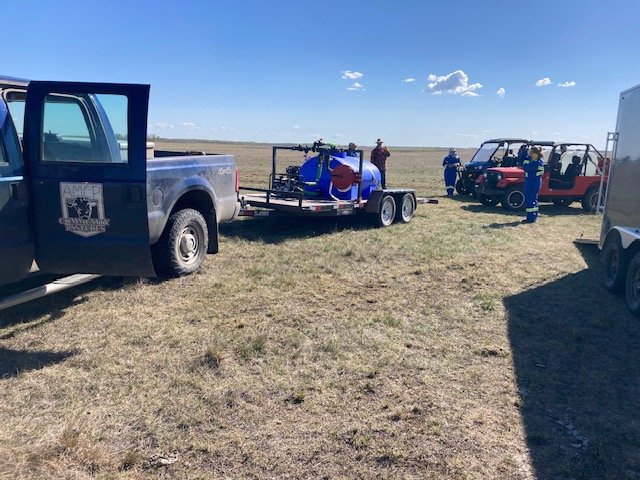
Arriving on a site, ready for a prescribed fire experience.
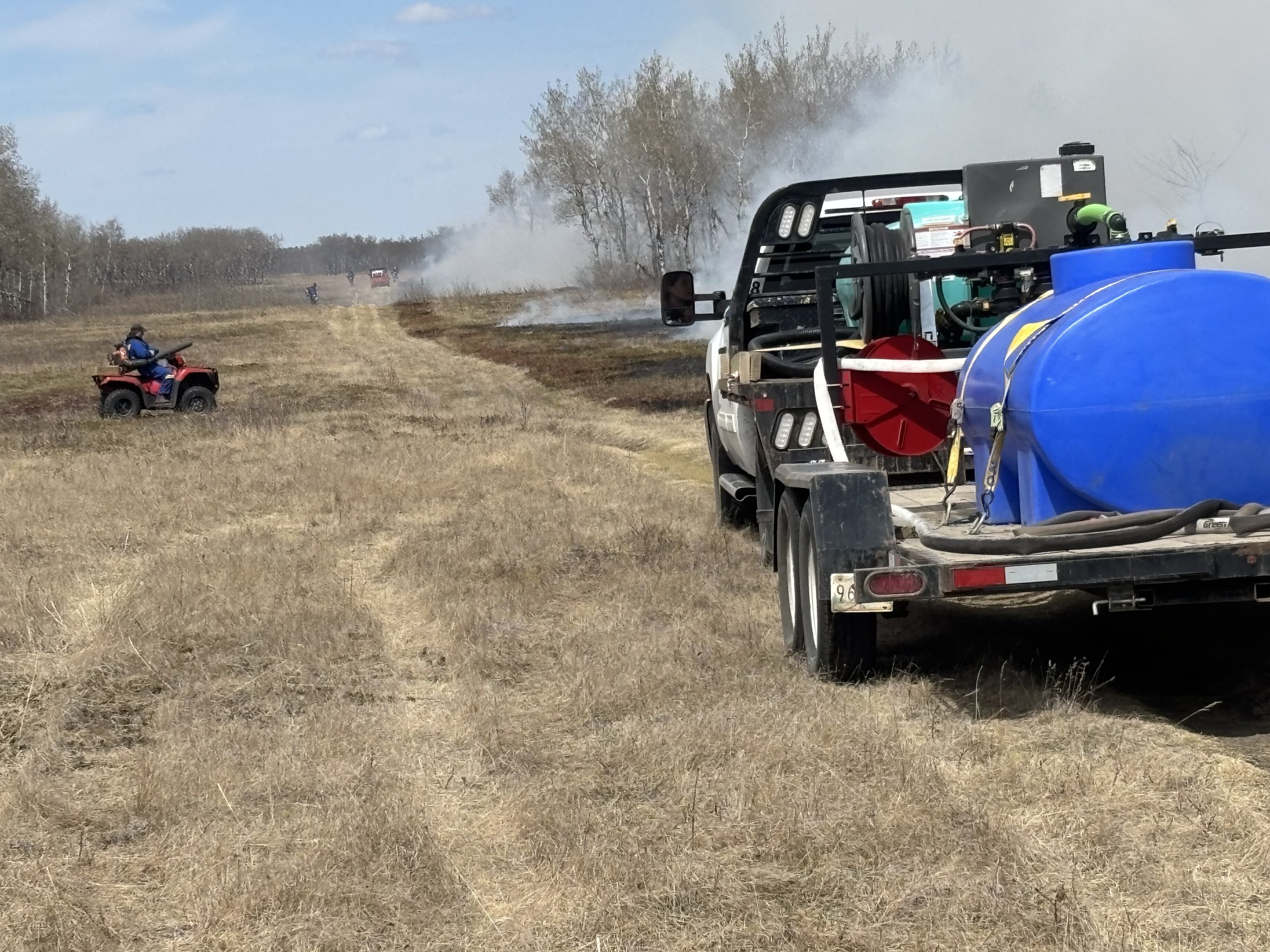
Getting started and ensuring to keep the fire guarded
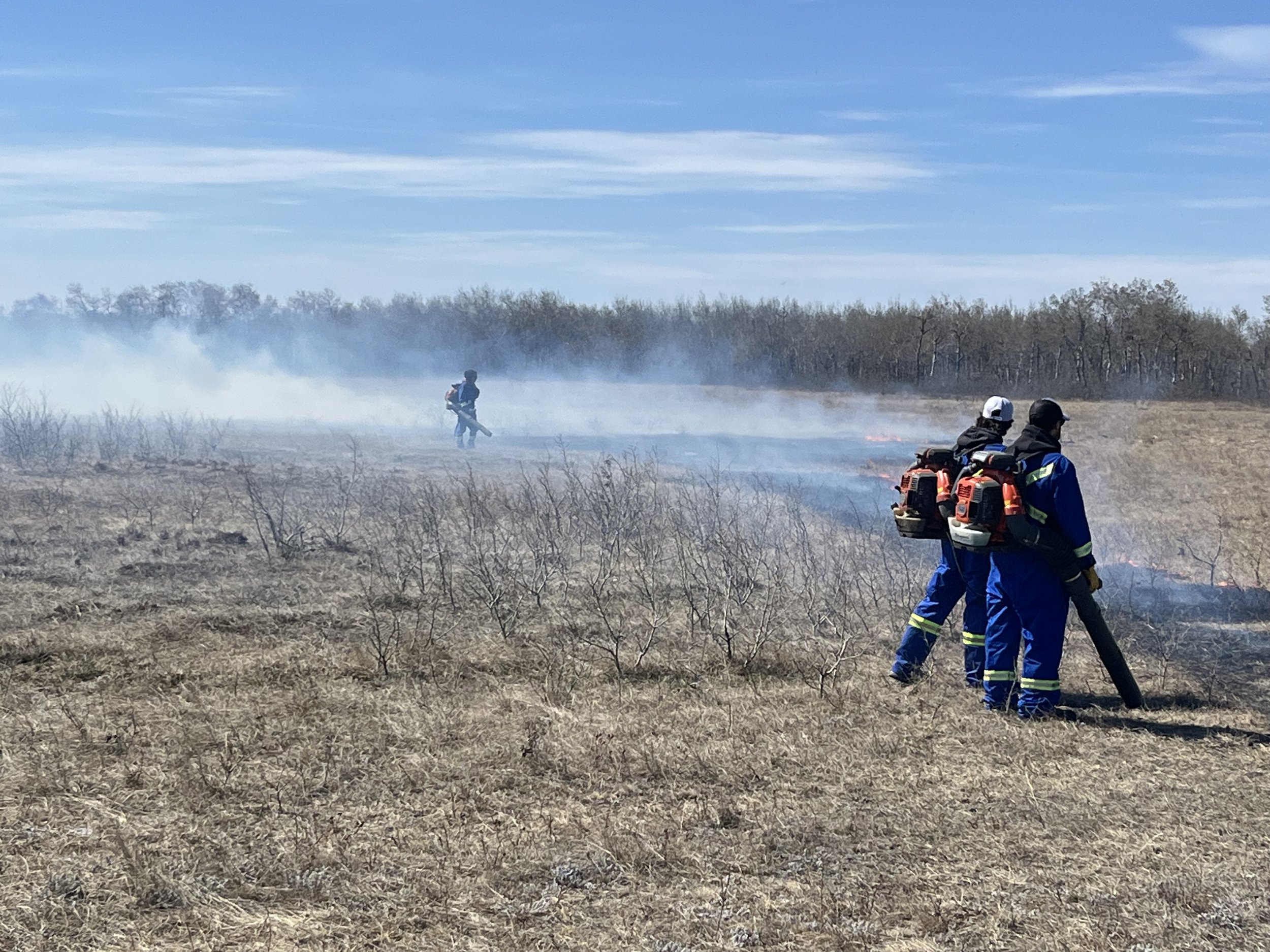
Wrapping up a burn with the team
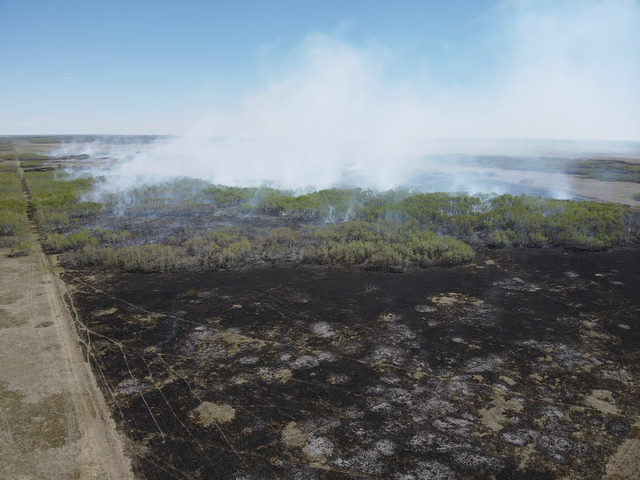
Prescribed fire smoke, well managed and funneled like chimney smoke- just the way we like it!
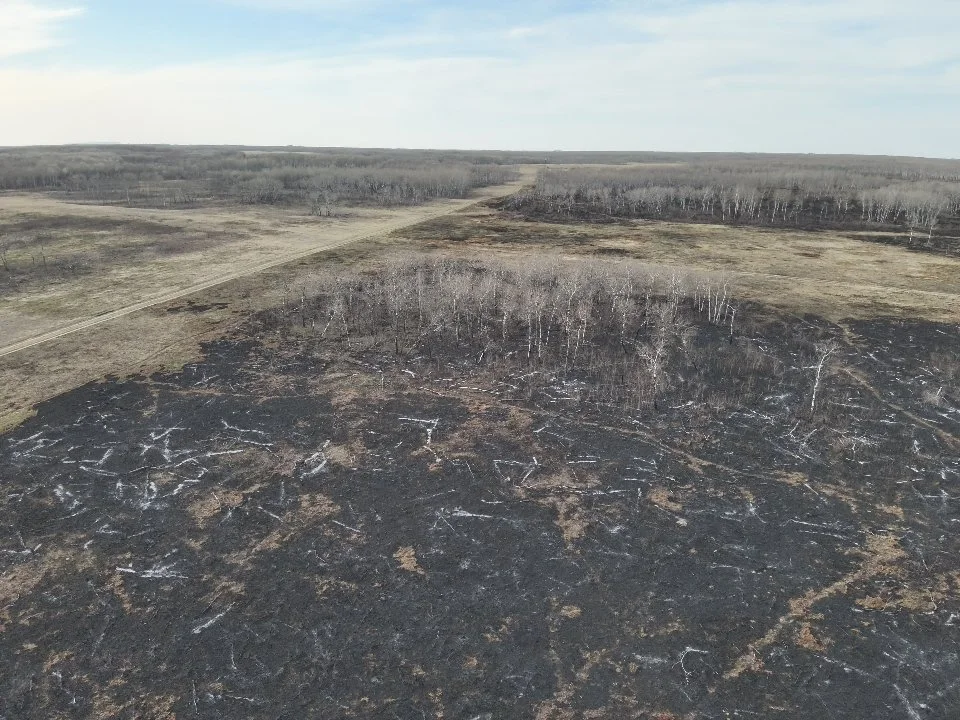
Final look of a burn site, ready for new luscious growth of vegetation and pyric-diversity.
Photo Credits: Ken Morrice

Wanuskewin Heritage Park
Wanuskewin Heritage Park is a National Historic Site that brings to life the history and culture of the Northern Great Plains First Nations peoples. Spanning approximately 741 acres immediately adjacent to the City of Saskatoon, the park was dedicated by Her Majesty Queen Elizabeth II in 1987 and established by the Province of Saskatchewan in 1992 as a living memorial to the people who gathered on the site for over 6,000 years. This rich heritage includes nearly all recognized pre-contact Indigenous cultures of the Northern Great Plains, as evidenced by more than 20 archaeological dig sites across the landscape.
This profound archaeological history, combined with the continued affirmation by contemporary Indigenous nations recognizing Wanuskewin as an important spiritual site, serves as the driving force behind the park's mission: "to advance the understanding and appreciation of the evolving cultures of the Northern Plains Indigenous peoples." It also shapes their overarching vision "to act as a living reminder of the peoples sacred relationship with the land," and fuels their current pursuit of designation as a UNESCO World Heritage Site.
Restoring the Land: Cultural and Ecological Stewardship
Wanuskewin’s mission extends deeply into the restoration and management of the prairie ecosystem itself. Recognizing that Indigenous cultures and Northern Great Plains ecology are inextricably linked, the park integrates traditional land stewardship with modern conservation science.
Bison Reintroduction: As a cornerstone of prairie restoration, Wanuskewin successfully returned a heritage bison herd to the landscape, re-establishing a vital keystone species that helps maintain native grassland biodiversity and ecosystem health through natural grazing and disturbance regimes.
Prairie Restoration & Fire Management: Staff and partners actively work to restore degraded agricultural lands back to native mixed-grass prairie, utilizing traditional knowledge and modern tools including prescribed fire to enhance ecological function and suppress invasive species.
Cultural Landscapes: Stewardship efforts are guided by Indigenous worldviews, ensuring that land management respects the sacred relationship between the original caretakers and the territory, creating a living classroom for visitors and researchers alike.
Collaboration and Community Impact
Managing a nearly 741-acre urban-adjacent National Historic Site requires strong partnerships with conservation groups, researchers, and government agencies. By aligning ecological restoration with cultural education, Wanuskewin bridges the gap between historical preservation and modern environmental challenges. These collaborative efforts not only protect threatened Northern Plains biodiversity and crucial watershed areas but also provide immersive educational programming that connects thousands of annual visitors to the ecological importance of healthy grasslands.
Looking Ahead
Wanuskewin continues to stand as a beacon of reconciliation, environmental stewardship, and cultural resilience. As the park advances toward its UNESCO World Heritage aspirations, it remains a vital landscape where the past, present, and future of the Northern Great Plains converge, proving that healthy ecosystems and thriving Indigenous cultures rely on shared stewardship and a deep respect for the land.
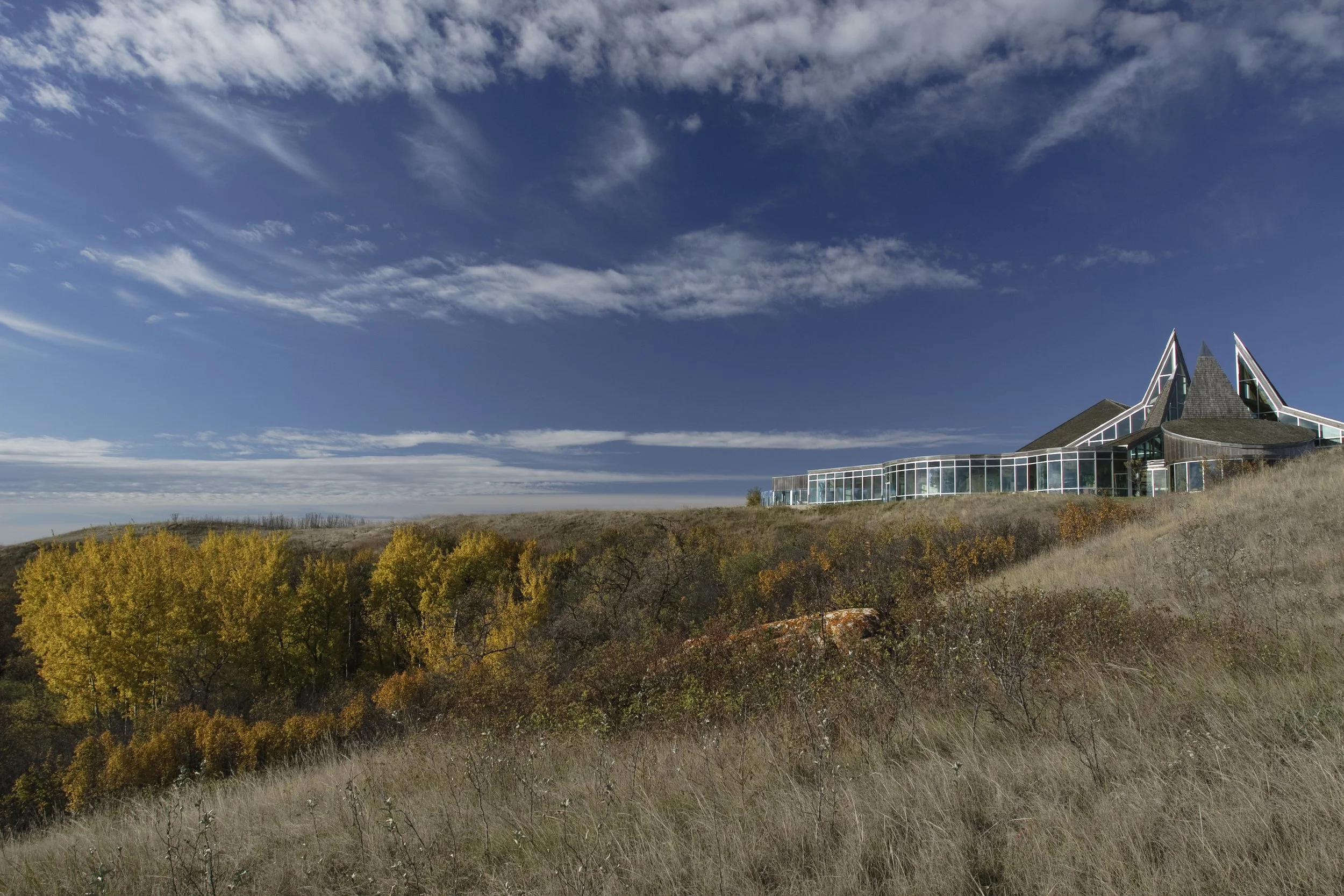
The Wanuskewin Heritage Park
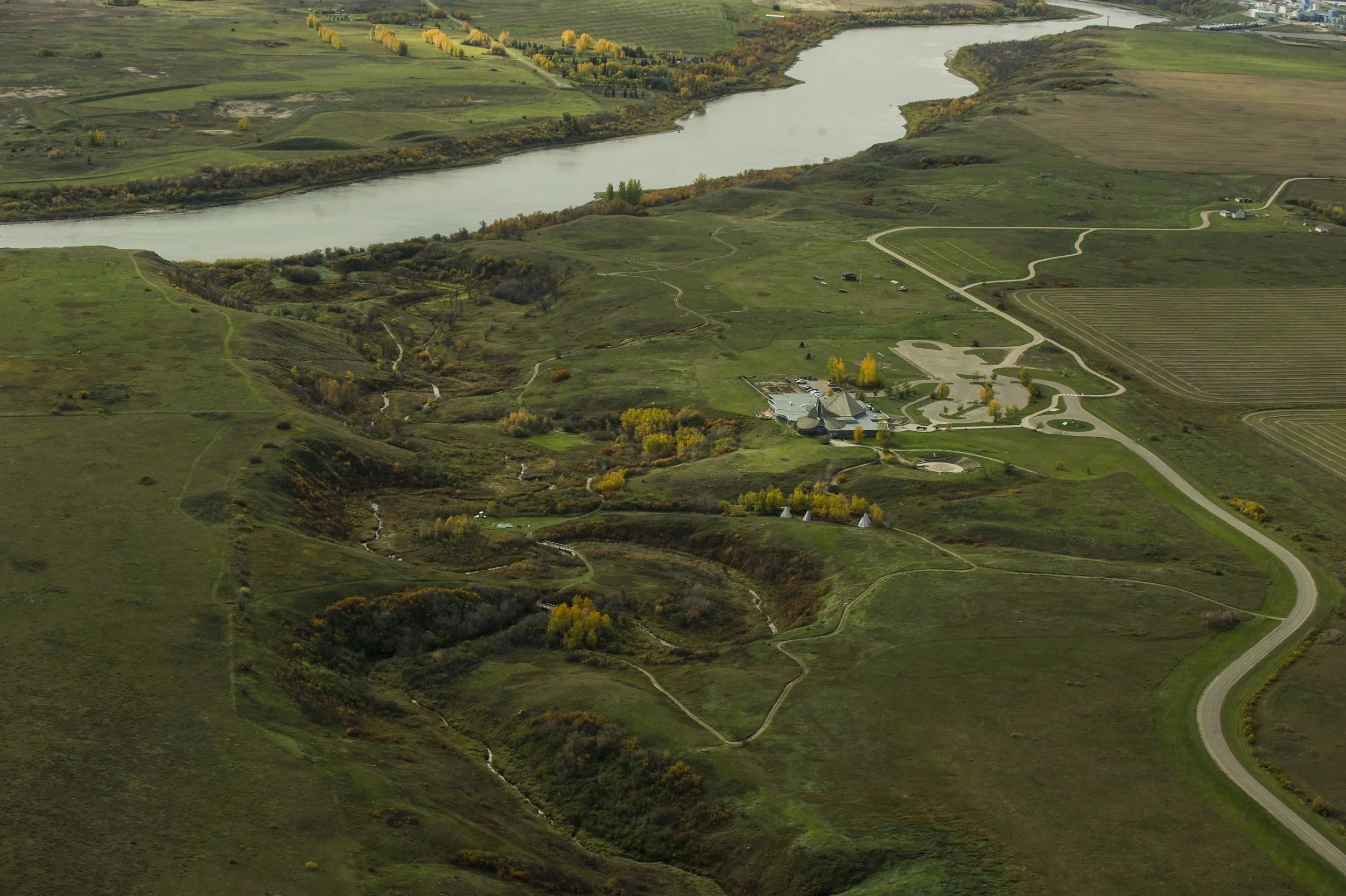
Arial View of The Wanuskewin Heritage Park