

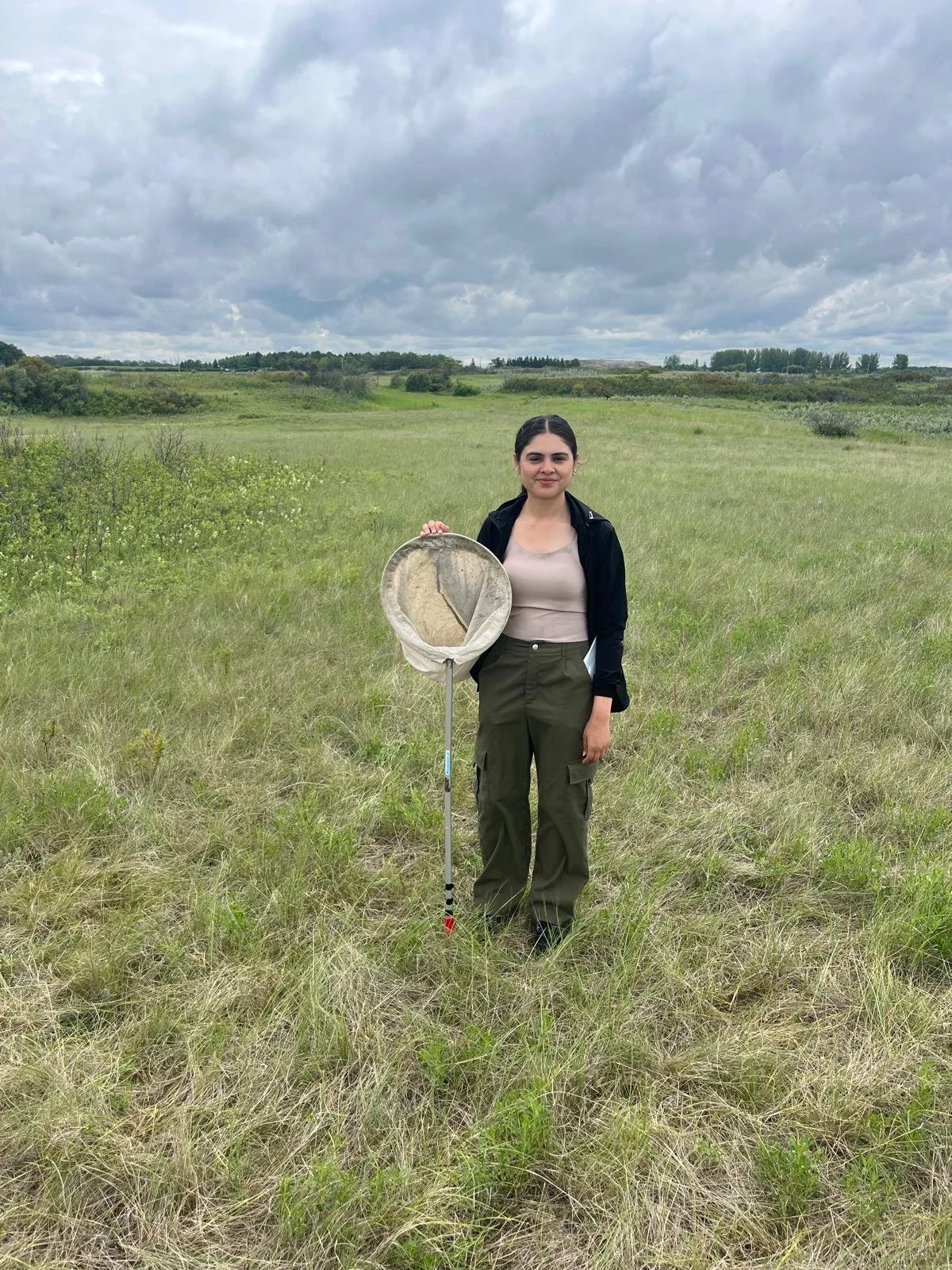
Anuska Acharya
M.Sc. Student, Biology, University of Saskatchewan
Photo Credit: Anuska Acharya
Anuska Acharya is a Master's student in Biology at the University of Saskatchewan. Originally from Nepal, her research focuses on understanding how habitat management practices influence wildlife biodiversity and how species respond to environmental change across space and time. She is particularly interested in the ecological impacts of land management and the development of science-based conservation strategies.
Research Project
Effects of Prescribed Fire on Birds and Insect Communities in Saskatchewan's Prairies
Temperate grasslands are among the world's most threatened ecosystems and depend on natural disturbances such as grazing and wildfire to maintain biodiversity and ecological integrity. While prescribed fire is increasingly used as a management tool and has been shown to enhance plant diversity, its effects on higher trophic levels and ecological interactions remain less understood.
Anuska's research examines how prescribed fire influences bird and insect communities in Saskatchewan's prairie ecosystems. Specifically, she investigates whether prescribed burning acts as a catalyst for songbird diversity or creates nutritional constraints by altering the availability and quality of insect prey.
Her study is conducted across several conservation areas in the Saskatoon region, including Cranberry Flats Conservation Area, Northeast Swale, Chief Whitecap Park, and Beaver Creek Conservation Area. Using Autonomous Recording Units (ARUs), systematic nesting surveys, and a range of insect sampling techniques including malaise traps, pitfall traps, and sweep nets, she compares ecological responses between burned and unburned sites. Laboratory lipid extraction analyses are then used to assess the nutritional quality of insect communities available to insectivorous birds.
By linking prescribed fire management to trophic dynamics and food resource quality, this research aims to improve understanding of how habitat management practices affect biodiversity in fragmented prairie ecosystems. The findings will support adaptive management strategies designed to maintain healthy bird and insect populations while enhancing the ecological resilience of Saskatchewan's grasslands and other similar ecosystems.